How to Move a Pergola Without Disassembly
You’ll relocate your pergola by evaluating its foundation type and preparing the new site with proper drainage. Use jacks to lift one side incrementally, inserting wooden cribbing blocks beneath. Once lifted, employ round poles as rollers for lateral movement. Clear your pathway of debris, rocks, and obstructions beforehand. Wear safety gear and restrict access to the worksite. After repositioning, secure the pergola at its new foundation and conduct a thorough structural inspection. Understanding each relocation phase guarantees you’ll maintain your pergola’s integrity throughout the process.
Foundation Preparation and Planning
Before you relocate your pergola, you’ll need to thoroughly assess your current foundation and plan for the new site’s requirements. Start with a thorough foundation assessment to identify your existing type—whether concrete footings, strip foundation, screw piles, or ground anchors. Check for settling, cracking, or structural damage that might complicate relocation. Measure depth and width to guarantee compliance with local frost line codes.
Next, prepare your new site through proper site preparation. Clear and level the area to match your pergola’s footprint, removing vegetation, rocks, and debris. Call 811 for utility locates before excavation begins. Establish drainage solutions to prevent water pooling, then mark post locations and verify alignment with your design specifications. Since pergolas must be attached to load-bearing structures, ensure your new foundation can support the pergola’s weight and attachment requirements. For optimal stability, ensure footings are placed on undisturbed earth rather than fill or previously disturbed soil. This groundwork guarantees a smooth, compliant relocation process.
Lifting Methods and Techniques
Once you’ve prepared your foundation and site, you’re ready to lift your pergola safely from its current location. Master jack techniques by lifting one side incrementally, inserting wooden cribbing blocks underneath before lowering gently. Alternate sides gradually to evenly raise the entire frame without straining supports.
Employ lifting straps around the pergola frame to distribute weight evenly during manual or mechanical lifting. Multiple helpers stabilize posts and prevent tilting throughout the operation. For heavier structures, consider electric winches or motorized pallet jacks for controlled, inch-by-inch repositioning.
Use sturdy wooden poles as rollers beneath the pergola to facilitate lateral movement once lifted. Maintain stability with temporary cross braces, preventing twists under partial loads. Frequently verify balance and alignment to prevent sudden shifts or tipping during the entire lifting process. Before moving your pergola, verify that you’ve obtained any required building permits for relocation, as this may be mandated by your local jurisdiction. Ensure your heavy-duty post base brackets are properly disengaged from their footings before attempting any lateral movement of the structure.

Our lifting slings and straps Made of qualified polyester, which was widely used for lifting in civil engineering. Nylon web stretches more, helps avoid shock loading, 6,500 lbs Vertical, 5,200 lbs Choker, 13,000 lbs Basket Load Capacity, lifting straps for construction

Heavy Duty 2-Pack Lift Slings: Includes two 1" x 8' polyester web straps with wear guard ends, designed for lifting heavy furniture, appliances, machinery, and more. Ideal for safe and easy lifting, towing, and rigging.

6600 lbs High Load Capacity: With a maximum working load of 6600 lbs, this lifting sling strap provides reliable lifting power for industrial and construction tasks
Rolling and Sliding Strategies
With your pergola lifted and stabilized, you’re ready to employ rolling and sliding strategies that’ll minimize physical effort while protecting your structure and lawn.
You can use round poles or fence posts as rolling materials, positioning them sequentially beneath the structure. As your pergola advances, retrieve rear poles and move them forward. Alternatively, attach smooth furniture dollies or frisbee-style slides to the pergola legs using duct tape loops. These sliding techniques work effectively on grass and flat surfaces.
For best results, combine methods strategically. Position a car jack at the pergola’s center, then alternate pressure between sides while inserting rolling materials. Place spare 2×4 lumber atop these mechanisms to distribute jack force evenly. When securing pergola components that may shift during movement, ensure connections use appropriate 316 stainless steel fasteners to prevent rust and deterioration. Similar to installing structures like deck railings, proper frame construction techniques ensure your pergola maintains structural integrity throughout the moving process.
Clear your path of debris and rocks beforehand. These preparations guarantee smooth, controlled movement without structural stress or lawn damage.

Constructed from lightweight, polypropylene material that won't rust or chip and is easy to clean

Robust Construction: Constructed from high-quality hardwood, our dolly's platform ensures durability and can withstand heavy loads, making it ideal for moving furniture and other items.
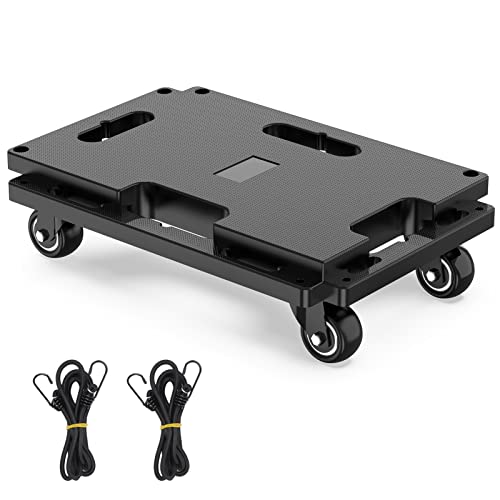
Innovative Interlocking Furniture Dolly: This furniture dolly 4 wheels heavy duty features a unique interlocking design, allowing you to connect two or more flat dolly carts horizontally or vertically with ease--no tools required! Great for moving large items like sofas, refrigerators, or heavy furniture
Clearing Your Path
As you prepare to move your pergola, you’ll need to establish a clear, wide pathway that accommodates both the structure and your moving equipment. Begin with a thorough pathway assessment to determine the ideal route from your pergola’s current location to its destination.
Start your obstacle identification process by removing garden tools, furniture, and yard decorations. Clear fallen branches, leaves, and debris from the entire route. Trim shrubs and plants that obstruct movement, and relocate children’s toys and playsets.
Address ground-level hazards by removing rocks, roots, and uneven surfaces. Fill depressions with soil or use temporary plywood boards to bridge soft spots. Verify the ground is firm enough to support your pergola’s weight throughout the move.
Safety Considerations During Movement
Before you move your pergola, you’ll need to assess its structural integrity and prepare for the physical demands of relocation. Equip yourself with appropriate safety gear—gloves, safety goggles, and steel-toed footwear—to protect against injuries. Establish clear worksite protocols by restricting access and keeping children and pets away from the work area.
Communicate movement procedures with all helpers to coordinate safely. Remove trip hazards and debris surrounding your pergola. Use strong ropes or straps to guide movement, applying slow, controlled force to prevent tipping or structural damage. Avoid stepping on beams or rafters, as these structural supports like rafters are critical to maintaining your pergola’s integrity. Deploy mechanical aids like dollies for heavier structures.
Ensure adequate lighting and favorable weather conditions before proceeding. After relocation, inspect your pergola for any accumulated dust or debris, and use mild soap and water solution to clean any affected surfaces. These preparations minimize injury risk and protect your pergola from damage.
Securing Your Pergola at the New Location
Properly anchoring your pergola at its new location is essential to prevent shifting, tipping, or structural failure from wind and weather exposure. Your pergola anchoring method depends on your ground type. For pavers, use surface-mounted brackets that distribute weight across multiple units. On grass or soft soil, drive ground spikes or helical anchors 18–24 inches deep. For concrete surfaces, install wedge anchors or expansion bolts into properly drilled holes. Before installation, ensure your deck or foundation surface is properly prepared by cleaning away dirt and debris, similar to how wood surfaces require thorough cleaning before staining. Follow installation guidelines carefully by consulting your pergola’s manufacturer specifications and local building codes. Confirm all brackets and anchors are rated for your region’s wind loads and your structure’s weight. Tighten fasteners to manufacturer specifications for maximum strength. Verify that all connection points are secure before considering your pergola permanently installed at its new location.
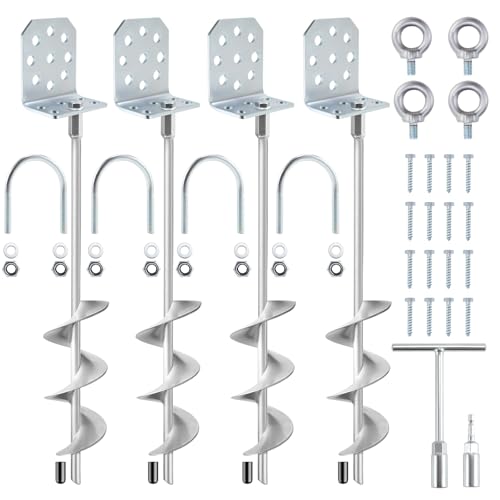
Stable in High Winds: The wider(2.5 inches) spiral blade screws deeper into soil, sand, or clay, offering reliable holding power. Perfect for securing mobile homes, sheds, trampolines, swing sets, carports, and more, even in windy conditions

Complete Heavy-Duty Ground Anchor Kit: Comes with 4×18″ ground anchors, 50 ft of galvanized cable, bolt-type clamps, extra-wide tree straps, drill adapter, T-Socket & clamp wrench—all you need to secure sheds, mobile home, tents, trampolines, and canopies

Choose American, Choose Certainty. Eurmax Canopy is North America’s #1 factory store, stocking all canopies, Trampoline accessories, All Kinds of Ground Stakes Right Here in the U.S.
Post-Move Inspection and Repairs
Once you’ve anchored your pergola securely at its new location, you’ll need to conduct a thorough inspection to identify any damage sustained during the relocation process. Your post move checklist should begin with a visual examination of all support posts for wood rot, cracks, and warping. Use a level to verify that posts remain plumb and beams are level. Systematically inspect fasteners—screws, bolts, and brackets—for looseness or corrosion, tightening as needed. Your structural evaluation must include checking for gaps between members and testing guardrails for rigidity. When measuring gaps between structural components, use a rigid tape measure to ensure accurate assessments of any separation that may have occurred during the move. Ensure your pergola meets building codes and safety standards to protect against structural failures and potential accidents. Document any damage with photos and prioritize repairs accordingly. Schedule regular biannual inspections to monitor for issues arising from the move, ensuring your pergola maintains safety and compliance with local codes.