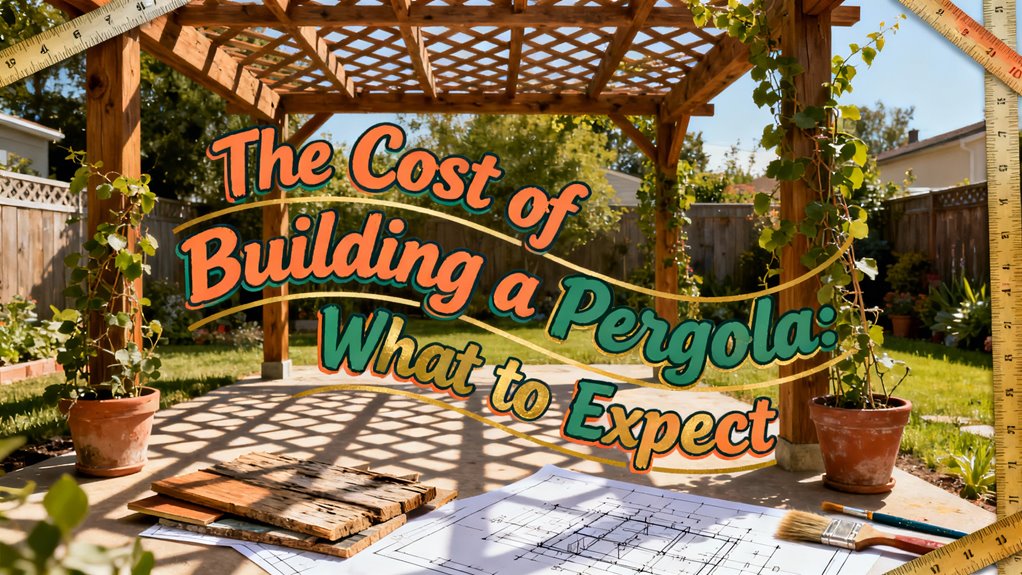
The Cost of Building a Pergola: What to Expect
You’ll invest $700 to $18,000+ building your pergola, depending on your choices. Prefabricated kits run $2,000 to $6,000 for 100 square feet, while custom wood structures cost $30 to $65 per square foot installed. Material selection notably impacts expenses—pressure-treated pine costs $10–$25 per square foot, but composite materials reach $50–$70. Labor typically accounts for 20–30% of your budget, ranging from $500 for simple installations to $7,000 for custom builds. Understanding each cost factor helps you determine your realistic investment.
Prefabricated Pergola Costs
Prefabricated pergola kits offer you a budget-friendly alternative to custom-built structures, with prices ranging from $700 to $4,000 depending on size and materials. You’ll find material-specific costs vary considerably: aluminum kits run $25 to $60 per square foot, while vinyl and wood options cost $20 to $40 per square foot. The DIY benefits are substantial—you’ll eliminate professional installation fees of $10 to $20 per square foot, saving thousands of dollars. Material durability differs by choice; aluminum provides low-maintenance construction with powder-coated finishes, while vinyl offers cost-effective moderate durability. For a 100-square-foot kit, expect $2,000 to $6,000 total. Before starting your prefabricated pergola project, verify that you understand local building code requirements to ensure your structure complies with regulations in your area. Beyond cost savings, prefabricated kits allow you to quickly create versatile entertaining spaces that enhance your outdoor living area. Basic carpentry skills suffice for assembly, though completion time varies by complexity and your experience level.

Upgrage 3-Way Right Corner Brackets: Our Grehitk pergola brackets are extended 3-Way right angle corner bracket. It has enhanced the stability of the pergola, even in inclement weather. The 4x4 pergola brackets post features weather-proof performance and a stable frame, so you do not have to worry about the attack and damage to storms and wind.

Superior Quality Materials: This 4x4 pergola brackets feature a 90° right angle gusset plate design and weather-proof performance and a stable frame,so you do not have to worry about the attack and damage to storms and wind.
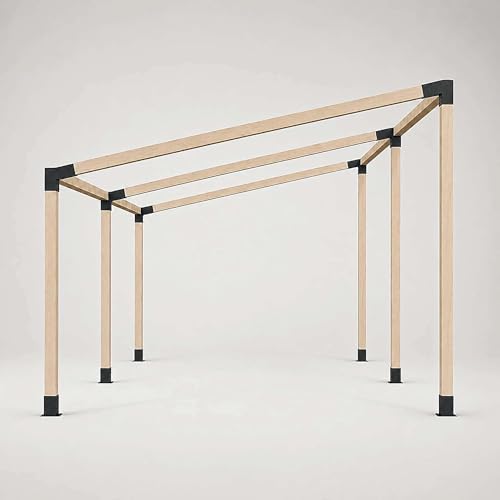
Premium 2.5mm Reinforced Steel Construction:Crafted from upgraded 2.5mm thick galvanized steel (thicker and stronger than standard 2mm market brackets), these pergola brackets deliver enhanced structural integrity and long-term durability. The extended 5.9-inch design provides greater support surface and improved weight distribution, ensuring a more stable and secure pergola structure for heavy-duty outdoor projects.
Custom Wood Pergola Costs
While prefabricated kits provide budget-conscious homeowners with affordable options, custom wood pergolas deliver unmatched design flexibility and aesthetic appeal—though you’ll pay markedly more for that customization. You’ll invest $30 to $65 per square foot installed, with a 12’x12′ structure running $4,300 to $9,400. Labor costs range from $10 to $20 per square foot, accounting for installation complexity. Your wood type selection greatly impacts pricing: pressure-treated pine costs $20–$35 per square foot, while cedar and redwood range $25–$50. Premium hardwoods reach $55–$100. Design options including louvered roofs, integrated lighting, or intricate details considerably increase expenses. Most standard pergolas use 6×6 inch support posts for optimal structural stability. Proper foundation preparation with concrete footings ensures your investment withstands the elements for years to come. Site preparation challenges and specialty equipment rentals further affect your final investment, though professional installation guarantees structural durability and lasting value.

【Thickened Carbon Steel】 Heavy-duty rustproof steel with a black powder finish to withstand harsh outdoor weather.

【Thickened Carbon Steel】 Heavy-duty rustproof steel with a black powder finish to withstand harsh outdoor weather.

Engineered for USA Climates - ORIGLE pergola brackets are crafted with heavy-duty, corrosion-resistant steel and a premium black powder coating to withstand harsh weather conditions. Designed to snugly fit 4x4 post brackets (actual inner dimension: 3.58"x3.58"), these brackets eliminate gaps and ensure a rock-solid hold for your pergola’s structural integrity. Ideal for pergola kit projects in gardens, patios, or backyard retreats.
Material Cost Breakdown
Your material choice fundamentally determines your pergola’s initial expense, maintenance requirements, and long-term durability.
Pressure-treated pine offers the most affordable entry point at $10-$25 per square foot, though it demands annual staining or sealing. Cedar and redwood cost $25-$50 per square foot with natural rot resistance, reducing long term maintenance needs. Premium hardwoods exceed $55-$100 per square foot.
Aluminum and vinyl provide mid-range options at $15-$30 installed, with vinyl offering superior weather resistance and minimal upkeep. Steel commands $40-$60 per square foot but delivers exceptional strength for heavy snow loads and large spans, requiring rust prevention coating. For wood beams, understanding beam span capabilities helps ensure your pergola structure can safely support your chosen materials and design.
Composite materials ($50-$70 per square foot) blend wood aesthetics with plastic durability, resisting rot and insects while maintaining wood-like design options. Polypropylene composites specifically offer exceptional weather resistance that protects against sun, rain, wind, and extreme temperatures without significant fading or damage. Your budget and maintenance tolerance should guide your material selection.

PENETRATING OIL-BASED WOOD STAIN – Advanced conditioning oils penetrate deep into wood fibers while drying oils lock in protection, helping prevent cracking, peeling, and premature wood deterioration.

BRING AGED WOOD BACK TO LIFE: The contractor's choice for restoring weathered and gray wood after proper cleaning; this long-lasting, oil-based wood stain revives natural wood character while providing excellent performance on new wood surfaces

BRING AGED WOOD BACK TO LIFE: The contractor's choice for restoring weathered and gray wood after proper cleaning; this long-lasting, oil-based wood stain revives natural wood character while providing excellent performance on new wood surfaces
Installation and Labor Costs
Once you’ve selected your materials, labor expenses become the second major cost driver—typically consuming 20% to 30% of your total pergola budget. You’ll likely spend around $1,500 for labor on average, though simple installations may run as low as $500, while custom builds reach $2,000 to $7,000.
Labor timeframes vary considerably based on project scope. Kit installations take a few hours, whereas custom builds require 8 to 16 hours. Your labor costs depend heavily on site conditions—slope, accessibility, and existing foundations affect both time and expenses.
Professional installation costs $50 to $120 hourly. You’ll also encounter additional expenses: permit acquisition, equipment rental, and site protection. For homes with existing gutters, you may need specialized attachment techniques such as lag screws into wood or other fastening methods to ensure secure installation. Hiring contractors eliminates your time investment but increases project costs compared to DIY approaches. Consider using high-quality breathable covers to protect your pergola and any wicker furniture underneath from weather damage during construction and after installation.
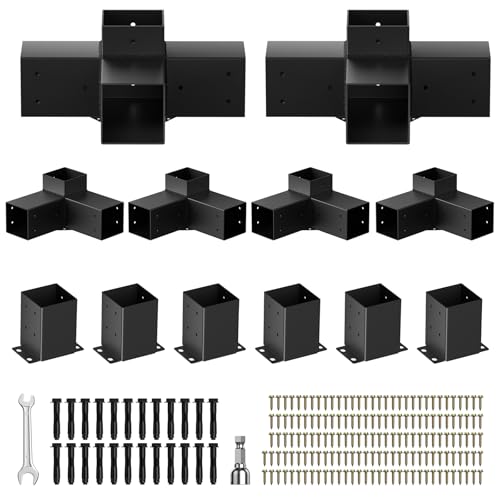
3-Way & 4-Way Pergola Brackets Kit: Upgraded 3-way & 4-way right-angle pergola brackets boost pergola stability in harsh weather. Designed for 4"x4" (actual 3.5"x3.5") sizes, the 4x4 pergola brackets are weather-resistant and sturdy, with no need to worry about storm or wind damage

Premium Craftsmanship Durable: BUDONI shade sail hardware kit is crafted from premium 304 stainless steel with an anti-rust black oxide finish, providing excellent corrosion resistance and long-lasting durability for extended outdoor use. This sun shade hardware kit withstands rain, UV solar exposure, and strong wind, making it an ideal choice for securing shade sail. This shade sail hardware delivers reliable performance while adding a modern, high-end look to sun shades outdoor patio setups.

6x6 Inch Three-Way Pergola Brackets: This durable and strong pergola bracket kit that covers wooden beams, preventing them from rotting due to rainwater and harsh sunlight. It is designed for the mainstream 6x6 Inch specifications and can accommodate actual dimensions of 5.5 x 5.5 inches (142 x 142 mm) for both soft and hardwood
Size and Dimension Impact
Because pergola pricing scales directly with square footage, the dimensions you choose’ll have a dramatic effect on your total investment. Standard sizes like 12×16 feet typically cost $7,500–$15,000, while smaller 10×10 structures run $3,000–$6,000. You’ll pay an average of $37 per square foot nationally, though this varies by material: aluminum averages $20, wood $30–$60, and fiberglass exceeds $60 per square foot.
Larger pergolas demand additional structural support and engineering complexity, increasing labor costs. Pergolas exceeding 16 feet in any dimension require reinforced beams, substantially raising expenses. Your design preferences—including louvered roofs or screening—become costlier with greater dimensions. Consider that size also impacts maintenance requirements; larger structures demand more upkeep and protection, influencing long-term ownership costs beyond initial installation. Proper joist spacing requirements become increasingly critical as pergola dimensions expand, ensuring structural integrity and longevity of the installation. Consistent fastener spacing across joists ensures your pergola maintains structural stability and visual appeal throughout its lifespan.

Premium Solid Cedar Wood Frame: Crafted from high-quality cedar wood with rich grain patterns, this pergola features a natural finish and is treated with a weatherproof stain for long-lasting durability, ensuring protection through all seasons

Note: The pergola is shipped in 8 separate boxes and may arrive at different times, please be patient

Strong Stability: The use of metal ground pile, the pergola pavilion fixed on the soil, more stable. You can also attach the pergola to other desired positions with additional anchor bolts, such as on cement. Perfect for your patio, garden, backyard or deck. Be ready to enjoy summer with your loved ones and family, gathering friends, having a barbecue, having afternoon tea, playing games, etc.
Additional Considerations and Expenses
While the base pergola cost sets your initial budget, several additional factors can greatly inflate your final expenses. You’ll encounter significant upgrades if you want enhanced pergola aesthetics or seasonal usage capabilities. Adding a roof or shade sail runs $3,000–$14,000, while gable or hip roof designs cost $5,700–$30,000. Retractable covers and weatherproof tarps add $1,500–$2,500 for year-round protection. Built-in lighting, fans, or cooling systems require $300–$2,000 in installation costs. Custom shapes and specific wood species increase expenses by $500–$600. For pergolas with integrated deck spaces, ensuring proper board alignment and spacing will enhance both aesthetics and structural integrity. If your pergola includes railings, you may need to install cable railing systems to meet local building codes and safety requirements. Don’t overlook long-term maintenance either—wood pergolas demand regular repainting and sealing at $1,492+ every few years. Cheap materials lead to rust repairs and early replacement, ultimately costing $12,000–$18,000+ over time.