How Far Can a 4×6 Beam Span for Your Pergola?
A 4×6 beam typically spans 12 to 16 feet for your pergola, though the exact distance depends on several critical variables. You’ll need to take into account your wood species—Douglas Fir and Southern Pine perform better than Redwood or Western Cedar. Grade matters too; Select Structural allows longer spans than No. 2 or No. 3 lumber. Your local load conditions, including snow and wind requirements, will affect capacity. Understanding these specifications guarantees you’re building safely and to code.
Typical Span Lengths for 4×6 Beams
When you’re planning a pergola, you’ll find that 4×6 beams typically span between 12 and 16 feet, though this range depends heavily on your rafter configuration and load requirements. For light-duty applications with 2×6 rafters spaced 16 inches on center, you can safely achieve 14-foot spans. However, maximum beam limitations tighten considerably when you use heavier 4×6 rafters, restricting spans to 12 feet or less. Common pergola configurations rarely exceed these parameters without structural compromise. When you approach the 14 to 16-foot range, deflection becomes a concern. For spans exceeding 14 feet, you’ll want to take into account laminating two 4×6 beams together or upgrading to larger stock like 6×6 or 4×8 beams to prevent sagging and guarantee long-term performance. Proper installation using heavy-duty post base brackets and correct measurement techniques will ensure your beam assembly remains stable and performs as expected. Like 6×6 cedar beams, 4×6 beams also benefit from reinforcement elements like knee braces to extend their effective span capabilities and improve overall structural integrity.

6" x 6" Four-Way Pergola Brackets: This durable pergola bracket covers wooden beams, preventing them from rotting due to rainwater and harsh sunlight. It's designed for mainstream 6"x6" specifications and can accommodate actual dimensions of 5.6x5.6 in (142x142 mm) for both soft and hardwood.Enhanced Durability: Constructed from 2mm Carbon Steel Plates with Black Powder Coating for Corrosion Resistance. Reinforced 90° Boot Structure Prevents Breakage and Deformation, Ensuring Stability.

Used for 6×6 post to attach 4x4 beam
Key Factors That Influence Beam Span Capacity
Now that you’ve established your target span range, you’ll need to understand the specific factors that determine whether a 4×6 beam can actually achieve it. Your beam’s capacity depends on wood species, grade, and mechanical properties like moment of inertia and modulus of elasticity. SPF beams offer approximately 1,200 psi bending strength and 1.6 million psi stiffness, directly affecting load ratings. Design considerations include deflection limits—typically L/360 for pergolas—which often restrict span more than strength alone. Construction techniques matter greatly; support spacing, proper post placement, and load distribution all influence performance. Environmental factors like moisture content and seasonal snow loads further impact capacity. Proper post anchoring hardware ensures secure load transfer from beams to footings, maintaining structural integrity throughout the span. For reference, double beams fastened together can achieve significantly greater spans than single beams, similar to how dual 2x12s can reach 17 to 18 feet compared to single beam limitations. These interconnected variables determine your actual maximum span.
Wood Species and Grade Considerations
Because wood species and grade fundamentally determine your 4×6 beam’s structural capacity, you’ll want to prioritize this selection before finalizing your pergola design. Douglas Fir and Southern Pine deliver superior species strength, permitting spans of 8–10 feet, while softer woods like Redwood and Western Cedar limit you to 6–7 feet maximum. Your beam grades matter equally—Select Structural and No. 1 grades allow longer spans than No. 2 or No. 3 due to fewer defects and higher allowable stress values. Glulam beams outperform solid sawn alternatives, spanning up to 10 feet versus 6–8 feet for comparable grades. Cedar species require proper treatment methods like sealing and staining every 2-3 years to maintain structural integrity and prevent decay that could compromise your beam’s long-term span capacity. For outdoor pergolas exposed to the elements, pressure-treated wood is particularly valuable as it resists moisture, rot, and insects far more effectively than untreated alternatives. Check your local building codes, as jurisdictions often mandate specific species or pressure-treated requirements for exterior structures.

DOT FMVSS108 Compliant LED

Heavy Duty Lag Screw Alternative: Eliminates pre-drilling in most woods with Zip-Tip technology. Installs 3x faster than traditional lag screws
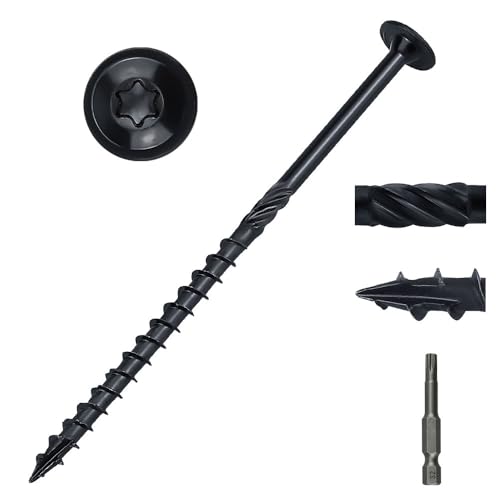
Quantity & Size: 20-Pack #14 x 6" Black Lag Screws for Wood Construction (includes a T30 Bit); Thread Diameter 0.25 inch -Head Diameter 0.545 inch -Screw Length 6"
Understanding Load and Deflection Requirements
While wood species and grade establish your beam’s material capacity, the actual span you can achieve depends on understanding how loads and deflection interact to determine real-world performance. You’ll need to calculate both live and dead loads affecting your pergola, measured in pounds per linear foot (plf). These loads directly influence how much your beam bends under stress. Deflection limits for pergolas typically follow the L/360 standard, meaning maximum deflection shouldn’t exceed your span divided by 360. For a 10-foot span, you’re limited to approximately 0.33 inches of deflection. Your load distribution pattern—whether uniform or concentrated—significantly impacts deflection calculations. For outdoor pergolas, selecting pressure-treated or naturally durable woods like cedar or redwood will enhance your beam’s long-term performance by resisting weathering and decay. Consulting your local building department ensures your pergola meets all structural requirements and code compliance before construction begins. Understanding this relationship guarantees your 4×6 beam performs safely and maintains structural integrity throughout its lifespan.
Heavy Duty Lag Screw Alternative: Eliminates pre-drilling in most woods with Zip-Tip technology. Installs 3x faster than traditional lag screws

Screw Dimensions - ~5/16" Thread Diameter - 11/16" Head Diameter - Length 6"

Heavy Duty Lag Screw Alternative: Eliminates pre-drilling in most woods with Zip-Tip technology. Installs 3x faster than traditional lag screws
Residential Load Conditions and Standards
Three fundamental load categories—dead load, live load, and environmental factors—determine whether your 4×6 beam can safely span the distance you’re planning. Your pergola design must account for dead load (structure weight) at approximately 10 pounds per square foot, plus live loads averaging 20 psf for wind and 20 psf for snow, though regional codes vary considerably.
Understanding load distribution guarantees your beam won’t fail prematurely. Most residential pergolas handle light loads effectively, but you’ll need to verify your local requirements before finalizing specifications. Building codes mandate minimum standards regardless of your area’s typical weather patterns. Check with local authorities to confirm whether your region requires additional capacity for wind or snow exposure. This verification prevents costly redesigns and guarantees compliance with safety standards. Consider selecting weather-resistant materials like those used in quality outdoor furniture to enhance your pergola’s durability against the elements. Just as proper surface preparation is critical for long-lasting finishes in deck staining, ensuring accurate load calculations during the planning phase prevents structural failures and costly repairs.
Beam Span Tables for Different Applications
To properly size your 4×6 beam for a pergola, you’ll need to consult span tables that organize maximum allowable spans by beam size, wood species, grade, and loading conditions. These tables reflect engineering standards and guarantee beam performance meets building codes. You’ll find entries organized by species—such as Douglas Fir or Southern Pine—and grades like No. 1 or Select Structural, each affecting allowable span length. Tables differentiate between live loads (typically 10-20 psf for pergolas) and dead loads, while specifying deflection limits like L/360. These standardized references account for uniform gravity loads and assume fully supported members. Pergolas offer versatile, multi-functional spaces that can enhance your outdoor living area while maintaining structural integrity. For comparison, 2×6 beams typically span 7 to 8 feet for single beams, while doubled beams can extend to 10 to 11 feet depending on pergola width and load conditions. Always verify that your local jurisdiction’s requirements align with the table data before finalizing your beam selection.

Rust Protection: post bracket hot-dip aluminum-zinc coated carbon steel ,forming an industrial-grade "sacrificial anode" protective layer on the surface,resists rust, salt spray, and moisture, providing long-lasting in harsh weather conditions

Low carbon steel, black powder coating finish

Sturdy & Heavy‑Duty Construction:These T post brackets (11" x 8", 4‑pack) are crafted from heavy‑duty carbon steel with a thickness of 3 mm, providing reliable support and connection for wooden shelves, pergolas, and other structural framing projects.
Practical Spacing Guidelines for Pergola Posts
Once you’ve selected your 4×6 beam using span tables, you’ll need to determine proper post spacing—the distance between vertical supports that’ll carry your pergola’s load. For 4×6 beams, you’ll typically achieve 8 to 10 feet between posts on center. Your post installation and spacing techniques should follow these guidelines: mark all locations before excavation, install corner posts first, then work inward for accuracy. Use laser levels or string lines to guarantee even spacing. Check local building codes for minimum requirements—they vary by region. Adjust your spacing based on wood species, roof load, and wind exposure. Closer spacing (6 feet) suits heavier loads or high-wind areas, while standard conditions support 8-foot intervals. For permanent installations, concrete footings dug below the frost line with post-mounting hardware remain among the most reliable anchoring approaches. After your pergola is constructed, maintaining the wood with oscillating multi-tool equipment will help preserve the finish and extend the lifespan of your beam connections and exposed surfaces.

Material Of 4x6 Post Base: Made of Solid Steel, Black Powder Coated, Rustproof and Strong.

Durable and Sturdy: The post base is made of high-quality carbon steel with a black powder coating, offering excellent rust and corrosion resistance.

6x6 Inch Three-Way Pergola Brackets: This durable and strong pergola bracket kit that covers wooden beams, preventing them from rotting due to rainwater and harsh sunlight. It is designed for the mainstream 6x6 Inch specifications and can accommodate actual dimensions of 5.5 x 5.5 inches (142 x 142 mm) for both soft and hardwood
Weather and Environmental Impact on Outdoor Beams
While you’ve carefully selected your 4×6 beam and positioned your posts according to engineering standards, environmental factors will ultimately determine how long your pergola structure lasts. You’ll need to prioritize moisture management by maintaining at least 25 mm air gaps behind cladding and elevating beams 300 mm off ground. These measures prevent fungal decay and rot that compromise structural integrity.
UV protection proves equally critical. Unprotected wood exposed to direct sunlight loses integrity faster than shaded alternatives, as UV rays break down lignin and cause brittleness. In coastal environments, salt-laden air accelerates moisture absorption and corrosion of metal fasteners. Temperature fluctuations and freeze-thaw cycles stress untreated wood, causing cracks.
You should apply UV-blocking finishes and protective coatings while ensuring proper drainage and ventilation. Consider using deep-penetrating waterproof sealants to repel moisture and prevent swelling, warping, and rot in your pergola beams. For beam attachment, secure fasteners such as ½-inch diameter bolts spaced according to local building codes to ensure your structure maintains long-term stability. Regular inspections detect early degradation signs, extending your pergola’s lifespan considerably.
Structural Alternatives for Extended Spans
When you’re designing a pergola that demands spans beyond what a standard 4×6 beam can safely handle, you’ll need to evaluate structural alternatives that enhance load capacity without requiring massive timber sections. Pultruded fiberglass beams span up to 22 feet with minimal support columns, offering superior strength-to-weight ratios. Cellular PVC beams with aluminum cores provide excellent span strength, rot resistance, and design flexibility. Steel beams deliver high-strength performance but require protective coatings and professional installation. Double beams bolted on either side of posts markedly improve load capacity. For a 20-foot span, engineered lumber such as LVL (laminated veneer lumber) can safely span the full distance at comparable depths to solid dimensional lumber. You can also combine these materials with secondary support systems—cross bracing, notched connections, and intermediate posts—to safely extend spans while maintaining structural integrity and aesthetic appeal. Securing these structural components requires heavy-duty galvanized screws or lag bolts anchored into the pergola’s framing to ensure maximum stability and durability.