
How to Square Posts for a Perfect Pergola Installation
You’ll square your pergola posts using the 3-4-5 method for accuracy. Measure 3 feet along your reference line, 4 feet perpendicular, then verify the diagonal equals 5 feet. Use multiples like 6-8-10 for larger dimensions. Install post bases with heavy-duty anchors on concrete, ensuring they’re plumb with temporary bracing. Verify all four corners before final fastening. Secure posts prevent leaning and structural failure. The specific steps for achieving perfect alignment are covered in detail ahead.
Laying Out Post Locations
Before you dig a single footing, you’ll need to establish precise post locations using reference lines and baseline measurements. Start by selecting your house’s outer wall or an existing structure as your reference point. String lines will serve as your baseline, with permanent markers denoting specific measurements for accuracy.
Snap lines across both north-south and east-west directions to establish your footing center points. This creates a visual guide ensuring your posts align perfectly with your pergola design. Determine your post spacing to create a symmetrical structure, then extend a masonry line between marked stakes to outline your complete post perimeter. Use a measurement tape to verify all dimensions match your pergola plan before proceeding with installation. Before submitting your installation plans, check your local zoning permit requirements to ensure your pergola design complies with municipal regulations. Just as wood preparation and cleaning ensures proper stain absorption on deck boards, accurate post location layout ensures your pergola structure will be stable and properly aligned.

Ten-times stronger than typical thermoplastic

✅ No Pre-Inscription Design – Offers a blank surface for custom engraving or writing to match your specific boundary marking needs.

Precision Layout Accuracy: This bolt hole marker is designed for precise sill plate layout on framed walls. Designed as a professional hole marking tool, it creates clean, visible marks aligned with anchor bolts, supporting consistent drilling accuracy.
Using the 3-4-5 Method
Now that you’ve established your post locations and reference lines, you’ll use the 3-4-5 method to guarantee every corner is perfectly square.
This construction technique relies on the Pythagorean theorem‘s fundamental principle. Measure 3 feet from your corner along the reference line and mark it. Then measure 4 feet along the perpendicular line from the same corner point and mark that location. Stretch your tape measure between these two marks—the diagonal distance must equal exactly 5 feet for measuring accuracy.
If your measurement doesn’t reach 5 feet, adjust your stakes or string lines accordingly. Recheck until you achieve the precise 5-foot measurement. For larger pergolas, use multiples like 6-8-10 or 9-12-15 to maintain accuracy across bigger dimensions. Verify all four corners before proceeding with post installation. For temporary or flexible setups, consider using sturdy poles placed in planters as an alternative to traditional in-ground installation. Ensuring your posts are securely anchored in concrete will provide the foundation necessary to support the weight of your pergola and roof structure once construction progresses.
Installing Post Bases on Concrete
Once you’ve verified that all four corners are perfectly square, you’re ready to transfer those reference points onto your concrete slab and install the post bases. Begin concrete preparation by verifying the slab thickness exceeds your drilling depth and testing concrete strength with a hammer. Mark anchor points at each corner’s inside edge using permanent marker, ensuring obstruction-free placement. Using a hammer drill with carbide-tipped masonry bits, drill holes perpendicular to the surface, reaching 1/4 inch below your required embedment depth. Install Simpson Strong-Tie post bases or equivalent hardware into the drilled holes using heavy-duty screw anchors. Tighten fasteners with a wrench until the base has no play when wiggled. This post base installation creates essential standoff, protecting timber posts from moisture wicking and rot. For maximum durability and longevity, consider using treated wood or applying post guards to prevent rot and moisture damage over time. Ensure all fasteners are galvanized or stainless steel to resist corrosion and extend the life of your pergola installation.

【FIT NOMINAL 6X6 WOOD POSTS】 Designed for nominal 6x6 wood posts (actual 5.5" x 5.5" on market), it provides a snug, gap-free fit and can be easily installed on existing concrete or wood decks

Heavy Duty Galvanized Steel: This 6x6 post base made from thick galvanized steel for reliable outdoor support. The rust-resistant coating helps protect the 6x6 post base from weather exposure, making it suitable for concrete foundations, decks, patios, pergolas, and gazebos.

Fits 2" x 2" square sign posts — insert the sign post into the anchor base
Bracing and Plumbing Posts
Your posts won’t stay square without proper bracing and plumbing, so you’ll need to prepare them carefully before raising them into position. Raise each post individually, guaranteeing it’s plumb before installing temporary bracing. Use 2×4 or 2×6 lumber to brace posts, which provides essential post stability during installation. Adjustable post bases allow flexibility as you make fine adjustments. Don’t fully fasten posts to their bases until all are plumb and aligned. Temporary bracing lets you correct any deviations before permanent fastening. Once you’ve verified plumbness, secure posts using structural wood screws with rust-resistant hardware, following the same fastening principles used in deck railing installation for maximum durability. Double-check alignment again before removing temporary bracing, using the 3-4-5 method to verify square corners one final time. This methodical approach guarantees your pergola structure is square and stable.

Yesland's adjustable half-column base adapts to different sizes of wooden columns, such as 1.5 "x1.5", 2 "x2", 2 "x4", 4 "x4", etc., Suitable for deck post supports, wood pile welding project.
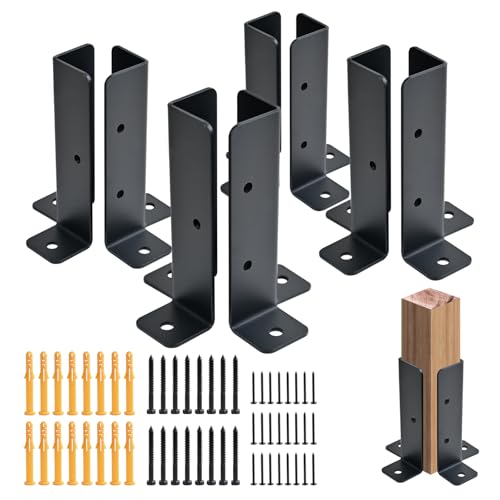
Adjustable Deck Post Anchor Base Brackets Size: 1.37in x 1.51in x 5in; Thickness: 2.8 mm, Hole diameter (2 types): φ0.25in (3 pcs),φ0.3in (2 pcs). Which accommodate different sizes of wooden columns, such as 1.5 "x1.5", 2 "x2", 2 "x4", 4 "x4" post, etc. Please check the size you need before purchasing

CUSTOMIZABLE SUPPORT SYSTEM - 3 removable stays let you dial in the perfect compression — from gentle post-op support to firm everyday hold. Adapts to every stage of recovery, whether you're fresh out of surgery or easing back into your routine.
Checking Alignment and Squareness
After you’ve braced and plumbed your posts, you’ll need to verify they’re properly aligned and square before moving forward with assembly. Use alignment tools like spirit levels to confirm vertical positioning and check front-to-back tolerance. Take diagonal measurements between opposite corners of your installed frame—they must match exactly for squareness verification. If readings don’t align, reposition posts or bases as needed. Double-check with a framing square at frame attachment points to confirm 90-degree angles throughout. Don’t tighten anchor bolts permanently until you’ve completed all alignment checks. Keep temporary braces in place during this verification process. Maintaining proper alignment is especially critical for pergola beams, as unsupported spans typically cannot exceed 6 to 8 feet without risking sagging or structural failure. For optimal longevity, ensure your posts are constructed from pressure-treated wood or naturally durable woods to resist weathering and decay once your pergola is fully installed. This thorough inspection prevents structural compromises and guarantees your pergola installation meets precise specifications.
Finalizing and Securing Posts
Now that you’ve verified your posts are properly aligned and square, it’s time to permanently secure them using appropriate brackets and fasteners. Select galvanized or stainless steel brackets designed for your post types—whether wood, composite, or metal. Apply structural wood screws or hex head bolts rated for outdoor use, ensuring compatibility with your materials. Tighten all fasteners securely with a wrench to prevent future movement and shifting. Your fastening techniques should follow manufacturer specifications for torque and bracket placement. For concrete installations, use post bases fitted over anchored bolts. For deck applications, secure 90-degree strap brackets to structural beams, never solely to deck boards. Before loading your pergola structure, allow concrete footings to cure fully and verify that all exterior-grade fasteners are corrosion-resistant. Verify local building codes for required fastener spacing and bracket strength ratings. Just as proper adhesion is essential when applying new finishes to wood surfaces, selecting the correct fasteners ensures your pergola posts remain secure and stable for years to come.