How Long Does Wisteria Take to Cover a Pergola?
You’ll wait 2–5 years for full pergola coverage, though the timeline varies greatly by species and conditions. Chinese wisteria covers faster than American varieties, which need longer establishment periods. You’ll see first flowers in 3–4 years with ideal sunlight (six+ hours daily), well-drained soil, and consistent moisture. Biannual pruning in July/August and January/February accelerates blooms and structural development. Climate zone, species selection, and your training approach dramatically shift these timelines—discover how each factor compounds your coverage rate.
Understanding the Initial Growth Phase
When you plant wisteria on a pergola, you shouldn’t expect immediate coverage—the establishment period typically yields only 30–60 cm (1–2 ft) of growth in the first year, with the plant’s energy directed toward root development and basal stem formation rather than lateral spread. During this critical phase, you’ll observe minimal above-ground expansion while the root establishment occurs beneath the soil surface. To support this foundational growth, you must maintain consistent watering and shield the plant from harsh environmental conditions.
Key growth factors include soil quality—fertile, moisture-retentive, well-drained soil accelerates establishment—and location selection favoring full sun exposure in sheltered, south- or west-facing positions. This patience during year one ultimately enables the vigorous lateral and vertical extension you’ll witness in subsequent years.
The First Flowering Timeline
While you’re establishing your wisteria on the pergola, you’ll likely wait 3–4 years before witnessing the first flowering display, though this timeline varies considerably depending on plant type and growing conditions. Chinese wisteria (Wisteria sinensis) may flower as early as the second year, whereas American varieties typically require 5–7 years. Grafted specimens flower earlier than seed-grown plants.
Optimal flowering conditions demand at least six hours of daily sunlight, consistent moisture during July through September, and adequate potassium levels in your soil. Your wisteria care routine greatly impacts bloom timing; implement twice-yearly pruning in July/August and January/February to encourage flowering without disrupting bud formation. Root pruning in late fall or early spring further stimulates blooming. Spring frosts can damage developing buds, delaying visible flowers despite proper care.
Training Your Wisteria for Optimal Structure
Once you’ve selected your planting location, establishing a robust structural foundation becomes your primary concern before the vigorous growth begins. You’ll need 4×4 lumber posts with 2×4 crosspieces minimum for your pergola framework. Cedar or similar weather-resistant materials guarantee durability against wisteria’s substantial mature weight. Concrete footings must secure all posts firmly into the ground. For optimal structural integrity, ensure posts are fastened with #10 x 3 screws that penetrate at least 1 inch into the joist framework. Heavy-duty post base brackets will provide additional stability as your wisteria matures and adds significant weight to the structure.
Your wisteria training strategy involves systematic pruning during two critical windows: July/August and January/February. After flowering concludes, cut summer shoots to 6 inches. Winter pruning reduces shoots to 3-5 buds. You must remove unwanted shoots and root suckers regularly to maintain structural support integrity. This disciplined approach prevents excessive foliage overgrowth while promoting superior flowering performance and preventing structural damage from the plant’s vigorous expansion.

【Upgraded 2mm Thick Reinforced Steel Structure】 Made of upgraded 2mm hot-dip galvanized steel, these brackets are thicker and stronger than standard 2mm ordinary...
Guiding Vertical and Horizontal Growth
Because wisteria’s vigorous woody stems generate substantial weight as they mature, you’ll need to establish strategic directional guidance from the plant’s earliest growth stages. Begin by securing main stems to vertical support structures using soft, preservative-treated twine applied loosely to prevent damage and girdling. Space these ties regularly along the posts to distribute support evenly as the vine thickens.
Simultaneously, direct lateral training by tying horizontal shoots along crossbeams and rafters to promote broad coverage. This dual approach—combining upward vertical support with outward lateral training—maximizes your pergola’s flowering display. Employ wisteria’s natural counterclockwise twining habit in Chinese species by wrapping branches directionally along your structure. Regular twice-yearly pruning reinforces this balanced growth pattern, preventing unchecked vertical growth while encouraging the lateral branching necessary for thorough pergola coverage. To protect your pergola structure from deterioration, consider applying automotive or marine wax to any aluminum components to maintain their finish and durability.

Soft & Elastic: Our plant ties designed to gently support growing plants without scratching or damaging stems, ideal garden ties for plants, vines, tomatoes and delicate indoor or outdoor greenery

LONG AND THICK ENOUGH - Long: 656 Feet Thick: 2mm Very durable, you can use our jute twine for a long time

[Premium Material & Ample Length]: Our twist ties are made from high-quality, rustproof, and odorless PE with an eco-friendly and durable green coating. Unlike PVC, PE does not peel or become too rigid. With a length of 328 feet, these ties are durable enough for long-term use, providing an exceptional gardening experience.
Coverage Development Over Multiple Seasons
As your wisteria establishes itself through its first growing season, you’ll observe rapid vertical growth reaching 5 to 10 feet under ideal conditions, though the initial foliage remains sparse and concentrated at the base and lower sections. By the second season, you’ll notice horizontal expansion across pergola beams, with side shoots filling gaps. Summer and winter pruning encourages branching and controls growth direction. By year three, vines reach the pergola’s top edges, forming a loose canopy with denser foliage. Year four brings near-complete coverage with thickened woody stems supporting mature blooms. Throughout these stages, seasonal changes in foliage color emerge while growth challenges like overcrowding require regular pruning maintenance. Established wisteria then maintains dense coverage for years with minimal intervention.
How Long Does Full Coverage Take?
The timeline for achieving full pergola coverage depends heavily on species selection and growing conditions, with most wisteria vines requiring 2–3 years under favorable circumstances. Japanese wisteria (Wisteria floribunda) leads in speed, typically establishing complete coverage within this window, while Chinese wisteria may need 3–5 years. Silky wisteria progresses more slowly, often exceeding 5 years.
Your location greatly impacts wisteria growth stages. In temperate climates, expect up to 7 years for full coverage, while cooler northern regions extend timelines beyond this. Ideal sunlight conditions—6+ hours daily—accelerate development considerably. Consistent moisture, well-drained soil, and young, vigorous plants further expedite coverage. Grafted specimens outpace seed-grown alternatives. Conversely, poor drainage, drought stress, or inadequate support structures greatly delay your pergola’s full transformation.
Pruning Schedule for Maintained Coverage
Maintaining your wisteria’s pergola coverage requires a disciplined two-pruning annual schedule that balances structural control with flower production. You’ll execute summer pruning in July or August, cutting shoots back to 5-6 leaves after flowering concludes. This seasonal maintenance redirects energy toward flower bud formation rather than excessive vegetative growth.
Follow with winter pruning in January or February when foliage drops completely. Cut previously summer-pruned shoots further back to 2-5 buds, creating visible framework structure. These pruning techniques establish short flowering spurs that enhance bloom visibility and prevent the plant from sprawling uncontrollably.
Skipping either cut allows aggressive growth that damages pergola structures and hides flowers beneath excessive foliage. Consistent biannual pruning maximizes blooms while maintaining structural integrity and manageable coverage throughout the growing season.

CLEAN CUTS FOR LIVE GROWTH: Bypass blade design is ideal for pruning delicate flower stems and green growth, helping reduce crushing and plant damage while cutting stems and small branches up to 5/8” in diameter

ULTRA SHARP - Much less effort to cut branches with our pruning shears. Crafted from premium SK5 steel with titanium coating, our garden scissors and garden clippers boast exceptional durability and sharpness. A perfect pruning shears for gardening and a must-have garden tool, hedge clippers pruners for gardening
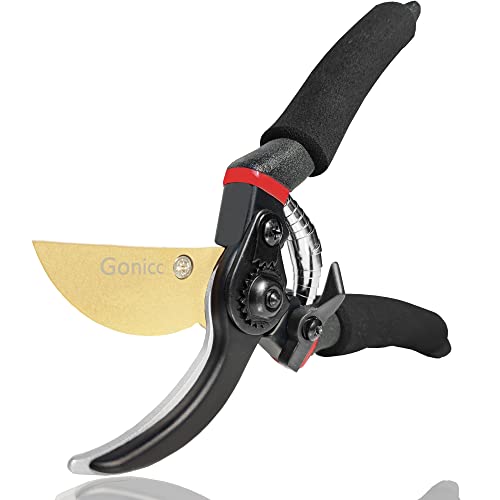
Drop-forged construction delivers exceptional durability and sturdiness for long-term heavy garden use.
Environmental Conditions That Accelerate Growth
Environmental conditions profoundly shape how quickly wisteria establishes pergola coverage, and you’ll achieve the fastest growth by optimizing multiple interconnected factors simultaneously. Your sunlight requirements demand a minimum of six hours daily direct exposure—full sun positions accelerate vine extension and flower bud development most effectively. Simultaneously, prioritize soil amendments to create deep, fertile, well-drained conditions with neutral to slightly alkaline pH. Loamy, rich soils promote vigorous establishment, though you can amend clay with organic matter for comparable results. Maintain consistent soil moisture without waterlogging during the first two years to support rapid root expansion. In warmer USDA zones with longer growing seasons, you’ll notice substantially accelerated coverage rates. Sheltered locations protect against frost damage and wind stress, further maximizing seasonal development and pergola colonization speed.
Choosing the Right Wisteria Species
Which wisteria species you select fundamentally determines your pergola’s coverage timeline and aesthetic outcome, since growth rates, bloom characteristics, and hardiness vary dramatically across cultivars. Chinese Wisteria dominates rapidly, reaching 10–30 feet and flowering en masse in April before foliage emerges. Japanese Wisteria grows more moderately with longer 12–18 inch racemes that bloom gradually. For constrained spaces, American Wisteria or Silky Wisteria suit your growth preferences better, offering slower spread and shorter flower clusters. Kentucky Wisteria excels in cold climates, tolerating -40°F while maintaining moderate vigor. Your wisteria varieties selection hinges on climate tolerance, available space, and desired bloom timeline. Assess these factors alongside environmental conditions to optimize pergola coverage rates and flowering displays.

Wisteria is a large vine best-suited to a spot where it has plenty of room.

Long-Lived Perennial Vine: Wisteria is a perennial deciduous vine that sheds its leaves every winter and sprouts and bloom anew in spring, sometimes reblooming in summer; it has an exceptionally long lifespan, lasting for decades or even centuries, and serves as a vital nectar source for pollinators like bees and butterflies

Proper Size: Wisteria garland is a symbol of love and happiness, each silk wisteria garland measures 2.2m/7.2ft, each wisteria contains 10 flower strings, and each flower string is 35cm/14inch in length