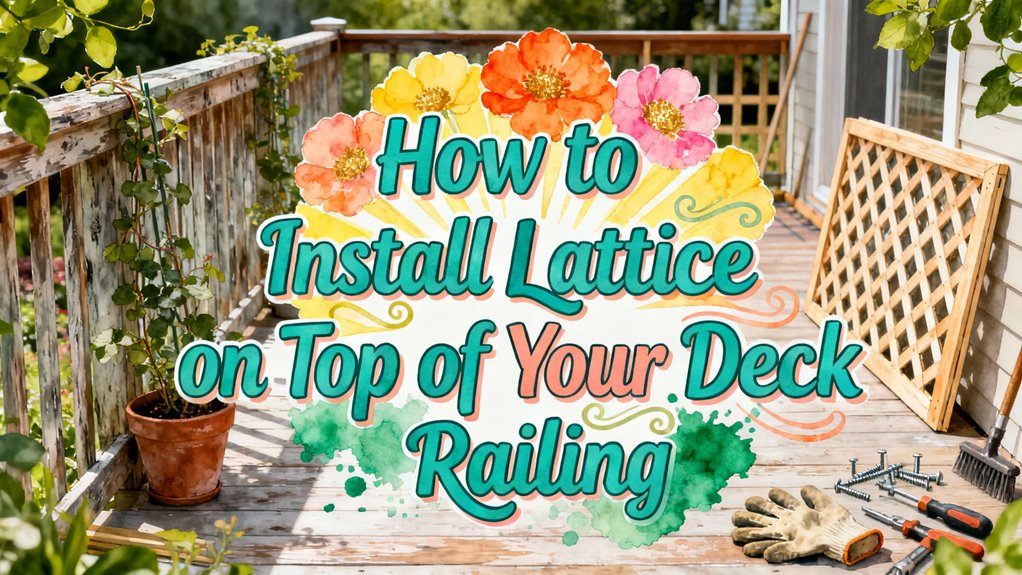
How to Install Lattice on Top of Your Deck Railing
You’ll start by measuring your deck railing accurately and selecting lattice material—wood, vinyl, or composite—based on your climate and maintenance preferences. Cut pressure-treated 2×4 boards to frame your opening, then measure and cut lattice panels with a 1/2-inch width and 1-inch height allowance for expansion. Secure the frame to your deck posts using stainless steel screws pre-drilled every 18-24 inches. Attach lattice panels with 1-inch panhead screws and washers for even pressure distribution. Finally, apply primer and protective finish for durability. The complete installation process involves several additional considerations that’ll enhance your project’s longevity.
Materials and Tools Required
Before you’ll need to gather the right materials and tools. For lattice panels, choose from wood, vinyl, or composite based on your outdoor design ideas and durability preferences. You’ll also need pressure-treated lumber for framing, stainless steel fasteners, and outdoor caulk for sealing gaps.
Your essential tools include a measuring tape, saw, drill with screwdriver bits, and level. Don’t forget safety equipment like gloves, goggles, and dust masks.
For framing support, gather pressure-treated lumber, corner brackets, and mending plates to reinforce joints. Include hinges if you’re creating access panels.
Consider optional finishing materials like outdoor paint or stain—critical lattice maintenance tips that protect against moisture and UV damage. Primer improves adhesion and extends lifespan considerably. Pre-installation surface cleaning guarantees better durability and professional results. For wood lattice, apply multiple coats of polyurethane to ensure robust protection against the elements and maintain appearance over time. If your lattice is made from wood, note that proper cleaning and drying of the surface can suffice for good finish adhesion without requiring sanding.

[Phillips Pan Head Self-tapping Screw]: The package comes with 100pcs of white pan head self-tapping screw in #10 thread diameter, 1inch Thread Length, 0.37inch Head Dia, 0.13inch Head Thickness.


APPLICATIONS: cabinets, casebacks, drawers, upholstery, soffits, underlayment, lattice and sheathing
Selecting the Right Lattice Panel Type
What material you choose for your lattice panels will ultimately determine your deck’s aesthetic appeal, maintenance requirements, and long-term durability. When comparing wood versus vinyl, consider your climate and commitment to upkeep. Wood offers traditional charm but demands regular staining and painting, especially in humid environments. Vinyl requires minimal maintenance and resists rot and insects, making it ideal for high-moisture areas. If you select wood lattice, Southern Yellow Pine is a cost-effective option with natural resistance to decay that can enhance your deck’s longevity when properly maintained.
Next, evaluate lattice design options based on your privacy needs. Square cell patterns provide versatile, classic coverage, while diamond cell designs deliver decorative appeal. Tighter spacing increases privacy but reduces airflow; looser patterns enhance ventilation.
Select framed panels for finished aesthetics on trellises or gazebos, or unframed panels for continuous wall coverage. Budget constraints matter too—wood costs less initially, while vinyl offers superior lifetime value despite higher upfront expenses.

Decorative screen panels can enhance both indoor and outdoor spaces, creating the perfect accent or focal point

Decorative screen panels can enhance both indoor and outdoor spaces, creating the perfect accent or focal point

Decorative screen panels can enhance both indoor and outdoor spaces, creating the perfect accent or focal point
Preparing and Cutting Your Frame
Your lattice installation’s success depends on accurate measurements and properly prepared framing, so you’ll want to start by measuring the exact distances between your deck posts and from the deck floor to its underside. Subtract ½ inch from the width and 1 inch from the height to guarantee proper fitting clearance.
Cut pressure-treated 2×4 boards to your frame measurements using precise cutting tools like circular or miter saws for clean edges. Prepare additional lumber for a center support piece that prevents sagging and enhances rigidity. For optimal durability, ensure your pressure-treated lumber is straight and properly graded to prevent warping over time.
Your cutting techniques should account for your corner bracket style—choose between miters or square cuts accordingly. Label all cut pieces clearly before assembly to streamline your installation process and minimize errors during the framing stage. Just as hidden fastener systems ensure your composite deck boards sit flush without visible hardware, proper frame preparation ensures your lattice installation remains secure and visually seamless.

By Crafters, For Crafters: Crafting and building with wood is our number one priority. Bringing you more of the wood craft supplies you love is our job. Please dont hesitate to get in touch
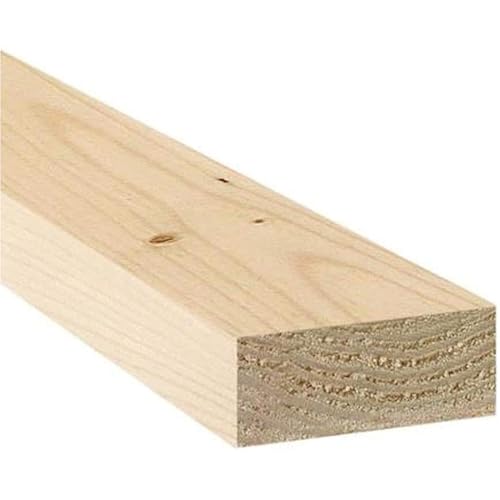
By Crafters, For Crafters: Crafting and building with wood is our number one priority. Bringing you more of the wood craft supplies you love is our job

Measuring and Cutting Lattice Panels
Once you’ve assembled your frame, you’ll move on to preparing the lattice panels themselves. Accurate lattice dimensions are essential for proper installation. Measure your deck railing‘s total length and height at multiple points to account for irregularities. Subtract 1/2 inch from the width and 1 inch from the height for each panel to allow expansion room.
Lay your lattice panel on a flat surface and mark cutting lines with a pencil. Use a straight edge to guarantee accuracy. Double-check all measurements against your recorded dimensions before cutting.
For cutting precision, employ a circular saw or handsaw with a fine-toothed blade. Clamp the panel securely and cut slowly along marked lines. Support both sides of the cut to prevent bending. Sand rough edges afterward for a professional finish.
Assembling the Frame Structure
Before you’ll need to construct a sturdy frame that’ll hold everything securely in place. Lay your frame components face down on a flat surface to guarantee accuracy. Use 2×4 or 2×6 pressure-treated lumber, checking corners with a carpenter’s square for proper alignment.
Install mending plates and flat corner braces at each corner joint, positioning hardware ¼-inch from the edge and securing with ¾-inch flathead screws. For larger frames, add a center stile connected with T-plates for extra support. This reinforcement prevents racking and enhances frame durability while maintaining frame aesthetics.
Drive all fasteners flush to avoid protrusions that’ll interfere with lattice installation. Before attaching the lattice panel, prime and paint your frame with two coats of gloss enamel trim paint, allowing complete drying between coats. This protects all surfaces against moisture intrusion, a critical concern that mirrors the protection strategies used in professional deck finishing. If your lattice installation will result in a structure over 200 square feet, you may need to obtain a full construction permit from your local jurisdiction.
Attaching Lattice to the Frame
With your frame primed, painted, and fully cured, you’re ready to secure the lattice panel using stainless steel screws as your primary fastening method. Pre-drill holes every 18-24 inches around the lattice edge to prevent splitting. Use 1-inch panhead screws with washers to distribute pressure evenly. Drill clearance holes slightly larger than screw shanks, allowing for natural wood expansion and contraction. Install screws using a cordless drill at consistent depth and angle, avoiding overtightening that could damage the panel.
For reinforcement, fasten seams where panels meet with two rows of screws. Attach corner braces directly to deck posts for additional stability. Space all fasteners uniformly to prevent uneven stress distribution. Consider complementing your lattice installation with neutral tone furniture to create a cohesive outdoor aesthetic that balances the visual elements of your deck structure. These fastener types work together to create a secure, durable installation that accommodates seasonal material movement.
Installing Panels on Your Deck Railing
Now that you’ve secured your lattice to the frame, you’re ready to install the completed panels onto your deck railing system. Position corner braces to attach your finished panels directly to the deck posts, ensuring stability and secure positioning. Use a pry bar to raise each panel tightly against your porch fascia for proper alignment. Maintain adequate ground clearance beneath panels to prevent wear and tear on both the panel and ground surfaces. Consider your lattice patterns and decorative accents when positioning panels for best visual impact. For accessibility, mount T-hinges or strap hinges on the frame top to allow storage access underneath. Use two hinges for panels shorter than eight feet, adding a third hinge for longer panels to distribute weight evenly. To maintain the appearance of your lattice panels over time, perform routine spot cleaning with a dedicated outdoor cleaner to keep them looking fresh. Selecting weather-resistant materials for your lattice panels ensures durability and long-term performance against environmental exposure and UV damage.
Painting, Staining, and Protective Finishing
Once your lattice panels are mounted and secured, you’ll want to protect them with a quality exterior finish. Start by applying a primer suited to your lattice material—oil-based for wood, specialized vinyl primer for vinyl surfaces. Primer guarantees superior paint adhesion and durability.
For color selection, consider your deck’s aesthetic while accounting for UV exposure and weather resistance. You can apply finish using spray, brush, or roller methods. Spray application covers panels fastest at roughly four minutes per side, requiring only two to three coats. Brush and roller work best for detailed lattice patterns and edges.
If staining vinyl lattice, choose stains specifically formulated for vinyl surfaces. For wooden lattice, spar urethane provides superior UV resistance and flexibility, protecting your lattice from sun and moisture damage for years. Pressure-treated wood lattice offers exceptional resistance to moisture, rot, insects, and UV damage, making it a durable long-term choice for outdoor applications. Clean and thoroughly dry all surfaces before application to guarantee even coverage and ideal protection against the elements.

Interior/Exterior use on new or previously painted drywall, concrete, wood, masonry, metal and glossy or difficult surfaces

Use to prime interior surfaces such as walls, doors, trim, plaster, concrete and more

Designed for interior and exterior surfaces