Carriage Bolts vs. Lag Screws: Best Choice for Your Pergola
You’ll find carriage bolts deliver superior shear resistance with tensile strength reaching 100,000 psi in stainless steel, making them ideal for pergola connections. Lag screws offer excellent pull-out strength (205–307 lbs per inch of embedment) but concentrate stress at insertion points. Carriage bolts require nuts and washers, while lag screws need wrench tightening. Consider your load requirements, aesthetic preferences, and maintenance capacity—each fastener type performs distinctly under different structural demands.
Design and Structure Characteristics
While carriage bolts and lag screws both secure pergola components, they’re fundamentally different fasteners with distinct mechanical advantages.
Carriage bolts feature a smooth, round head with a square neck underneath that prevents rotation when tightened into wood. This design guarantees reliable fastener function through even load distribution across multiple boards. The smooth shaft minimizes wood fiber damage, preserving structural integrity in softer woods like cedar.
Lag screws employ a hexagonal head and pointed, threaded shaft that bites directly into wood fibers. This design maximizes withdrawal resistance but concentrates stress at the insertion point, potentially weakening soft materials over time.
You’ll find carriage bolts superior for applications demanding consistent clamping force throughout layered connections, while lag screws excel in single-material wood-to-wood anchoring where deep embedding is advantageous.

PROFESSIONAL FASTENING PERFORMANCE: Delivers strong, secure through-bolt connections while maintaining a clean, finished appearance. These timber bolts eliminate exposed bolt ends, improve safety, and ensure reliable fastening performance.
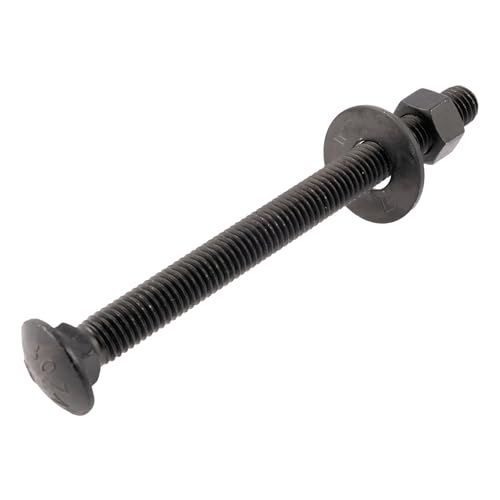
Diameter: 1/2" | Length: 6" | Head diameter: 1.062" | Nut diameter: 1/2" | Nut wrench size: 3/4" | Washer outside diameter: 1-3/8"

Thread Size: 1/4-20; Thread Pitch: 20 TPI; Thread Type: Coarse Thread; Screw Head Diameter: 0.58" (14.8mm); Round Head Height: 0.12" (3.2mm); Length (including the neck): 2 inch.
Load-Bearing Capacity and Strength Comparison
When you’re selecting fasteners for your pergola’s structural joints, understanding how carriage bolts and lag screws perform under different loading conditions becomes critical to long-term durability. Through load capacity analysis and strength testing, carriage bolts demonstrate superior shear resistance due to their square shoulder, which prevents rotation under lateral forces. Lag screws excel in pull-out strength, offering approximately 205–307 lb per inch of threaded embedment, making them ideal where withdrawal forces dominate. Your capacity requirements depend on bolt diameter, length, and material grade. Stainless steel variants reach 100,000 psi tensile strength versus carbon steel’s 60,000 psi. For pergolas with significant overhead loads, consulting local building codes ensures your fastener selection meets structural requirements. Structural soundness to support specified loads is essential for any elevated outdoor structure. Match your fastener selection to your loading direction: carriage bolts for shear-dominant applications, lag screws for tension-dominant installations.
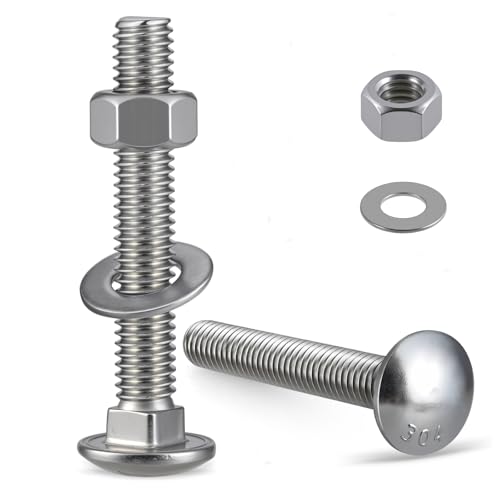
Screw Type:3/8"-16 carriage bolts, each paired with a matching hex nut, flat washer

Strong Carriage Bolts: Carriage bolt is dome head bolt fastener with a locking neck style, which prevents turning when the nut it tightened or removed. Can be used in wood, metal applications
Screw Type:5/16"-18 carriage bolts, each paired with a matching hex nut, flat washer
Installation and Preparation Requirements
Because you’re working with two fundamentally different fastening mechanisms, your installation approach and tool requirements’ll vary markedly between carriage bolts and lag screws.
For lag screws, you’ll need a wrench or socket to tighten the hexagonal head directly into wood. Carriage bolts demand additional components—a nut and washer—requiring two-tool tightening from opposite ends.
Pilot holes prove essential for both fasteners. Lag screw pilot holes should match the screw’s root diameter, facilitating easier installation and preventing wood splitting. Carriage bolt pilot holes must accommodate the bolt’s shank diameter, allowing smooth passage through materials.
You’ll drill pilot holes first, then insert your fastener. With lag screws, you drive directly into wood. With carriage bolts, you pass the bolt through aligned materials, then secure with washer and nut. Proper pilot hole sizing guarantees tight, durable joints regardless of fastener type. For structural applications like deck construction, ½-inch diameter bolts spaced according to code specifications provide the load-bearing security required for long-term stability.

DRIVES EYE LAG SCREWS — installs eye lag screws up to 4-1/2 in. into wood or metal quickly and cleanly

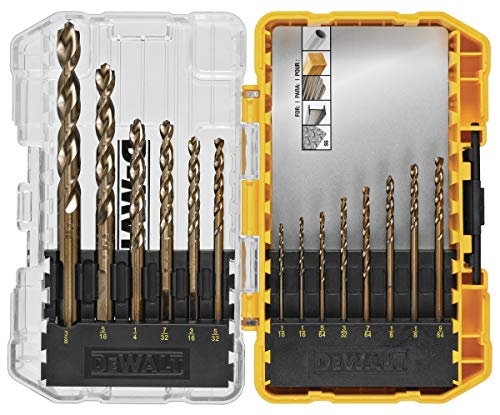
Connectable accessory storage system to optimize storage space of drill bits for wood, metal or i-beams
Aesthetic Appearance and Finish Options
Since you’re building a pergola that’ll be on display, the visual distinction between carriage bolts and lag screws matters considerably. Carriage bolts feature smooth, rounded heads that sit flush with surfaces, delivering clean aesthetics ideal for visible joints. Their square necks prevent rotation, eliminating exposed hardware concerns.
Lag screws, conversely, present hexagonal or square heads protruding above surfaces—a utilitarian appearance requiring decorative covers for refined finishes.
Regarding decorative finishes, you’ll find carriage bolts available in zinc-plated, hot-dip galvanized, stainless steel, and brass options. Zinc-plated delivers shiny silver; galvanized offers matte gray durability; stainless provides polished corrosion resistance; brass supplies ornamental gold tones.
Lag screws typically come in zinc-plated, galvanized, and stainless variants, though paint or powder-coating options exist. Your finish selection directly influences your pergola’s visual harmony with surrounding landscapes.
Material Protection and Durability Considerations
For a pergola that’ll withstand years of weather exposure, your fastener choice greatly impacts structural longevity and maintenance demands.
Lag screws grip wood tightly through coarse threads, reducing pull-out risk in soft wood. Carriage bolts, however, distribute load more evenly via nuts and washers, minimizing localized compression damage and extending fastener lifespan.
Both options accept corrosion-resistant treatments. Hot-dip galvanized variants provide superior moisture protection, while stainless steel (18-8 or 316 grades) resists rust in coastal or humid climates. Electroplated fasteners offer moderate weather resistance but degrade faster under harsh conditions. Proper curing and drying of any protective coatings on fasteners requires attention to temperature and humidity levels to ensure the treatments adhere correctly and provide lasting protection. When planning your pergola structure, calculating board feet for lumber helps ensure you have adequate material for a sturdy foundation that will properly support your fastening hardware.
Carriage bolts’ square necks prevent rotation, reducing wear on surrounding wood. Untreated steel fasteners invite rust and should be avoided entirely for outdoor applications. Select treatments matching your pergola’s environmental exposure for ideal durability.
Cost and Budget Implications
While durability determines your pergola’s lifespan, the fastener you’ll select must also align with your project budget. Your cost analysis reveals that lag screws command higher per-unit prices, typically $0.35–$1.42 depending on size and coating. Carriage bolts offer lower upfront costs but require additional hardware—nuts and washers—that accumulate expenses in large projects.
For budget planning, consider lifecycle costs beyond initial purchase. Lag screws may corrode faster without proper coatings, necessitating replacements that inflate long-term expenses. Carriage bolts allow simple nut tightening during maintenance, reducing replacement frequency and labor costs.
Installation labor varies greatly: lag screws require pilot drilling and torque precision, while carriage bolts demand two-tool installation. Stainless steel options minimize maintenance but increase initial investment for both fastener types, making informed budget planning essential for ideal pergola value.
Strong Carriage Bolts: Carriage bolt is dome head bolt fastener with a locking neck style, which prevents turning when the nut it tightened or removed. Can be used in wood, metal applications

Package Includes: 16 Pcs Carriage Bolts (1/4-20 x 2-1/2"), 16 Pcs Hex Nuts (1/4"-20), 16 Pcs 1/4" ID Flat Washers and 16 PCS Spring Lock Washers

Ready to Use – Save Time & Effort: This complete 10-piece set includes 10 precisely matched 3/8-16 x 3" Carriage Bolts, 10 Hex Nuts, and 10 Flat Washers; No more separate purchases or surprise missing parts—get everything you need to start and finish your project efficiently
Pergola-Specific Applications and Recommendations
Selecting the right fastener depends on your pergola’s structural demands and design priorities. For pergola framing, you’ll find lag screws excel in primary structural joints—attaching posts to footings and beams to posts—where tensile strength matters most. Carriage bolts outperform in applications requiring superior shear resistance and aesthetic appeal, particularly for rafter connections and visible beam joints.
Your fastener selection hinges on three factors: load requirements, accessibility, and visibility. Use lag screws for concealed, load-bearing connections where installation simplicity adds value. Choose carriage bolts when you need flush finishes on exposed surfaces or when joining multiple wood layers. For pergolas with spans exceeding 8 feet safely, consider upgrading your fastening strategy to accommodate the increased structural demands. Many contractors employ both strategically: lag screws for hidden structural work, carriage bolts for prominent, high-shear applications. This dual approach optimizes performance while maintaining your pergola’s visual appeal. Understanding your beam’s span capabilities helps determine whether your fastening approach requires reinforcement for structural integrity.

Diameter: 3/8" | Length: 3" | Head diameter: 0.813" | Nut diameter: 3/8" | Nut wrench size: 9/16" | Washer outside diameter: 1"

Diameter: 1/2" | Length: 8" | Head diameter: 1.062" | Nut diameter: 1/2" | Nut wrench size: 3/4" | Washer outside diameter: 1-3/8"

Diameter: 3/8" | Length: 3-1/2" | Head diameter: 0.813" | Nut diameter: 3/8" | Nut wrench size: 9/16" | Washer outside diameter: 1"
Weather Resistance and Corrosion Prevention
Both lag screws and carriage bolts offer robust protection against the elements when you specify the right materials and coatings. You’ll find weather resistant materials like stainless steel and hot-dip galvanized steel available for both fastener types. Hot-dip galvanizing delivers superior corrosion resistant coatings, particularly effective in outdoor and marine environments. Stainless steel variants—especially 18-8 grade—resist rust and degradation during prolonged exposure. You can further enhance protection through additional treatments including electroplating, phosphating, and Dacromet coatings. Your material selection should align with local climate conditions and moisture exposure levels. In harsh coastal environments, stainless steel or brass fasteners maintain structural integrity better than untreated carbon steel. Like hidden fasteners used in deck construction, the choice between fastener types depends on balancing aesthetic and functional requirements with environmental durability. For outdoor pergolas built with pressure-treated lumber, matching fastener durability ensures the wood outlasts untreated alternatives. Regular maintenance inspections of coatings extend lifespan considerably.
Maintenance and Long-Term Performance
Once you’ve selected appropriate materials and protective coatings, your pergola’s longevity hinges on how well you maintain these fasteners throughout their service life. Carriage bolts require shorter tightening intervals, particularly during the first season as wood settles. You should inspect them quarterly for nut looseness and washer deformation. Lag screws demand less frequent re-torquing but need consistent inspection frequency—annually minimum—to detect corrosion or wood splitting around threads. Both fasteners benefit from post-installation checks after two weeks and again seasonally. Carriage bolts excel in accessibility for maintenance due to their nut-and-washer design, simplifying quick assessments. Lag screws may necessitate invasive inspection if heads are recessed. To protect your fasteners from deterioration, ensure you implement thorough rinsing protocols to prevent residue buildup that can accelerate corrosion on metal components. When planning your pergola installation, verify that your project complies with local zoning permits to ensure proper construction standards. Establishing systematic maintenance protocols directly correlates with structural integrity and prevents costly repairs or premature replacement.
Making the Right Choice for Your Project
Your pergola’s fastening decision ultimately depends on balancing structural demands, installation constraints, aesthetic priorities, and budget parameters. Evaluate your project requirements systematically: if you’re prioritizing shear strength and durability, carriage bolts deliver superior performance with their thousands of psi capacity. However, if you’re seeking installation efficiency and cost savings, structural screws eliminate pre-drilling needs and additional hardware expenses associated with nuts and washers. Consider aesthetic factors—carriage bolts provide flush, polished surfaces while lag bolts create visible fastening points. For outdoor pergolas, hot-dipped galvanized varieties of both fastener types resist weathering effectively. Assess your specific application: heavy-duty structural connections favor carriage bolts, while wood-to-wood connections benefit from lag bolts’ traditional reliability. Your fastener choice should also align with your lumber dimensions and materials, as different wood types and post sizes may perform differently with specific fastening systems. Ultimately, selecting among these fastener types requires weighing performance gains against installation complexity and visual impact.