How to Orient Your Pergola for Optimal Shade
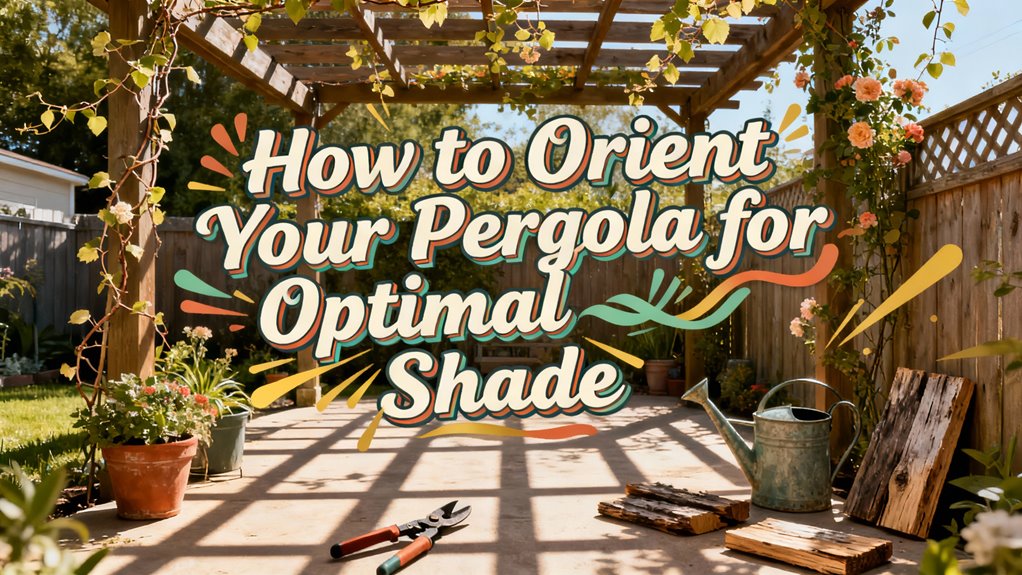
You’ll orient your pergola along a north-south axis to maximize shade during peak daylight hours (10 AM–4 PM). This alignment extends shadows and reduces direct sun exposure compared to east-west positioning. For dynamic control, adjust your slat orientation perpendicular to the sun’s path. Consider your climate zone: hot regions benefit from north-facing placement, while cooler areas favor south-facing exposure. Motorized louvers offer adaptability throughout seasons. Your specific usage patterns and local sun trajectory will determine the most effective configuration for your space.
North-South Alignment for Consistent Shade Coverage
How can you maximize shade coverage throughout the day? Orient your pergola’s rafters along a north-south axis, positioning them perpendicular to the sun’s east-west path. This alignment creates extended shadows length and delivers consistent shade during peak hours between 10 AM and 4 PM.
You’ll achieve superior light distribution compared to east-west orientation, reducing direct sun exposure across your space. The north-south configuration produces uniform shade in both morning and afternoon periods, making it ideal for moderate and hot climates where shade prioritization matters.
To enhance effectiveness, you can decrease rafter spacing and lower the pergola’s height. These structural modifications concentrate shade density and duration. In summer months, when the sun climbs higher, you’ll experience deeper, more concentrated coverage without sacrificing winter light penetration.
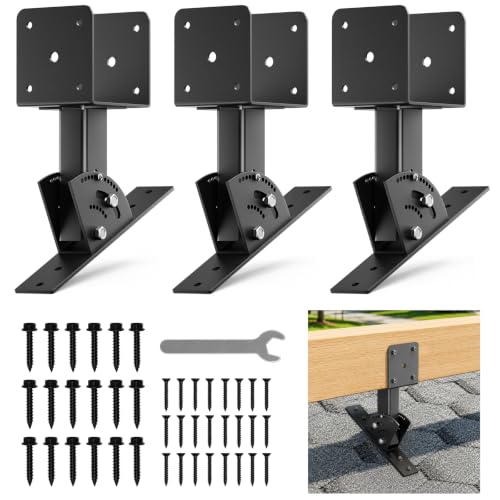
Roof Riser Bracket: The roof riser bracket is used to install and secure wooden rafters. It can stably fix pergolas, terrace covers, or sunshades on the roof, enhancing outdoor space. It is suitable for those who enjoy DIY design.
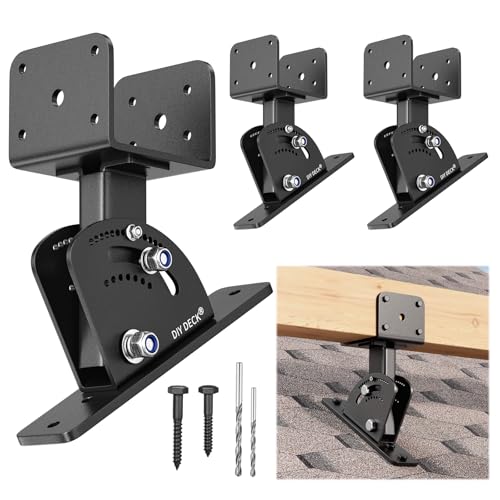
[Outstanding Workmanship] Made of thickened high-quality stainless steel with black powder coating.it has excellent corrosion resistance,. The welding parts of this bracket were screw locked before full welding to ensure double reinforcement.

Sturdy Steel:The pergola bracket kit are made of premium steel,precision welding using robotic arms,make them very strong and secure;Black powder coating to prevent rust and withstand extreme weather conditions, ensuring long-lasting durability.
East-West Slat Orientation and Time-of-Day Benefits
While north-south alignment provides consistent midday shade, east-west oriented pergolas offer distinct advantages based on when you’ll use your outdoor space. East-facing pergolas capture gentle morning sun, creating inviting conditions for breakfast and leisure activities without intense heat. West-facing pergolas deliver afternoon and evening warmth ideal for dining and entertaining.
You’ll achieve ideal thermal comfort through strategic slat adjustment. East-facing slats open clockwise, managing morning light penetration efficiently. West-facing slats open counterclockwise, regulating afternoon sun exposure. Perpendicular slat orientation relative to your adjoining façade maximizes both shade and ventilation throughout the day.
This directional approach balances your desired temperature comfort with time-of-day usage patterns. Proper slat positioning reduces reliance on artificial cooling systems while maintaining livability in hot climates. A pergola’s versatile design accommodates retractable canopies and other weather-resistant features to further enhance seasonal usability. For seating areas beneath your pergola, consider pairing your shade structure with durable patio furniture alternatives that offer superior breathability and weather resistance to enhance comfort during extended outdoor use.

Note: Accessories have been updated from [Zip-ties, Ropes, Bungee Balls] to [Zip-ties, Ropes, Bungee Hooks]. New and old packages shipped randomly. [90% Sun Protection] BELLE DURA Sun Shade Cloth offers blocking up to 90% harmful UV rays and direct sun lights, effective cooling of about 50-60 ℉, giving a sense of privacy while blocking sunlight.
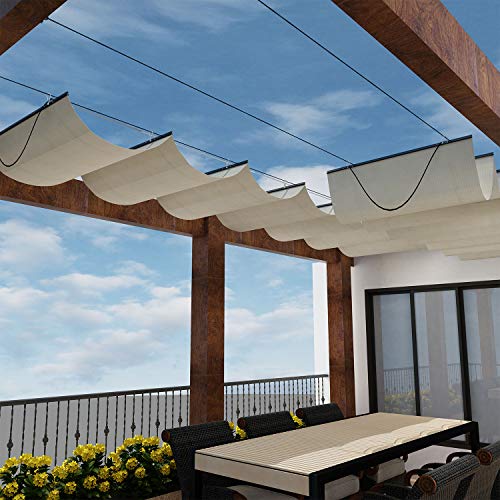
HIGH QUALITY FABRIC - Our retractable shade cover is made of high quality polyethylene, it can block most of strong sun rays but let some light get through. And it allows air to pass through with breathable fabric .

90% UV Blocking & HDPE Material: Sunocity's shade cloth is crafted from 200 GSM UV-resistant high-density polyethylene (100% HDPE)material, offering an impressive 90% UV protection for a safer outdoor experience. Its highly breathable design allows hot air to escape, keeping you cool and comfortable during scorching summer
Strategic Placement Relative to Existing Structures
Positioning your pergola strategically relative to existing structures transforms it from a standalone feature into an integrated extension of your home’s living spaces. You’ll maximize pergola benefits by anchoring it adjacent to patios, decks, or kitchen areas, facilitating seamless indoor-outdoor changes. This placement enables convenient meal preparation and entertaining while encouraging frequent usage.
Apply orientation techniques that complement your landscape’s existing elements. Align your pergola to frame ideal views and enhance sightlines rather than obstruct them. Position it near property boundaries using lattice panels for privacy without structural additions. For larger yards, multiple pergolas create distinct functional zones—dining, lounging, entertaining—each strategically placed near relevant amenities. When positioning your pergola near a deck, ensure joist spacing doesn’t exceed 16 inches on center for optimal structural support. When attaching pergola posts to your deck structure, use corrosion-resistant fasteners to ensure long-lasting durability and safety compliance. This methodical approach guarantees your pergola integrates harmoniously with current features while enhancing both shade coverage and spatial functionality.

Material Of 4x4 Post Base: Made of Solid Steel, Black Powder Coated, Rustproof and Strong.

Heavy duty hardware kit made of 316 stainless steel

Heavy-Duty Structure: This heavy duty L bracket is made of high-quality carbon steel, with a 4mm thickness that is 30% thicker than standard brackets. It supports up to 500 lbs of maximum load, specially designed for pergola, deck and heavy-duty support projects.
Seasonal and Regional Climate Considerations
Your pergola’s orientation must account for climate patterns and seasonal sun movement to deliver consistent shade performance year-round. You’ll need to evaluate your region’s specific demands: hot, sunny climates require north-facing orientation with north-south rafter direction for maximum shade protection. Cool regions benefit from south-facing exposure and east-west rafter alignment to maximize winter sunlight penetration. Variable climates demand climate adaptability through motorized louvered systems that adjust seasonally.
Understanding your sun trajectory throughout the year proves essential. Winter sun positioning differs considerably from summer angles in northern hemisphere locations, affecting shade distribution greatly. You should analyze prevailing weather patterns and local obstructions in your backyard, as these factors determine final placement decisions. Motorized solutions enable you to shift between seasons seamlessly, providing warmth during colder months and cooling relief during summer peaks. When selecting materials for your pergola structure, consider finishes that will withstand outdoor conditions, with varnish preferred over polyurethane for wood durability. A strong foundation with post holes at least two feet deep will ensure your pergola remains stable regardless of orientation adjustments or seasonal weather changes.
Design Features for Enhanced Shade Coverage
Once you’ve determined your pergola’s ideal orientation based on seasonal and regional climate patterns, the design features you select will directly determine your shade coverage effectiveness. Louvered systems offer precision control through adjustable slats that you can tilt to achieve 25-100% shade coverage. You’ll want to evaluate shade materials—darker beams absorb more sunlight, enhancing effectiveness. For maximum versatility, motorized louvers provide dynamic adjustment throughout the day. Privacy panels complement these systems by creating additional barriers against direct rays while maintaining flexibility when paired with adjustable slats. Just as proper surface preparation ensures stain adherence in wood finishing, careful design planning ensures your shade features perform optimally. Combining multiple features—tighter beam spacing, cross-lattice designs, and strategic panel placement—enables you to customize shade levels for your specific needs and climate conditions. Additionally, you can enhance your pergola’s functionality by incorporating climbing plants for a natural canopy that provide organic shade while adding aesthetic appeal to your outdoor space.
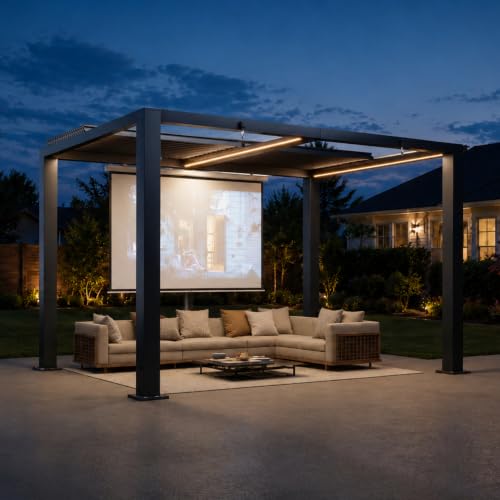
[Heavy-Duty Frame & Hidden Drainage] - Built with a reinforced aluminum and galvanized steel frame featuring a 5.75" center beam and 3.94" x 3.94" heavy-duty posts for enhanced stability and durability, this pergola is designed to withstand winds up to 90 MPH when properly anchored. Engineered to resist rust, corrosion, and outdoor elements, it features a hidden gutter system. Backed by a 2-year warranty for added peace of mind

[One-Touch Electric Control] – Effortlessly adjust shade coverage with a remote-controlled motorized system. Extend or retract smoothly for perfect sun protection anytime.

[Heavy-Duty Frame & Hidden Drainage] - Built with a reinforced aluminum and galvanized steel frame featuring a 5.75" center beam and 3.94" x 3.94" heavy-duty posts for enhanced stability and durability, this pergola is designed to withstand winds up to 90 MPH when properly anchored. Engineered to resist rust, corrosion, and outdoor elements, it features a hidden gutter system. Backed by a 2-year warranty for added peace of mind
Matching Your Pergola Orientation to Your Usage Patterns
The most effective pergola orientation emerges when you align it with your specific activity schedule and climate conditions. If you prioritize morning routines, position your structure east-facing to capture gentle sunrise light and establish a comfortable outdoor space for early activities. For evening relaxation, orient your pergola westward to maximize golden hour illumination and extend usable hours during twilight.
Climate considerations modify these recommendations considerably. Hot regions demand north-facing placement that provides continuous shade throughout peak heat hours. Conversely, colder climates benefit from south-facing designs that capture winter warmth through lower solar angles. Evaluate your predominant usage patterns—whether daytime or evening—then select orientation that aligns with both your activity timing and regional temperature patterns for year-round comfort and functionality. Consider that slat orientation and alignment significantly impact shade distribution, with north-south aligned slats offering more balanced, shifting shade throughout the day. When planning your pergola orientation, ensure that ground posts are securely anchored in concrete to support the structure’s weight and maintain proper alignment for optimal shade coverage throughout the day.

Precise Size - This replacement canopy measures 200"L x 103"W. Please verify your pergola frame dimensions before ordering to ensure proper fit. Compatible with Lowe's Allen + Roth 10x10 ft pergola, model L-PG152PST-B

[Adjustable Canopy]: This arched pergola features a flexible canopy that can be independently adjusted to deliver your desired level of sunlight or shade. Its retractable design offers the utmost convenience in customizing either side

High-Quality Materials: Our pergola comes with high-quality alloy frames with powder coating finish, has excellent resistance to weather, rust, corrosion. Durable and suitable for outdoor use, with long-lasting performance and enjoyment