What Is a Pergola With a Roof Called? A Complete Guide
A roofed pergola technically becomes a covered patio, pavilion, or carport, depending on your roof system’s design. You’re selecting between fixed roofs like polycarbonate or glass for all-weather protection, retractable louvered systems for adjustable light control, or fabric canopies for lightweight flexibility. Your choice fundamentally shifts the structure’s functionality, aesthetic identity, and maintenance demands. The terminology matters because it determines your structural requirements, load-bearing capacity, and long-term durability expectations.
Understanding Pergola Terminology and Definitions
Before you design or install a pergola, you’ll need to understand the structural terminology that distinguishes it from other outdoor structures. The term “pergola” derives from Italian architecture, where open-roof designs maximized shade while maintaining airflow. You’ll encounter key components: support posts or columns that bear load, beams and rafters composing the roof framework, and slats arranged to filter light. Understanding pergola benefits helps you appreciate why this structure remains popular—it defines outdoor living spaces, supports climbing vegetation, and provides partial shade without full enclosure. Adding features like retractable canopies or heaters allows you to extend your outdoor living space year-round while maintaining the pergola’s versatile character. Unlike gazebos with solid roofs or pavilions offering complete weather protection, pergolas maintain their signature open design. Modern variations include motorized roofs and cantilevered extensions, but traditional construction prioritizes structural simplicity and aesthetic versatility for your garden landscape. Properly sized support posts, such as 6×6 posts with secure footing installation, are essential for maintaining the pergola’s structural integrity and stability.
Exploring Different Types of Pergola Roofs
Once you’ve grasped pergola fundamentals, you’ll want to evaluate the roof configurations available to match your climate, aesthetic preferences, and functional requirements. You can choose from several distinct options that balance pergola aesthetics with roof functionality.
Slat roofs provide adjustable light filtration through evenly spaced materials like wood, metal, or HDPE. Retractable louvered systems offer motorized control over sunlight and ventilation using aluminum construction. Polycarbonate and glass roofing deliver transparent protection with UV filtering capabilities suitable for year-round use.
Fabric and canvas roofs present customizable, lightweight solutions ideal for temperate climates. Specialty materials—bamboo, thatch, and aluminum—add distinctive character while serving specific environmental needs. Solar panel integration represents an emerging option combining energy generation with structural coverage.
When pergolas are attached to residential structures or elevated above grade, ensure your design complies with guardrail height requirements to maintain safety standards for deck-connected installations. For attached pergolas, proper ledger board sizing is essential to securely anchor the structure to your home and distribute loads safely. Each configuration delivers distinct structural characteristics and aesthetic outcomes tailored to your requirements.

[Adjustable Louvered Roof] The louvered pergola is equipped with durable crank handle and winding device that allow the outdoor pergola to withstand more than 100,000 rotations, 0°-90° angle adjustable louvers to regulate the sunlight and airflow, pergolas for patios can create the perfect shaded relaxation space for patio, backyard, deck,garden any occasion

Aluminum Adjustable Louvered Roof: Designed with two independent adjustable roofs, equipped with adjustable poles that allow you to adjust it effortlessly from 0° to 90°, offering multiple protection options against sun, rain, and wind.
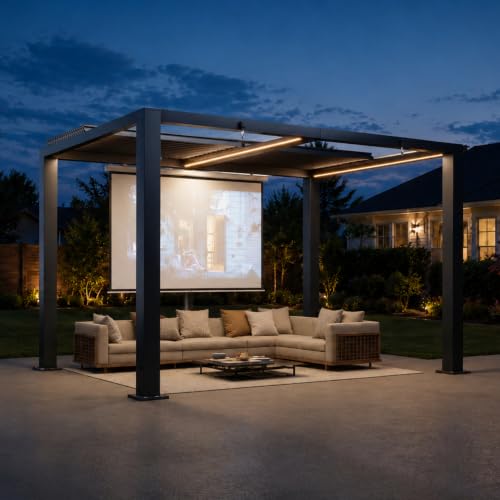
[Heavy-Duty Frame & Hidden Drainage] - Built with a reinforced aluminum and galvanized steel frame featuring a 5.75" center beam and 3.94" x 3.94" heavy-duty posts for enhanced stability and durability, this pergola is designed to withstand winds up to 90 MPH when properly anchored. Engineered to resist rust, corrosion, and outdoor elements, it features a hidden gutter system. Backed by a 2-year warranty for added peace of mind
Materials Used in Modern Pergola Construction
Material selection fundamentally determines your pergola’s longevity, maintenance requirements, and visual impact. Your materials comparison should weigh construction techniques across multiple options. Cedar and redwood deliver customizable aesthetics but demand regular restoration. Aluminum provides lightweight corrosion resistance ideal for coastal environments, requiring minimal upkeep. Vinyl and cellular PVC resist moisture penetration and termite damage while maintaining appearance without frequent repainting. Fiberglass and wood-plastic composites offer maintenance-free solutions combining wood aesthetics with plastic durability. Steel construction—whether stainless, galvanized, or powder-coated—provides exceptional strength for high-load applications. Concrete structures deliver maximum capacity for large public installations. For outdoor pergolas made from wood, applying exterior paint or sealant to all surfaces significantly extends the material’s lifespan and protects against weather damage. Wood materials also benefit from regular cleaning with mild soap to remove dirt and prevent mold growth that can compromise structural integrity. Each material presents distinct trade-offs between initial investment, ongoing maintenance costs, structural performance, and design flexibility, enabling you to select the best solution for your specific climate and usage requirements.

[Adjustable Louvered Roof] The louvered pergola is equipped with durable crank handle and winding device that allow the outdoor pergola to withstand more than 100,000 rotations, 0°-90° angle adjustable louvers to regulate the sunlight and airflow, pergolas for patios can create the perfect shaded relaxation space for patio, backyard, deck,garden any occasion

Enhanced Extra Protection Roof: The PURPLE LEAF aluminum pergola features a sloped roof design that effectively reduces water accumulation, while protecting the retractable canopy from rain and harmful UV rays, providing you with an enjoyable outdoor experience.

Excellent Load-Bearing:With the impressive and great load-bearing of 55lbs/㎡, this pergola is able to endure heavy snow or rain, and challenge other bad weather conditions. You have to fasten it securely on the wall and ground so it can better work
Key Functionality and Advanced Features
While material selection establishes your pergola’s structural foundation and durability profile, the roof system itself determines how effectively you’ll actually use the space. Modern pergola roofs deliver sophisticated weather control through multiple mechanisms. Louvered systems provide adjustable slats enabling precise sunlight and airflow regulation, while retractable canopies offer flexible coverage adapted to conditions. Motorized options enhance user comfort through remote operation and weather-responsive automation. Polycarbonate and metal constructions combine UV filtering with robust rain protection. Ventilation management remains critical—adjustable louvers and fabric shade sails prevent heat accumulation while maintaining passive circulation. Smart home integration automates operations based on forecasts or scheduling. Fixed-roof pergolas provide all-weather protection for those prioritizing consistent coverage over adjustable shade options. You’ll find that contemporary roofing systems balance structural durability with operational flexibility, transforming pergolas into year-round outdoor spaces suited to varying climatic demands and lifestyle preferences.

[One-Touch Electric Control] – Effortlessly adjust shade coverage with a remote-controlled motorized system. Extend or retract smoothly for perfect sun protection anytime.

[Heavy-Duty Frame & Hidden Drainage] - Built with a reinforced aluminum and galvanized steel frame featuring a 5.75" center beam and 3.94" x 3.94" heavy-duty posts for enhanced stability and durability, this pergola is designed to withstand winds up to 90 MPH when properly anchored. Engineered to resist rust, corrosion, and outdoor elements, it features a hidden gutter system. Backed by a 2-year warranty for added peace of mind
[Motorized + Manual Open-Sky Roof] – Open and close the louvered roof effortlessly with the included remote, or adjust it manually when needed—even during a power outage. Operate each roof section independently for flexible shade, sunlight, and airflow control, and enjoy an open-sky view whenever you want
Design Styles and Aesthetic Options
Your pergola’s visual identity hinges on selecting a roof design that complements both your home’s architectural vernacular and your functional requirements. You’ll find five primary design inspirations: modern minimalist roofs emphasize clean geometric lines with powder-coated aluminum or steel; traditional slatted wooden designs support climbing plants; arched configurations provide structural elegance across larger spans; louvered systems offer mechanically adjustable sun control; and living roofs utilize climbing vegetation for organic canopies. Your aesthetic preferences determine material selection—translucent panels for contemporary spaces, natural wood finishes for rustic settings, or decorative metal supports for classical styles. For wooden pergola roofs, Southern Yellow Pine offers an excellent combination of durability, natural weather resistance, and cost-effectiveness while maintaining the aesthetic appeal of traditional designs. To preserve the beauty and longevity of wooden roof structures, incorporate regular sealing and staining every 2-3 years to protect against UV damage, moisture, and decay. Each design approach delivers distinct functional benefits while establishing your outdoor space’s character. Align your choice with existing architectural elements and maintenance capacity for ideal results.
Maintenance Requirements and Durability Factors
Once you’ve selected your pergola’s roof design, protecting that investment requires systematic attention to maintenance and durability factors. Your cleaning techniques should match your material: wood pergolas need soapy water and periodic sealant reapplication every 2–3 years, while aluminum systems require only monthly soft-cloth cleaning with mild detergent. Inspection frequency proves critical—conduct annual assessments for structural integrity, checking fasteners quarterly and examining seals biannually. For motorized louvered roofs, lubricate mechanisms annually with silicone-based products. Wood pergolas can achieve 20+ years’ longevity with proper maintenance; aluminum extends 15–20 years through consistent care. Addressing minor damage promptly prevents costly repairs and maintains watertight integrity, particularly in humid or coastal climates where environmental stressors accelerate deterioration. Similar to how proper joist spacing is essential for deck structural integrity, ensuring your pergola’s support framework remains sound through regular fastener inspection and maintenance will extend its lifespan significantly. Like deck railings, pergola posts must be securely fastened to their support structure to withstand environmental loads and maintain long-term safety and stability.
Choosing the Right Pergola Roof for Your Space
Selecting the ideal pergola roof requires balancing aesthetic preferences, climate demands, structural capacity, and functional needs. You’ll consider seasonal considerations and climate adaptability when evaluating your local environment. Solid roofs suit regions experiencing heavy precipitation or intense UV exposure, while louvered systems excel in variable climates requiring dynamic light control. Retractable roofs address seasonal weather shifts, offering flexibility without permanent installation constraints. Polycarbonate panels deliver superior performance in consistently sunny locations, providing UV filtration and light diffusion. Fabric roofs serve mild climates with moderate conditions.
Consider your structural foundation’s load-bearing capacity alongside installation complexity. Solid constructions demand robust support systems, whereas polycarbonate and fabric options integrate seamlessly with standard frames. Proper post hole depth and concrete foundation work ensure your pergola withstands weather and structural demands over time. Using galvanized screws or structural hardware throughout your installation will enhance durability and prevent corrosion-related failures. Review maintenance demands, customization options, and long-term durability against your budget parameters and aesthetic objectives.

Pergola with Adjustable Triple-Zone Louvered Roof - This louvered pergola 14x20 features an easy-to-use crank system, letting louvers rotate 0 to 90° for customized light and shade. Split into 3 independent zones, this pergola louvered design delivers flexible ventilation for your patio pergola, making it a premium outdoor pergola with roof.

Pergola with Adjustable Dual-Zone Louvered Roof - This louvered pergola 10x12 features an easy-to-use crank system, letting louvers rotate 0 to 90° for customized light and shade. Split into two independent zones, this pergola louvered design delivers flexible ventilation for your patio pergola, making it a premium outdoor pergola with roof.

Modern Design -BPS louvered wall mounted pergola seamlessly merges traditional open-roof charm with a pavilion's closed-roof practicality. Enjoy sunlight by day and stargaze by night in this uniquely designed, modern outdoor space.