Eucalyptus vs. Teak: Which Wood Is Best for Outdoor Furniture?
You’ll find teak outperforms eucalyptus in durability, lasting 30-50+ years versus eucalyptus’s 10-25 years outdoors. Teak’s superior rot and moisture resistance stem from its silica content and dense grain structure, while eucalyptus demands more vigilant maintenance to prevent cracking and warping. However, eucalyptus costs 30-40% less initially and offers striking grain patterns with renewable sourcing. Your choice hinges on whether you’re prioritizing longevity and minimal upkeep or lower upfront investment—the details reveal which aligns with your specific climate and budget.
Durability Comparison: How These Woods Perform Outdoors
When you’re selecting outdoor furniture wood, durability is paramount, and teak and eucalyptus perform distinctly differently in outdoor conditions. Teak’s superior durability factors stem from its dense grain structure and high oil content, enabling it to last decades or centuries with minimal intervention. Eucalyptus, while a dense hardwood itself, typically survives only 25 years outdoors with consistent maintenance. Wood density alone doesn’t guarantee longevity; teak’s molecular composition actively resists environmental stressors like temperature fluctuations, moisture, and UV exposure. Eucalyptus proves more vulnerable to cracking in cold climates and warping under intense sunlight. Unlike rubberwood, which suffers from high moisture absorption and rapid deterioration outdoors, teak’s natural oil content provides inherent protection against environmental degradation. Teak’s silica content and tight grain structure work synergistically to create a durable barrier against weathering and insect damage that eucalyptus cannot match. You’ll find teak maintains structural integrity indefinitely, whereas eucalyptus requires vigilant upkeep to prevent deterioration. For long-term outdoor furniture investments, teak’s inherent durability factors outperform eucalyptus substantially.

【Premium Acacia Wood Construction】Crafted from high-grade acacia wood, this set combines durability with exotic beauty. Naturally resistant to outdoor elements, acacia maintains its rich, sleek appearance without darkening over time. Its sturdy hardwood frame ensures long-lasting resilience against wear and tear, making it a timeless investment for your patio or garden.

ACACIA WOOD: Made with acacia wood that brings a sleek and exotic look to your space, this durable hardwood naturally withstands outdoor elements and will not darken over time. Acacia wood is perfect as a solid, heavy frame that resists wear and tear.
Natural Resistance to Decay, Rot, and Insects
Because natural resistance mechanisms vary considerably between wood species, understanding how teak and eucalyptus defend themselves against decay, rot, and insects is essential for selecting durable outdoor furniture.
Eucalyptus’s natural oil benefits provide dual protection through moisture repulsion and pest deterrence. Its dense hardwood composition—approximately 710 kg/m³—creates lower porosity, limiting water penetration and fungal growth. These oils simultaneously offer insect deterrent efficacy without requiring chemical treatments, reducing maintenance demands. Like cypress, eucalyptus also weathers to a silvery gray when left unfinished outdoors over time.
Teak outperforms eucalyptus in rot resistance, maintaining structural integrity longer under consistent outdoor exposure. Its inherent pest resistance prevents termite and insect damage naturally, while its exceptional weather-resistant properties require less intervention. Unlike softer woods such as cedar with its 350 Janka hardness, both teak and eucalyptus provide superior resistance to physical damage from environmental exposure.
Both hardwoods protect against common outdoor threats effectively. You’ll find eucalyptus suitable for 20-25 years with proper care, while teak’s superior durability extends its lifespan considerably longer, making it the premium choice for long-term outdoor investments.
Maintenance Requirements and Long-Term Care
To preserve your outdoor furniture’s durability—whether teak or eucalyptus—you’ll need to implement a consistent maintenance regimen that addresses cleaning, protection, and inspection. Your cleaning methods should progress from regular dusting with soft cloths to periodic mild soap-and-water treatments for deeper grime. Natural solutions like vinegar or Castile soap prove both effective and biodegradable. Maintenance frequency varies by climate; apply teak or linseed oil at least twice during spring and summer, increasing applications in direct sunlight exposure. Always dry surfaces completely after cleaning to prevent moisture damage. For stubborn stains, employ soft-bristled brushes gently. Additionally, inspect joints and ground-contact areas annually for cracks, warping, and pest infestation. When selecting furniture placement, consider joist spacing and structural support similar to deck construction principles to ensure optimal weight distribution. Tighten hardware promptly and address mold issues immediately to prevent structural compromise. Store your furniture with protective covers during adverse weather to shield wood surfaces from prolonged moisture exposure and environmental damage.

Provides interior or exterior one-step protection for dense woods such as teak, rosewood and mahogany

ENHANCES THE BEAUTY OF THE WOOD: Teak Oil restores the beauty of grey, old and weathered teak furniture to give a golden-brown natural finish.

🌱 UNLEASH THE BEAUTY OF YOUR OUTDOOR WOOD WITH TEAK OIL: Our premium wood finish and sealer is specially formulated for outdoor furniture, providing waterproof protection and enhancing the natural color and structure of teak, mahogany, pine, beech, oak, and other wood types. Preserve and beautify your outdoor wood with confidence.
Cost Analysis: Initial Investment vs. Long-Term Value
As you weigh outdoor furniture options, the price differential between teak and eucalyptus presents a compelling financial consideration that extends well beyond the initial purchase. Your initial expenses favor eucalyptus, which costs 30–40% less than teak patio sets. However, this cost comparison shifts dramatically over time. Teak’s superior durability means you’ll rarely replace it, while eucalyptus typically requires replacement every 10–25 years. Over a 25-year period, total replacement costs for eucalyptus may approach or exceed teak’s premium pricing. Additionally, teak retains notably higher resale value due to its longevity reputation and market desirability. Eucalyptus’s high natural oil content provides resistance to outdoor elements, yet it demands more maintenance than teak to preserve its appearance and structural integrity. For budget-conscious buyers, eucalyptus offers immediate affordability. For long-term value retention, teak’s higher upfront investment yields superior financial returns.
Lifespan Expectations in Different Climates
Your choice between teak and eucalyptus becomes markedly more meaningful when you consider where you’ll place your furniture, since climate fundamentally determines how long each wood will perform. Teak’s superior lifespan variability—spanning 50+ years in humid tropics, 30–50 years in dry climates, and decades in coastal salt air—reflects its exceptional stability across diverse conditions. Eucalyptus exhibits pronounced climate impact, ranging from 15–25 years in tropical humidity to 25 years in arid regions. The climate impact on eucalyptus intensifies in variable seasonal environments, where temperature and moisture fluctuations trigger warping and cracking without consistent maintenance. Coastal settings particularly challenge eucalyptus durability, whereas teak thrives there effortlessly. Your maintenance commitment directly correlates with lifespan variability, but teak requires substantially less intervention across all climates.
Sustainability and Environmental Impact
While climate determines how long your furniture will serve you, environmental impact determines whether that service comes at an acceptable ecological cost. Eucalyptus matures in 7-15 years versus teak’s 30-40-year cycle, reducing pressure on natural forests. Your sourcing practices matter considerably: eucalyptus plantations typically involve regional sourcing with lower transportation emissions, while teak often requires international shipping. Eucalyptus requires less water during cultivation and generates harvestable timber multiple times during a single teak growth cycle. Natural teak forests face depletion from overharvesting, though FSC-certified options exist. When properly managed, eucalyptus plantations demonstrate minimal ecological impact through efficient land use and shorter rotation cycles. Both materials can be sustainably sourced through responsible forestry operations adhering to strict certification protocols.
Aesthetic Qualities and Design Options
When you’re selecting outdoor furniture, the visual characteristics of your chosen wood considerably influence your space’s overall design impact. Eucalyptus delivers striking grain patterns with fine, consistent texture that complements modern and traditional aesthetics alike. Its warm honey to reddish-brown heartwood tones adapt seamlessly to mixed-material designs featuring steel accents. Teak maintains a naturally golden-brown coloring with smooth texture that suits both contemporary and rustic settings. While eucalyptus develops a noticeable silvery-gray patina, teak preserves its color integrity longer. Both woods showcase natural grain variations that enhance your patio’s authentic character. You’ll find eucalyptus’s refined appearance particularly effective for design integration with cushions and textiles, while teak’s timeless aesthetic appeal requires minimal intervention for visual longevity. Proper maintenance techniques, including methods like removing damaged boards, can extend the lifespan of your outdoor furniture investment. However, alternative materials like resin furniture offer UV stabilization and resistance to fading, making them a consideration for those prioritizing long-term color preservation without the maintenance demands of natural wood.
Weather Resistance and Structural Stability
Beyond visual appeal, the durability of your outdoor furniture hinges on how well the wood withstands environmental stressors. In weather performance, teak’s superior natural oils and silica content provide exceptional resistance to moisture, UV rays, and decay. You’ll find teak maintains structural integrity for decades with minimal maintenance, even in harsh coastal conditions.
Eucalyptus, conversely, offers moderate weather resistance but requires regular sealing to prevent warping and rot. The strength comparison heavily favors teak—its dense grain and 1,070 lbf Janka hardness rating guarantees stability across temperature and humidity fluctuations. Eucalyptus, though hard, proves brittle and susceptible to surface-checking in extreme climates. While elm wood has historically been used in outdoor applications due to its resistance to moisture and decay, it is classified as a non-durable hardwood with a limited lifespan outdoors. Larch wood presents another compelling option, as its high density and resin content enable it to resist decay and warping effectively, often lasting 10–50 years or more with proper maintenance.
Your investment in teak delivers centuries of durability, while eucalyptus typically lasts 10–15 years with consistent maintenance.

DURABLE WOOD:This bistro set is made of real Acacia wood with a natural finish. This chat set is solid, strong and durable.This table chair set is Crafted from solid, weather-resistant natural acacia wood for beauty and long-lasting durability.Acacia wood is strong and durable.No splinter, rust, crack, chip or peel.Chat Set Bistro Set Table Chair Set.

【Acacia Wood 8 Pieces Conversation Sets】Experience the unparalleled durability and exotic beauty of our 8 piece outdoor furniture set, expertly crafted from high-grade acacia wood. This resilient material is naturally resistant to outdoor elements, ensuring that your furniture remains stunning and robust without darkening over time

CUSHIONED SOFA: Looking for something more refined in your outdoor space? This sofa fulfills with comfy cushions and eucalyptus wood that's protected to weather the elements with ease
Making Your Choice: Which Wood Suits Your Needs
How do you weigh durability against affordability when selecting outdoor furniture wood? Your decision hinges on personal preferences and lifestyle considerations. If budget constraints matter, eucalyptus delivers 30–50% cost savings while maintaining comparable hardness to teak. You’ll invest those savings in additional pieces or accessories. However, eucalyptus demands annual oiling and sealant application, whereas teak requires minimal maintenance due to higher natural oils. Consider your maintenance commitment. For longevity-focused buyers, both woods last 20–25 years with proper care, though teak offers slightly extended lifespan. Douglas Fir, while more affordable than both eucalyptus and teak, requires protective treatments like sealing or staining to extend its lifespan beyond 15 years. The key to success with outdoor wood furniture is selecting hardwoods over softwoods and committing to regular maintenance practices. Environmentally conscious consumers favor eucalyptus’s rapid growth and renewable status over slow-growing teak. Aesthetically, eucalyptus provides design flexibility through varied grain patterns and tone options, while teak offers consistent rich coloring. Evaluate these factors against your priorities and usage patterns.

ALL-WEATHER COMFORT - Sink into cozy relaxation with this premium lounge chair featuring deep-seating dimensions and high-performing, low-maintenance Nuvella fabric outdoor cushions
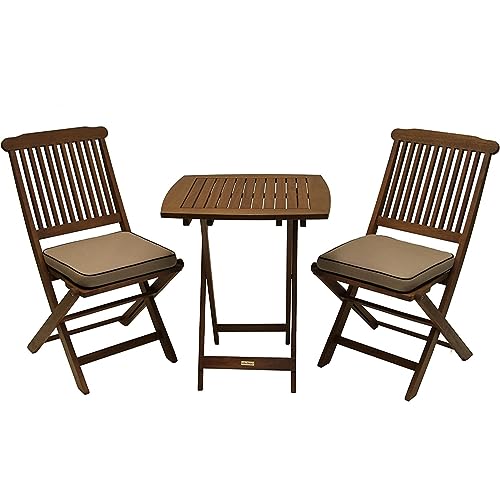
Fully Assembled 3-Piece Bistro Set: Includes a contemporary folding table, two chairs, and two removable weather-resistant seat cushions for instant outdoor enjoyment.

WEATHER-READY COMFORT - Transform your outdoor seating area with comfy removable cushions. This coastal patio couch features a sturdy eucalyptus wood frame designed to weather the elements with ease