How Many Coats of Spar Urethane for Outdoor Furniture?
You’ll apply three to five coats of spar urethane for standard outdoor furniture protection. For marine-grade applications, you’ll want five to seven coats to enhance durability. Between each coat, you’ll sand with 220-grit paper after waiting at least four hours—longer in cold, humid conditions. You’ll need to maintain proper temperature (55-90°F) and humidity (below 85%) for ideal drying. The specifics of your application method, environmental factors, and maintenance schedule will greatly impact how long your finish actually lasts.
Recommended Number of Coats for Optimal Protection
When you’re applying spar urethane to outdoor wood furniture, you’ll want to follow the industry standard of three to five coats for maximum durability. The exact number depends on your application method. Brush application typically requires three to five coats in thin, even layers, while wiping methods demand twice as many applications to achieve equivalent protection. High-end marine applications call for five to seven initial coats to maximize film thickness and finish longevity. Each additional coat builds protective layers that directly extend your furniture’s lifespan. With proper coat variations applied correctly, spar urethane maintains protection for four to five years. Before applying any finish, ensure your wood furniture is thoroughly cleaned and the surface is properly sanded to improve paint adhesion. Skimping on coats—applying only two—fails within one year in harsh climates, making adequate coating essential for outdoor exposure. For optimal results, allow each coat to dry thoroughly before applying the next to ensure a robust barrier against the elements.

Protects outdoor wood surfaces such as furniture, fences, railings, trim and more

PROTECTIVE CLEAR FINISH – Minwax Helmsman Spar Urethane is specially formulated as a protective varnish for wood for interior and exterior projects. It contains special UV blockers that reduce the sun’s graying and fading effects.

Protects outdoor wood surfaces such as furniture, fences, railings, trim and more
Drying and Sanding Between Coats
Patience between coats isn’t optional—it’s critical to achieving a durable finish with spar urethane. You’ll need to understand both drying conditions and sanding techniques to get results.
For oil-based products, you’re looking at an 8-hour recoating window minimum, while water-based versions let you recoat after just 1 hour. Your drying conditions matter greatly—maintain temperatures between 55-90°F and keep humidity below 85% for predictable results.
Once your previous coat dries hard to the touch and loses its tackiness, you’re ready to sand. Wait at least 4 hours before sanding, then use 220-grit sandpaper with light pressure across the entire surface. This sanding technique guarantees proper adhesion and a consistent finish for your next coat application. Unlike polyurethane finishes designed for indoor use, spar urethane’s flexible coating allows wood to expand and contract without cracking, making it more suitable for outdoor wooden furniture exposed to temperature fluctuations. For longer spans and larger outdoor furniture pieces, consider engineered lumber options to ensure structural integrity under extended exposure to the elements.
Application Techniques for Best Results
Proper surface preparation sets the foundation for spar urethane success—you’ll need to sand your wood smooth with progressively finer grits, starting at 120–150 and finishing with 220-grit sandpaper to remove imperfections and confirm excellent adhesion. Remove all sanding dust with a tack cloth before application.
For brush techniques, use a high-quality natural bristle or synthetic brush designed for urethane finishes. Apply long, even strokes following the wood grain while maintaining a wet edge to prevent lap marks. Avoid vigorous brushing that traps air bubbles.
Alternatively, employ the wiping method: thin spar urethane 50% with mineral spirits and apply thin coats with a cotton rag for a bubble-free finish. These application tips confirm uniform coverage and professional results on outdoor furniture. To further protect your investment, consider covering furniture when not in use to shield it from environmental damage. Spar urethane typically lasts 3–5 years with proper maintenance, providing a durable barrier against sun and moisture damage on outdoor pieces.

Finest results with alkyd and oil-based varnishes as well as marine paints or stains and urethanes
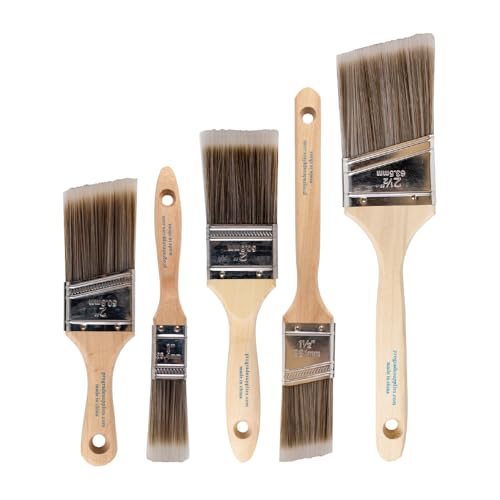
COMPLETE 5-PIECE BRUSH SET FOR EVERY PAINTING TASK — Includes 1 Inch Flat, 1.5 Inch Angle, 2 Inch Flat, 2 Inch Angle Stubby, and 2.5 Inch Angle brush giving you every size professional painters use daily. Get all 5 for less than the price of a single brush from hardware store brands — professional grade performance at a fraction of the cost. Perfect for walls, trim, cabinets, doors, furniture, and detailed cutting-in work on any project.

Designed with natural bristle for a smooth, glass like finish
Protection Properties of Spar Urethane
Spar urethane’s protective capabilities distinguish it as the ideal finish for outdoor wood furniture, shielding your pieces from the relentless combination of UV rays, moisture, temperature fluctuations, and mechanical wear that characterize exterior environments. The UV resistance advantages work by incorporating blockers that prevent sun-induced graying and fading while maintaining wood color integrity over time. Meanwhile, moisture barrier benefits create a waterproof seal against rain and humidity, preventing swelling, warping, and cracking. Special oils enable the finish to flex with seasonal temperature changes, reducing stress-induced splitting. You’ll also benefit from enhanced mold and mildew resistance, improved fiber durability, and abrasion protection. These combined properties greatly extend your furniture’s lifespan while preserving structural integrity and aesthetic appeal with minimal refinishing requirements. However, teak wood’s natural oil content and silica provide inherent weather resistance that can perform effectively even without protective coatings. For budget-conscious alternatives, eucalyptus wood offers comparable durability to teak at a significantly lower cost, though it requires regular maintenance including annual resealing to prevent fading and cracking.

Durable, protective poly for outdoor wood surfaces such as furniture, doors, windows, fences, trim and more
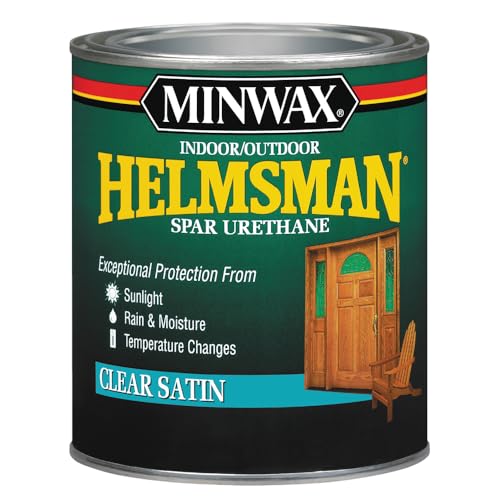
Contains UV blockers to reduce the sun's graying and fading effects

Protects outdoor wood surfaces such as furniture, fences, railings, trim and more
Surface Preparation for Spar Urethane Application
Because spar urethane’s performance depends almost entirely on substrate quality, you’ll need to meticulously prepare your wood surfaces before application. Start with cleaning techniques: remove all dirt, dust, grease, and contaminants using a vacuum and damp cloth. Avoid tack cloths, which leave residues affecting bonding.
For sanding tips, sand bare wood progressively from 120–150 grit to 220 grit, always moving with the grain. On previously finished surfaces, use 220–320 grit sandpaper to remove gloss and imperfections. Never use steel wool—it causes rust residue and adhesion failure.
Strip old shellac, lacquer, or wax entirely before proceeding. Eliminate all sanding dust with a vacuum and mineral spirits-dampened rag. Ascertain complete dryness before application, as moisture interferes with curing. Apply thin coats rather than heavy applications for ideal durability.

4 Different Grits: Includes 8 sanding blocks in 4 grits—60/80/120/220 (coarse, medium, fine, and superfine), 2 blocks per grit; our sanding sponge is reusable, washable, and suitable for all your sanding needs

Multi-Grit Sandpaper Collection: This pack includes 45 sandpaper sheets in 15 grits (80/120/180/240/320/400/600/800/1000/1200/1500/2000/2500/3000/5000*3), providing everything you need from coarse shaping to finish polishing.
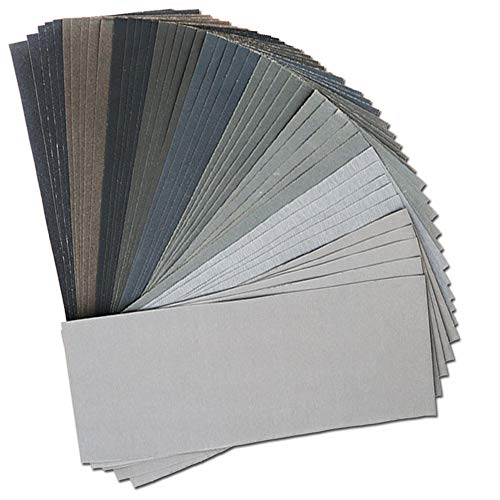
Wide Variety of Grit - Perfect selection of different grits, Including 5 sheets of each grit: 400/ 600/ 800/ 1000/ 1200/ 1500/ 2000/ 2500/ 3000, total 45 sheets.
Environmental Conditions and Best Practices
Environmental conditions critically influence spar urethane’s curing speed, adhesion, and ultimate durability—you’ll need to monitor temperature, humidity, and drying time between coats to achieve professional results. Apply spar urethane between 55-90°F with relative humidity below 85% to prevent application errors like poor leveling or extended cure times. Cold, humid conditions greatly slow drying, necessitating 24-48 hour intervals between coats rather than the standard 2-4 hours. Weather challenges require protective measures during application phases; avoid applying during rain forecasts or severe temperature fluctuations. You’ll notice that hot, dry climates accelerate drying, allowing multiple coats within one day. Extended drying periods won’t damage your finish—they’re preferable to rushing applications in suboptimal conditions.
Maintenance and Reapplication Timeline
Once you’ve mastered the environmental conditions that govern application and curing, you’ll need to establish a maintenance schedule that preserves your finish’s integrity over time. Your maintenance habits directly determine how long your spar urethane protection lasts. Plan for a refresher coat annually or whenever the finish dulls noticeably. Implement a rigorous inspection schedule before winter and after harsh weather, checking for chipping, peeling, or areas where water no longer beads on the surface. Address any dings or breaks immediately—erratic maintenance causes more damage than no finish at all. Light sanding and dust removal precede each new coat application, similar to the thorough deck preparation required before applying initial finishes. Remember, even with dedicated yearly care, clear finishes deteriorate within approximately one year in high-UV environments, requiring eventual complete stripping and reapplication.

Apply to outdoor wood projects

Protects outdoor wood surfaces such as furniture, fences, railings, trim and more

Protects outdoor wood surfaces such as furniture, fences, railings, trim and more