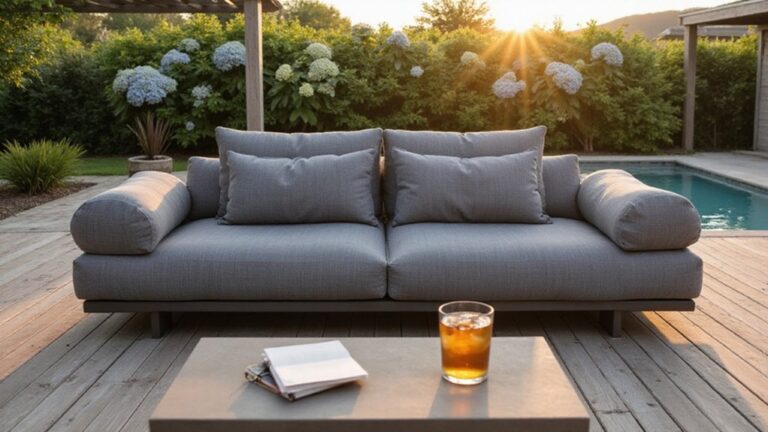
Is Teak Wood Good for Outdoor Furniture? Ultimate Guide
You’ll find teak wood excels for outdoor furniture thanks to its natural oils—tectoquinone and teak oil—that resist moisture, insects, and rot for 20–50 years. Its dense grain prevents warping and cracking while developing a sophisticated silver-gray patina. You’ll appreciate minimal maintenance needs and superior weather resistance across extreme climates. Though priced between $500–$5,000, teak appreciates annually, making it a sound investment. Its sustainability credentials strengthen its appeal further. Understanding what makes teak truly exceptional requires examining these advantages in greater depth.
Understanding Teak Wood Properties
Because teak wood’s exceptional durability stems from its unique composition, you’ll find it’s an ideal choice for outdoor furniture that withstands decades of exposure. The wood’s defining characteristics include natural oils—primarily tectoquinone and teak oil—that provide inherent resistance to moisture, insects, and rot. You benefit from a dense, straight grain structure that prevents warping, splitting, and cracking even through extreme weather fluctuations.
These wood characteristics work synergistically to create dimensional stability that resists swelling and shrinkage. You won’t experience significant deterioration from prolonged rain, humidity, or UV exposure. The natural oils eliminate your need for frequent sealing or protective treatments. Unlike eucalyptus wood, which requires annual resealing to maintain its appearance, teak’s superior oil content minimizes maintenance demands. Like larch wood, teak develops a silver-gray patina as it ages, creating a sophisticated aesthetic while maintaining structural integrity. As your teak furniture ages, it develops a sophisticated silver-gray patina—a cosmetic transformation that preserves structural integrity while enhancing its classic aesthetic appeal.
Durability and Lifespan of Teak Furniture
The natural composition that protects teak from the elements also determines how long your furniture will actually last. Your teak wood pieces maintain structural integrity for 20–40 years, often exceeding 50 years with proper maintenance. The dense grain structure and inherent natural oils create built-in preservation, making teak one of the longest-lasting woods globally. Unlike pine, oak, or cedar, teak’s lifespan expectancy dramatically outperforms conventional alternatives. Your furniture develops a distinctive silver-gray patina while remaining robust, potentially becoming a multi-generational heirloom. The wood resists moisture-related deterioration, warping, and cracking through its innate chemical composition. To further enhance durability, ensure your deck’s moisture content remains below 15% before applying finishes. Applying teak sealers or protectors every 6 to 12 months further preserves the wood’s natural oils and protects against UV damage, ensuring your investment maintains its appearance and longevity. This exceptional durability eliminates frequent replacement cycles, transforming your initial investment into lasting value that justifies premium pricing over time.
Natural Weather Resistance Benefits
While teak’s legendary longevity stems partly from its dense grain structure, you’ll find that its natural oils are what truly shield your outdoor furniture from the elements. These oils create a protective barrier that prevents cracking, warping, and swelling from moisture exposure. You’re getting weather resistance that withstands rain, frost, snow, and intense sunlight without structural degradation.
Your teak pieces naturally resist fading, preserving their color integrity far longer than alternative woods. The dense grain and oils render the wood virtually immune to rot, termites, and wood borers—eliminating the need for chemical treatments. You’ll also benefit from the wood’s thermal adaptability; it self-regulates temperature, staying comfortable to touch despite temperature fluctuations. Like resin furniture, teak’s non-porous surface and natural composition prevent water absorption and mold growth, making it exceptionally resilient in humid outdoor environments. Unlike woods with high moisture absorption, teak maintains its structural integrity when exposed to outdoor elements. This exceptional combination of natural weather resistance means you’re investing in furniture that maintains its durability across decades and diverse climates.

ENHANCES THE BEAUTY OF THE WOOD: Teak Oil restores the beauty of grey, old and weathered teak furniture to give a golden-brown natural finish.

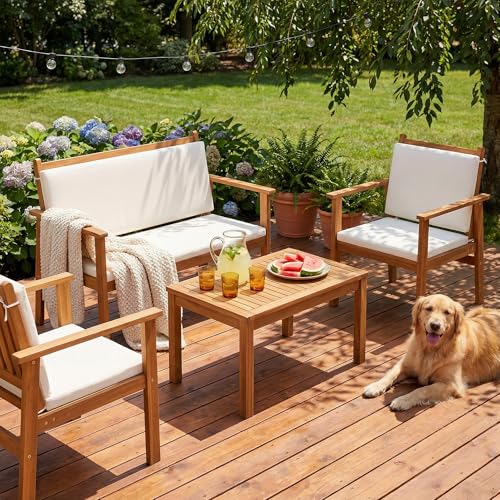
ACACIA WOOD: Made with acacia wood that brings a sleek and exotic look to your space, this durable hardwood naturally withstands outdoor elements and will not darken over time. Acacia wood is perfect as a solid, heavy frame that resists wear and tear.

Premium Outdoor Furniture: Werph outdoor conversation furniture set is all crafted from premium 100% acacia wood which is more durable and FSC certified. With a smooth processed, it is enhanced waterproof, ensuring furniture lasts for years in your outdoor space, like patio, garden, porch and courtyards
Low Maintenance Requirements
Once you’ve invested in teak outdoor furniture, you’ll appreciate how remarkably little maintenance it demands compared to other wood options. You’ll only need to clean once or twice yearly for basic upkeep, though monthly light scrubbing with soft-bristle brushes prevents debris accumulation. Your cleaning frequency can remain minimal because teak’s natural oils resist mold and mildew effectively. For maintenance tips, wipe spills promptly with mild soap and water, and tackle tough stains with a diluted bleach solution. You won’t need sealers or oils—teak’s inherent protection suffices. Unlike materials such as vinyl that require careful attention to prevent trapped moisture issues, teak’s breathability naturally inhibits these problems. Avoid pressure washing and harsh chemicals that strip natural oils. Similar to ensuring a strong, level foundation in outdoor structures, establishing proper initial care practices with your teak furniture sets the stage for long-term durability. This durability-focused approach means you’ll spend less time maintaining your furniture while it develops a desirable silver-grey patina over time.
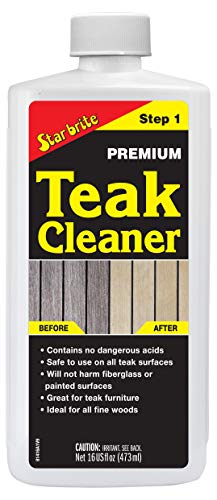
REVITALIZE YOUR TEAK - STAR BRITE Premium Teak Cleaner effortlessly restores the original charm of weathered and gray teak furniture or boat decks without the need for sanding or pressure cleaning

EFFICIENT CLEANING & BRIGHTENING: Clean and brighten weathered, gray, or black teak, effortlessly in one easy step, saving time and effort

The Bayes Teak cleaning solution deeply penetrates and protects the wood from getting dry, cracked, stained, spotty or grayed, while cleaning and maintaining for a beautiful appearance
Performance in Extreme Climates
Beyond keeping your teak furniture clean and pristine, you’ll want to understand how it performs when nature turns hostile. Teak’s climate adaptability makes it exceptional across extreme conditions. In arid environments, its natural oils prevent brittleness despite low precipitation. Coastal settings showcase teak’s salt-resistance and rot-prevention capabilities—historically used in shipbuilding for this reason. Cold climates won’t crack your kiln-dried pieces; the wood moderates temperature swings naturally. Tropical regions benefit from teak’s moisture-resistant properties and fungal protection. Whether facing temperature fluctuations or humidity shifts, teak performance remains consistently superior. Its tight grain and dense structure absorb and release moisture gradually, preventing warping and cracking. This dimensional stability guarantees your outdoor furniture survives whatever environmental challenges emerge. Compared to softwoods like Douglas Fir, which require protective treatments to extend their outdoor lifespan beyond 15 years, teak’s natural durability provides inherent longevity without extensive maintenance. For comparison, materials like powder coated aluminum also offer exceptional durability and resistance to diverse weather conditions, though teak provides natural sustainability through its inherent protective properties.
Comparing Teak to Alternative Materials
When you’re selecting outdoor furniture, teak’s performance metrics distinguish it from competing materials across three critical dimensions: durability, aesthetics, and maintenance demands.
Teak alternatives like mahogany and oak demand frequent sealing, whereas teak’s natural oils provide decades of protection without intervention. Cedar resists rot naturally but doesn’t match teak’s longevity under continuous exposure. Acacia offers moderate moisture tolerance yet requires covered storage during harsh conditions. Mahogany’s dense grain structure protects against moisture and insect damage, though it still requires regular finishing and maintenance to prevent warping and cracking. Southern Yellow Pine provides a budget-friendly alternative with high resin content that offers natural moisture protection, though it typically lasts only 3-10 years outdoors without treatment.
Your wood comparison reveals aesthetic advantages too. Teak’s golden-brown hue transforms into an elegant silver-gray patina—a transformation mahogany and acacia can’t replicate. Pine appears rustic but lacks refinement.
For maintenance, you’ll appreciate teak’s minimal upkeep against oak and pine’s demanding treatment schedules. Synthetic teak provides low-maintenance durability, though it sacrifices natural grain authenticity. Ultimately, teak balances uncompromising performance with sophisticated aging characteristics.

【Premium Acacia Wood Construction】Crafted from high-grade acacia wood, this set combines durability with exotic beauty. Naturally resistant to outdoor elements, acacia maintains its rich, sleek appearance without darkening over time. Its sturdy hardwood frame ensures long-lasting resilience against wear and tear, making it a timeless investment for your patio or garden.

DURABLE WOOD:This bistro set is made of real Acacia wood with a natural finish. This chat set is solid, strong and durable.This table chair set is Crafted from solid, weather-resistant natural acacia wood for beauty and long-lasting durability.Acacia wood is strong and durable.No splinter, rust, crack, chip or peel.Chat Set Bistro Set Table Chair Set.

【Acacia Wood 8 Pieces Conversation Sets】Experience the unparalleled durability and exotic beauty of our 8 piece outdoor furniture set, expertly crafted from high-grade acacia wood. This resilient material is naturally resistant to outdoor elements, ensuring that your furniture remains stunning and robust without darkening over time
Cost and Long-Term Value Analysis
While teak’s initial investment commands premium pricing—typically $2,000 to $5,000 for tables and chair sets, or $500 to $1,500 for individual lounge chairs—the mathematics of long-term ownership reveal compelling value. You’ll experience exceptional cost efficiency through teak’s 75-year lifespan, vastly outlasting alternatives lasting merely 15-20 years. Its natural oils provide superior waterproofing and insect resistance, minimizing maintenance expenditures and replacement cycles. You’ll avoid costly warping and cracking common in inferior woods, particularly in humid climates. Additionally, teak’s dimensional stability preserves aesthetic appeal without frequent treatments. Unlike woods such as walnut that require intensive maintenance including annual finish applications to prevent deterioration in outdoor conditions, teak demands significantly less upkeep. Over decades, you’ll recoup initial expenses through reduced upkeep and enhanced resale value—teak furniture appreciates approximately 5% annually, supporting your investment’s long-term financial trajectory.

Easy to Assembly & 24/7 Customer Support: It is very easy to assemble according to the instructions with all tools included. For the safety of the product, we divide it into 3 packages. If you encounter any issues, please visit our website christopherknighthomes.com or feel free to reach out to us at amazonvendorfeedback@gdfstudio.zendesk.com

CUSHIONED SOFA: Looking for something more refined in your outdoor space? This sofa fulfills with comfy cushions and eucalyptus wood that's protected to weather the elements with ease
Environmental Sustainability Considerations
As you consider teak’s environmental profile, you’ll reveal that responsible sourcing and natural durability create a compelling sustainability narrative. Sustainable harvesting from FSC-certified plantations guarantees replanting occurs for every tree felled, maintaining biodiversity while teak matures in just 8-20 years—far faster than alternatives like IPE.
You’ll appreciate that teak naturally sequesters approximately 50% of atmospheric carbon without chemical treatments, actively cooling the earth throughout its lifecycle. Manufacturing demands minimal energy compared to energy-intensive plastic and metal production, eliminating forges and blast furnaces entirely.
Your investment extends beyond aesthetics. Teak furniture’s 50-70 year lifespan dramatically reduces waste and replacement frequency, vastly outpacing alternatives like acacia which typically lasts only 15-20 years. The wood’s natural oil content and dense grain resist moisture and deterioration, minimizing maintenance demands and resource consumption across generations. Unlike woods with moderate decay resistance, teak’s superior natural durability eliminates the need for frequent refinishing and protective treatments that would otherwise increase environmental impact.
Best Practices for Teak Furniture Care
Protecting your teak investment requires a straightforward maintenance regimen that balances aesthetic preservation with structural longevity. You’ll establish effective cleaning techniques using soft-bristle brushes and mild soap solutions, avoiding pressure washers that damage wood fibers. For stubborn mildew, you’ll mix one part bleach with two parts water, then rinse thoroughly.
Oil application demands precision: apply thin coats with lint-free cotton rags, allowing 15–30 minutes for absorption before wiping excess. You’ll reapply teak oil periodically based on environmental exposure and usage patterns. To extend your furniture’s lifespan, ensure thorough drying before retreatment to prevent moisture damage.
Combine cleaning techniques with UV protection by applying sealers seasonally. You’ll address stains promptly with hardwood cleaners and light 120-grit sanding when necessary. For weathered furniture with heavily soiled surfaces, consider sanding with appropriate grit sandpapers to remove old gray layers before refinishing. Regular seasonal maintenance—including hardware inspection—sustains your furniture’s durability and prevents deterioration from moisture and UV exposure.

Provides interior or exterior one-step protection for dense woods such as teak, rosewood and mahogany

Apply periodically to refresh your dense woods and help protect them from UV rays
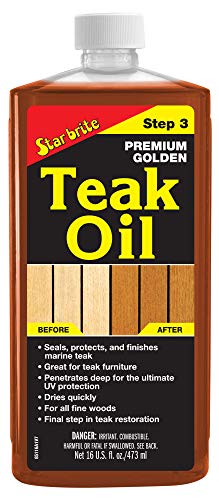
ULTIMATE WOOD PROTECTION: STAR BRITE Teak Oil provides superior protection for teak and other fine woods - Suitable for teak furniture, marine teak, decks and teak shower benches
Why Teak Remains the Premium Choice
Given your investment in proper teak maintenance, you’ll find that the wood’s inherent qualities justify its premium positioning in the outdoor furniture market. Teak wood characteristics—including natural oils, dense grain structure, and exceptional pest resistance—deliver unmatched longevity that spans 50–75 years. You’re acquiring furniture that genuinely outperforms competing materials through superior weather resistance and minimal upkeep demands.
Beyond durability, teak furniture aesthetics evolve beautifully over time. The wood shifts from golden-brown to sophisticated silvery-gray, developing character that enhances rather than detracts from its appeal. This aesthetic evolution, combined with teak’s tight grain and smooth texture, guarantees your investment remains visually relevant across decades. For optimal protection and longevity, applying varnish finishes specifically formulated for outdoor use will enhance teak’s natural weather resistance properties. Like other premium hardwoods, teak’s natural water resistance prevents warping and rotting even in extreme weather conditions. You’re not simply purchasing outdoor furniture; you’re investing in a timeless material that appreciates through graceful aging while maintaining structural integrity.