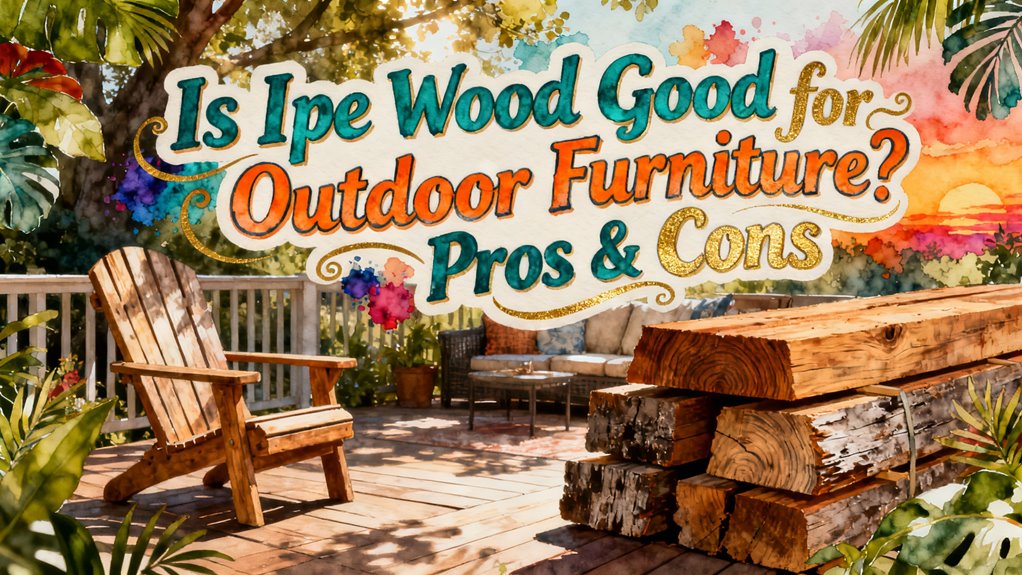
Is Ipe Wood Good for Outdoor Furniture? Pros & Cons
You’ll find Ipe wood excels for outdoor furniture due to its 3,680 Janka hardness rating, offering exceptional durability lasting 50-75 years. It’s naturally weather-resistant without chemical treatments and requires minimal maintenance. The deep brown-to-reddish tones and distinctive grain patterns enhance any aesthetic. However, you’ll invest markedly upfront, though long-term costs prove favorable. The primary concern involves sustainable sourcing, as illegal logging remains problematic. Its structural strength rivals steel in load-bearing applications. Understanding the complete performance picture reveals why designers consistently specify this material.
Exceptional Durability and Lifespan
Because Ipe wood ranks among the hardest and densest hardwoods available, you’ll find it delivers unmatched durability for outdoor furniture. Its 3,680 Janka hardness rating far exceeds comparable woods, making it ideal for high-traffic applications and frequent use.
You’ll benefit from Ipe’s natural weather resistance and moisture protection, thanks to its tight grain structure and inherent oil content. These properties prevent swelling, warping, and rot without requiring chemical treatments—a significant advantage in humid climates. Unlike synthetic patio materials, Ipe wood provides natural durability without relying on protective coatings that may degrade over time. For comparison, Southern Yellow Pine requires regular reapplication of protective coatings like marine spar varnish to maintain its weather resistance.
When you invest in Ipe furniture, you’re securing a 50-75 year lifespan, with some pieces lasting over 100 years under ideal conditions. This longevity substantially surpasses cedar, redwood, and treated pine alternatives. Proper installation with correct fasteners and adequate ventilation maximizes this exceptional performance, making Ipe a sound long-term choice.

Modern and Ergonomic Design: The design of our patio furniture set is simple, stylish and Ergonomic. It is perfect to decorate your your yard, poolside, balcony, patio and indoor area. Provide great comfort for you while you are enjoying your leisure time

Durable and Long-Lasting: This metal patio furniture set is constructed from steel, offering a stable structure with excellent strength. This small patio furniture set frame features an external rust-proof coating that provides water resistance and corrosion protection, ensuring a long service life

DURABLE WOOD:This bistro set is made of real Acacia wood with a natural finish. This chat set is solid, strong and durable.This table chair set is Crafted from solid, weather-resistant natural acacia wood for beauty and long-lasting durability.Acacia wood is strong and durable.No splinter, rust, crack, chip or peel.Chat Set Bistro Set Table Chair Set.
Natural Beauty and Aesthetic Appeal
While Ipe’s durability guarantees your outdoor furniture will withstand decades of use, its visual characteristics make it equally compelling for design applications. You’ll appreciate Ipe’s deep brown to reddish-brown tones, sometimes featuring blackish hues that create visual depth. The wood’s distinctive straight and wavy grain patterns with interlocked structures provide sophisticated texture and dimension to your pieces.
You can embrace Ipe’s natural color variation, which includes subtle reddish undertones enhancing its refined appearance. Whether you prefer the original rich tones or allow the wood to develop a silver-gray patina over time, Ipe adapts to your aesthetic preferences. These grain patterns and color characteristics remain distinct for years, complementing modern, contemporary, rustic, and traditional architectural styles while maintaining their visual integrity in any outdoor environment.

VALUE 2-PACK - 48 OZ TOTAL - Get more for your money with this convenient 2-pack of 24 oz spray bottles, perfect for ongoing care of multiple teak and hardwood pieces, indoors and out.


3/8" Tapered Ipe Plugs - 100 pieces
Low Maintenance Requirements
Your Ipe furniture won’t demand constant attention—its natural density and rot resistance mean you’ll spend far less time maintaining it than comparable hardwoods. You’ll handle routine cleaning techniques using just water and a soft brush for regular upkeep, reserving specialty cleaners like Penofin® Pro-Tech only for stubborn stains. Implement smart preventive measures: use coasters, remove debris promptly, and position furniture away from extreme sun exposure. Regarding sealing options, you can apply penetrating oil finishes annually to preserve the rich brown color, though untreated Ipe remains durable regardless. Regular inspections of joints and fasteners catch minor issues before they escalate. Unlike untreated wood that typically deteriorates within a few years outdoors, Ipe’s inherent properties provide exceptional resistance to rot, ensuring your investment remains protected for decades. This combination of inherent durability and straightforward maintenance makes Ipe an exceptionally practical choice for outdoor spaces.
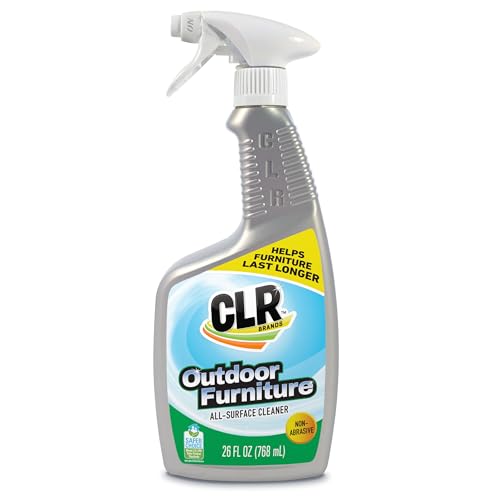
HUNDREDS OF USES: Tackle the whole yard with this powerful outdoor furniture cleaner. Formulated for use on patio, lawn and deck furniture, it is an effective and versatile product for outdoor furniture - from upholstery to plastic play sets.

OUTDOOR RESTORER: Penetrates deep to restore faded & weathered outdoor surfaces.

POWERFUL CLEANING ACTION: Formula that loosens and dissolves greasy, grimy messes on contact ensuring easy removal with minimal effort
Structural Strength and Performance
While low maintenance keeps your Ipe furniture looking good, it’s the wood’s extraordinary structural properties that confirm it’ll actually withstand years of use without failing. You’re working with a Modulus of Rupture around 25,740 psi, delivering superior bending strength that resists breaking under load. Its Elastic Modulus near 3,089,000 psi guarantees minimal deflection in structural components like pergola frames and furniture supports. With crushing strength at 13,160 psi, Ipe handles compressive stress from heavy legs and weight-bearing elements. Larger lumber sizes—4×6, 4×8, 4×12—showcase incredible natural load bearing capacity, often substituting steel framing in outdoor applications. This combination of stiffness and strength keeps your furniture stable and intact through decades of use.
Environmental and Sustainability Concerns
How sustainable is Ipe wood, really? You’ll find the answer depends on sourcing and transportation methods. Ipe’s carbon footprint remains lower than concrete or composites, especially when manufacturers use fossil-free energy and repurpose waste into biomass pellets. However, long-distance shipping from tropical forests noticeably increases emissions.
The real concern lies in harvesting impact. Ipe trees grow sparsely—one mature tree per 7-25 acres—requiring extensive forest clearing for access roads. This devastates biodiversity, though water-reclaimed Ipe from submerged forests offers a greener alternative.
Responsible forest management practices help mitigate damage. Sustainable operations involve selective harvesting of mature trees while replanting seedlings and allowing decades for regeneration. You’ll want to verify your furniture’s origin; illegal logging remains problematic despite regulatory improvements.
Fire Resistance and Safety Benefits
Beyond sourcing and sustainability concerns, Ipe wood’s inherent fire resistance offers another compelling reason to specify it for outdoor furniture, especially in wildfire-prone regions. You’ll appreciate that Ipe achieves a Class A fire rating under ASTM E84 testing, matching non-combustible materials like steel and concrete. Its exceptional density and natural oils resist ignition and slow flame propagation without requiring chemical treatments. When you incorporate Ipe furniture into fire prevention strategies, you’re reducing rapid fire spread compared to conventional woods. This performance enhances outdoor safety in dry, forested, or suburban zones while meeting stricter building codes. Unlike synthetic alternatives, you gain both fire-resistant protection and natural aesthetics—delivering a cost-effective solution that safeguards property and provides lasting peace of mind.
Cost-Benefit Analysis for Long-Term Value
Though Ipe wood commands a significant price premium—often doubling or tripling the cost of cedar or pine—its exceptional durability and minimal maintenance requirements deliver compelling long-term financial value that justifies the initial investment. Your cost analysis reveals that higher upfront expenses offset through extended lifecycle performance. You’ll experience 40–75 years of service life compared to 10–15 years for softwoods, dramatically reducing replacement frequency and labor costs.
Ipe’s natural resistance to rot, decay, and insect damage eliminates costly repairs and refinishing cycles. You’ll maintain structural integrity with periodic cleaning and optional protective oils—no hazardous chemical treatments required. Unlike softer woods that may require pressure washing and sanding to restore surfaces damaged by stains and weathering, Ipe’s density minimizes the need for such intensive restoration procedures. In comparison, alternative materials like resin furniture offer UV stabilization and non-porous surfaces that similarly prevent water absorption and require only soap and water for maintenance. This longevity investment substantially lowers cumulative ownership expenses while preserving aesthetic appeal and resale value, making Ipe a financially sound choice for premium outdoor installations.

Simple & Practical: Closed armrest and leg design makes the chair simple but modern and no need to worry about the rattan falling off when they are used after a long time.
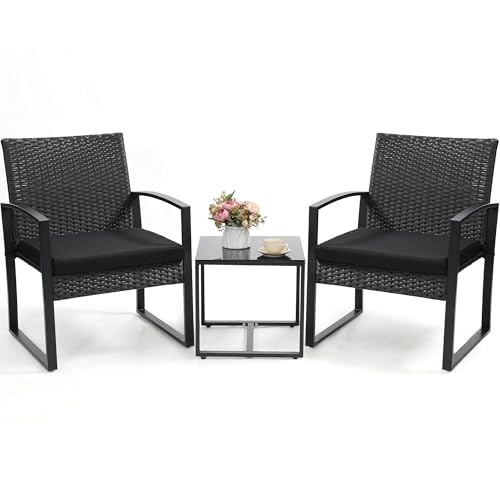
【AESTHETIC AND MINIMALIST DESIGN】The legs connected with seat and armrests. It looks like simple and modern. Each chair has self-adjust feet at the bottom. you can adjust it according to the ground conditions, keep the chair balance.

Comfortable Textile Material: The back and seat of the chair are made of textile materials with many meshes. It is one of the selected materials for outdoor furniture. This quality material is very breathable and you will enjoy it even in the summer. When it’s dirty, just wipe it with a wet or dry cloth.