How to Properly Wrap Patio Furniture for Winter Storage
You’ll protect your patio furniture by selecting UV-resistant shrink wrap, preparing surfaces thoroughly through cleaning and drying, and gathering essential tools like heat guns and adhesive tape. Secure removable components with heavy-duty straps, stack items strategically with protective layering, and elevate furniture off concrete to prevent moisture damage. Apply shrink wrap securely, ensuring proper ventilation to avoid mold growth. Monitor your storage every four to six weeks for damage and pest activity. A thorough approach to winter storage demands attention to each critical phase.
Choosing the Right Wrapping Material
When you’re preparing patio furniture for winter storage, selecting appropriate wrapping materials is fundamental to preserving your investment. You’ll find shrink wrap advantages include superior resistance to rain, snow, and wind when properly applied with a heat gun. The tight seal greatly extends furniture lifespan by blocking moisture infiltration.
For cover durability, you should consider UV-resistant weatherproof materials that protect against sun damage and debris. Thickness matters considerably—you’ll want to balance protective capability against practicality. Thicker films offer enhanced durability for harsher climates, but excessive thickness complicates installation and removal.
You might also evaluate HDPE alternatives, which resist cracking and rotting while requiring minimal maintenance. Whatever material you choose, guarantee proper fit and secure fastening to prevent snow and ice accumulation that damages furniture surfaces.

WATER REPELLENT SPRAY: One Scotchgard Outdoor Sun & Water Shield Fabric Spray, 10.5 oz can, that repels water and protects against the sun's UVA/UVB rays

Proper Size: Our outdoor sectional sofa covers can fit the l-shaped patio sofa size up to 83”(left) x 104”(right) x 32”D x 31”H. 1 patio sectional cover with storage bag per package, please measure your sofa and verify the facing direction before purchasing.
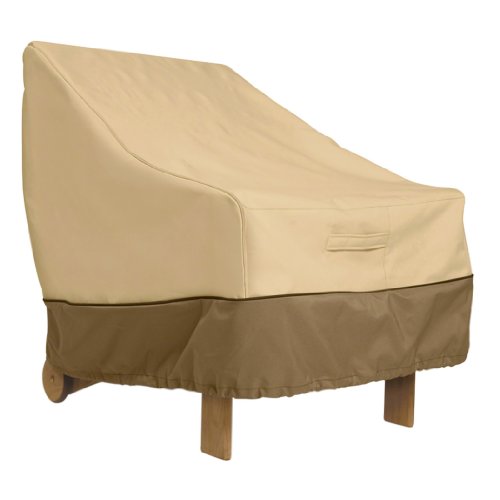
THE CLASSIC ACCESSORIES DIFFERENCE: Veranda covers go the extra mile with interior bound seams for strength, high-density stitching for durability, padded handles for comfort, and matching webbing for a sophisticated look
Preparing Furniture for Wrapping
Before you wrap your patio furniture, you’ll need to prepare it thoroughly to guarantee maximum protection during winter storage. Start by conducting a detailed damage assessment, identifying any wear or deterioration that requires attention before wrapping. Next, employ appropriate cleaning methods for your furniture’s material—use mild dish soap and warm water for most pieces, but select fabric-safe solutions for cushions and gentle cleaners for resin wicker. Verify all surfaces dry completely before proceeding, as trapped moisture promotes mold and mildew growth. To prevent moisture accumulation during storage, consider using protective covers in addition to your wrapping. Apply protective coatings like sealants, varnishes, or rust-resistant paints to wood and metal furniture, allowing them to cure fully. For aluminum pieces, consider car wax application for enhanced moisture protection. Proper preparation during this stage ensures routine inspections and repairs will be unnecessary when you retrieve your furniture next season. These preparatory steps establish an ideal foundation for effective wrapping and long-term furniture preservation.
Essential Tools and Accessories
Now that your furniture’s been properly cleaned, assessed, and treated with protective coatings, you’ll need to gather the right tools and materials to execute an effective wrapping strategy. Start with 6-7 mil shrink wrap and a propane-fired heat gun for even application. You’ll want scissors, safety gloves, and glasses for protection during handling.
For storage tips, incorporate foam padding underneath to prevent abrasion, and install heat shrink vents to maintain airflow and reduce moisture buildup. Use 3-4 inch wide adhesive tape to secure seams and edges, applying overlapping patterns that eliminate gaps. Consider UV-resistant wrap types for extended sun protection, and add corner protectors at sharp edges. Before wrapping, ensure your furniture is completely dry by allowing air drying to prevent mold and mildew growth during storage. Keep reinforcement patches, a fire extinguisher, and an inspection checklist nearby to guarantee thorough coverage and safety throughout the wrapping process.

Item Protection – This moving wrapping plastic roll is suitable for most situations, helping protect and secure the items you need.

PREMIUM 7-MIL PROTECTION: Made from durable LDPE, our shrink wrap forms a tough barrier against weather and debris, providing versatile protection for boats, RVs, patio furniture, and marine, storage, industrial, or seasonal applications.

Extra-Wide Shrink Wrap Roll – Heavy-duty 17’ x 25’ white plastic film ideal for covering wide boats, pontoons, and outdoor gear. Perfect for storage, shipping, or protection from weather damage
Securing and Stacking Your Furniture
You’ll need to stabilize your wrapped furniture before stacking to prevent shifting, damage, or safety hazards during storage. Start by securing all removable components—cushions, legs, and wheels—to the main frame using heavy-duty straps or bungee cords. Confirm proper furniture positioning by placing heavier items on the bottom and lighter pieces on top for maximum stability.
Apply protective layering between stacked pieces using blankets or padding to shield surfaces from scratches. Stack only compatible furniture to prevent structural damage, keeping stacks below shoulder height. Balance and center each stack carefully to eliminate tipping risks.
For elevation, use pallets or glides to raise furniture 2–3 inches off concrete surfaces, promoting air circulation and preventing moisture damage. Maintaining proper ventilation by leaving gaps between the tarp and furniture will help prevent moisture buildup during the storage period. Consider using fabric water repellency treatments on your covers before storage to provide additional protection against moisture infiltration during the winter months. Periodically inspect connections, fasteners, and stack stability throughout the storage period.

TRIPLE WATERPROOF PROTECTION: Vailge patio furniture covers are built with heavy-duty 600D Oxford fabric with a water-resistant coating and taped interior seams. Prevents water leakage through stitching during heavy rain, protecting your round patio table from moisture.

TRIPLE WATERPROOF PROTECTION: Vailge outdoor sofa cover is built with heavy-duty 600D Oxford fabric with a water-resistant coating and taped interior seams. Prevents water leakage through stitching during heavy rain, protecting your patio sofa from moisture.

【Kipiea Outdoor Furniture Covers】 Would you like to protect your precious patio furniture from the elements with a high-quality cover? Kipiea patio furniture covers feature a double-layer PU waterproof coating on higher-density 420D fabric and quality waterproof tape at the seams to ensure the cover withstands up to 200,000 PA of water pressure and keeps your furniture dry even after years of use
Cutting and Applying Shrink Wrap
With your furniture secured and stacked properly, you’re ready to encase everything in protective shrink wrap. Start by measuring the widest, tallest, and deepest points of your furniture cluster to determine the necessary shrink wrap materials. Roll out the wrap, fold it in half, and drape it so half covers beneath and half above your furniture. Cut relief lines from corners to ground, allowing the material to conform tightly to your furniture’s shape. Using a heat gun, apply heat in slow, sweeping motions from bottom to top, systematically working around all sides. These application techniques guarantee uniform shrinkage without overheating. Fold and heat-seal the base perimeter first, then shrink the remainder. This methodical approach creates a secure, weatherproof barrier for winter storage.

▶ 【Strong Power With 2 Modes】 SEEKONE 1800W heat gun provides strong power quickly heat up to 1202℉(650℃) in 1.5 seconds. Two modes: I: 50-450℃, 190-210L/min; II: 50-650℃, 250-500L/min

⏩【Warm Tips】When using the heat gun for the first time, there will be smoke and burning odour, which is normal. This is because there is an anti-rust coating on the heating core. When the heat gun is activated, the coating will start to melt and smoke due to the high temperature

Efficient Heating Performance: This propane heat gun delivers a powerful 187,660 BTU output, heating 1 cubic meter pallet wrap in just about 1.5 minutes. Ideal for large-area shrink wrapping, the propane heat tool boosts efficiency.
Heat Sealing Techniques
Heat sealing transforms your shrink wrap into a durable, weatherproof barrier that’ll protect your patio furniture throughout winter. Start your shrink wrap application at the bottom edge, moving upward with smooth, sweeping motions to distribute heat uniformly. Maintain a 30–45 cm distance from the film using a heat gun or propane torch designed for this purpose. Monitor constantly for bubbling or melting, stopping immediately if damage occurs. Employ heat safety precautions by wearing gloves and eye protection, and use cardboard barriers to shield delicate surfaces like glass or wicker from direct heat exposure. For furniture with handwoven PE wicker, take extra care during the heating process to prevent material damage. Inspect the entire wrap afterward for weak points, repairing any holes with additional tape or spot heating to guarantee complete protection.
Ventilation and Moisture Control
Moisture becomes your greatest adversary once furniture enters winter storage, as trapped condensation accelerates mold and mildew growth far more destructively than outdoor exposure ever could. You’ll achieve effective moisture management by selecting breathable covers with mesh vents that facilitate continuous airflow optimization around all surfaces. Elevate furniture 1-2 inches above ground using risers or blocks to prevent moisture wicking from concrete and damp surfaces. Space stored pieces strategically to maintain air circulation and reduce condensation accumulation zones. Position covers to align with prevailing wind patterns, maximizing natural ventilation. Periodically remove snow and water pooling on cover surfaces to prevent internal buildup. In humid climates, deploy dedicated moisture absorbers within storage areas. Ensure all structural connections between risers and furniture are securely fastened to provide stability during the storage period. For optimal protection, invest in 600 to 900 denier polyester covers that balance durability with breathability. These coordinated ventilation strategies work synergistically to protect your furniture throughout winter months.

【Enzeno Patio Furniture Set Covers】-- Is your expensive furniture damaged by rain, sun exposure, dust ? The new Outdoor table covers has been tested to withstand 10,000pa of water pressure and can stay dry for 1800 hours when water is accumulated. The interior is coated with an environmentally friendly silver-coated coating that absorbs UV and other visible light to prevent furniture aging.

【Size】108" L × 82" W × 28" H. The universal design fits up to outdoor sectional furniture sets, rectangular table and chair sets. The patio furniture cover is large enough that can hold 6-8 chairs, 1-2 rectangular tables, or 6-8 double couches. Please measure the furniture size before purchasing.

【Enzeno Garden Furniture Cover】 - Is your expensive furniture damaged by rain, sun and dust? The new upgraded garden furniture cover is covered with nano PU coating and high temperature sealed waterproof adhesive tape on the stitching seams. It enables the product to withstand 15,000pa water pressure.
Selecting the Right Storage Location
Your storage location determines whether the ventilation and moisture controls you’ve implemented will actually succeed. You’ll want to select ideal locations like climate-controlled storage units, basements with stable temperatures, or enclosed garages that shield furniture from precipitation and UV exposure.
Identify problematic areas you must avoid: spaces prone to flooding, damp basements, attics with temperature fluctuations, and areas near heating vents. Don’t place furniture directly on concrete without elevation or risers underneath.
Elevate your pieces using pallets or plastic risers to prevent moisture absorption from ground contact. Verify your chosen location has secure locks for theft prevention and remains easily accessible for periodic inspections. Keep pathways clear and store furniture away from flammable materials or chemicals.
Monitoring and Maintenance During Winter
Once you’ve placed your patio furniture in storage, the work isn’t finished—you’ll need to establish a consistent inspection and maintenance routine throughout the winter months to catch potential problems before they become costly damage.
Conduct a winter inspection every four to six weeks, checking for moisture accumulation, mold, and structural damage. Implement pest monitoring by examining furniture legs and joints for nesting evidence or chewing marks. Remove any debris that could attract rodents or insects.
Maintain proper humidity levels using dehumidifiers or silica gel packs, and guarantee covers remain dry and securely fastened. Verify protective coatings remain intact, treating exposed wood or rust spots immediately. For stored white furniture, consider using a mild soap solution to spot clean any surfaces that accumulate dust during winter storage. To prevent surface damage during cleaning, always use soft sponges or brushes rather than abrasive materials. Address any water intrusion or leaks promptly to prevent deterioration and preserve your furniture’s condition for spring use.