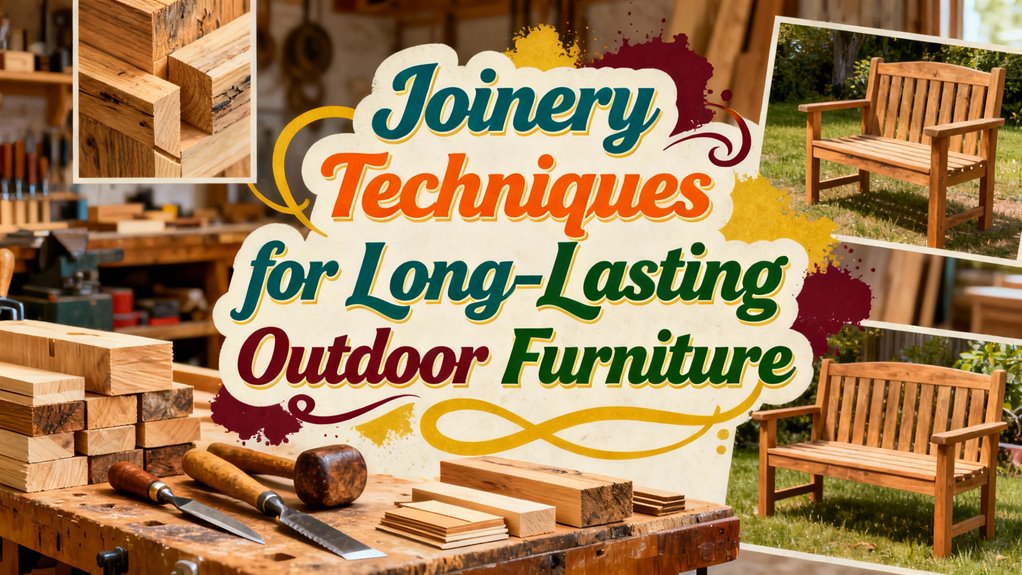
Joinery Techniques for Long-Lasting Outdoor Furniture
You’ll dramatically extend your outdoor furniture’s lifespan by mastering joinery techniques that lock wood pieces together with structural integrity far superior to fasteners alone. Draw-bored mortise and tenon joints create self-tightening connections proven to last 500+ years, while reinforced halving joints and dovetails resist moisture infiltration when paired with durable woods like teak or black locust. Combining these time-tested methods with proper finishing—spar urethane or epoxy sealers—protects against UV damage. The synergy between superior joinery and material selection transforms your outdoor pieces into heirloom-quality furniture.
Reinforced Halving Joints for Enhanced Durability
When you’re constructing outdoor furniture that’ll withstand years of exposure to the elements, reinforced halving joints offer a proven foundation for structural integrity. You’ll cut half the thickness from each piece, creating interlocking components that sit flush together while greatly increasing surface area for adhesive types like epoxy or polyurethane to bond effectively.
Double shoulders at each corner substantially strengthen these joints, enhancing joint stability by resisting water infiltration and lateral movement. You can supplement your primary adhesive with screws or dowels, creating a combination reinforcement system that prevents deterioration from moisture and temperature fluctuations. When paired with naturally durable woods like Siberian larch, which has high resin content and frost hardiness, these reinforced joints maximize the lifespan of your outdoor furniture. For even greater longevity, consider that pressure-treated wood can extend furniture life to 15-30 years or longer with proper maintenance. This methodology delivers exceptional durability without the complexity of alternative techniques like mortise and tenon joinery, making it ideal for underframes and frame structures requiring both strength and aesthetic flush surfaces.
Dovetail Joints and Wood Selection for Outdoor Environments
While reinforced halving joints excel at creating durable underframes, dovetail joints represent the pinnacle of joinery strength and represent your best option for outdoor furniture components subjected to constant stress and movement. You’ll benefit from their interlocking trapezoidal design, which resists pulling forces without requiring metal fasteners that corrode outdoors.
Choose teak, cedar, redwood, or mahogany—woods with natural rot and insect resistance. Mahogany performs well outdoors when properly finished and maintained, including regular sealing and refinishing to prevent warping and cracking. For outdoor applications, varnish offers superior weather resistance compared to polyurethane, making it the ideal choice for protecting these premium woods. Confirm kiln-dried lumber to minimize warping from humidity fluctuations. Through dovetails provide maximum strength, while half-blind variants maintain outdoor furniture aesthetics by concealing pins from weathered surfaces.
The dovetail joint history spans nearly 4,000 years, proven through archaeological evidence. You’re investing in time-tested craftsmanship. Annual inspections, regular oiling, and proper storage during extreme weather maximize longevity, transforming your furniture into heirloom-quality pieces.
Mortise and Tenon Joints as the Gold Standard
The mortise and tenon joint stands as the apex of outdoor furniture joinery, delivering unmatched strength through long grain-to-long grain contact that creates interlocking wood fibers capable of resisting pulling, twisting, and racking forces. You’ll find mortise advantages evident in centuries-old antique furniture and timber-frame buildings that withstand environmental stress without deterioration. Unlike corroding metal fasteners, well-crafted joints maintain structural integrity through harsh conditions. Tenon aesthetics offer versatility—through tenon designs showcase contrasting woods while remaining structurally superior, adapting seamlessly to diverse styles from rustic to contemporary. Executing these joints demands precision and skill, but when properly fitted and glued, you’ll create connections stronger than the wood itself, establishing the gold standard for durable outdoor furniture construction.
Draw-Bored Mortise and Tenon for Maximum Strength
To elevate mortise and tenon joints beyond their already superior standard, you’ll employ draw-boring—an intentional misalignment technique that transforms a static connection into a self-tightening mechanism. This method offsets holes by 1/32″ to 1/16″ toward the shoulder, allowing a beveled peg to bind and pull the joint tight when driven home.
Draw bore advantages include eliminating clamp dependency during assembly while delivering strength that exceeds glued joints alone. The self-tightening action compensates for minor misfits and maintains integrity as wood shrinks seasonally. Proper joint alignment demands careful marking and offset drilling—scribe your tenon face, disassemble before offsetting the hole, and verify alignment before final pegging. Similar to achieving strong outdoor installations, maintaining consistent board spacing and alignment during assembly ensures structural integrity.
Historical examples demonstrate draw-bored joints withstanding 500+ years of outdoor exposure, making this technique essential for weather-resistant furniture. While draw-boring provides exceptional structural integrity, the wood species selected remains critical—woods lacking natural resistance to decay will still require protective finishes and regular maintenance to survive long-term outdoor conditions.
Understanding Pocket-Hole Screw Technology
If you’ve mastered draw-bored mortise and tenon joints, you’re ready to explore pocket-hole screw technology—a modern joinery method that delivers comparable strength with markedly faster assembly. This system’s pocket hole advantages lie in its three-part design: a counterbore for the screw head, a shoulder mechanism that draws pieces together, and a pilot hole guiding the threaded portion. You’ll find screw compatibility essential for outdoor success. Coarse threads work for softwoods, while hardwoods demand fine threads to prevent splitting. For exterior applications, you’ll choose between stainless-steel or Blue-Kote™ variants—the latter featuring ceramic coating and multi-layer corrosion protection. Real-world testing confirms these joints withstand freeze-thaw cycles and repeated stress, making them reliable for outdoor furniture without requiring glue reinforcement. When designing larger furniture pieces, consider how beam span capabilities affect the overall structure and support requirements. Proper fastening and spacing accommodates expansion and drainage, similar to the principles used in composite deck construction for long-term durability.

Pack Size: Includes 100 stainless steel pocket-hole screws in 1-1/4 in length for woodworking, cabinetry, and furniture assembly

【For Pocket Hole】: Optimized pocket hole screws 1-1/4 inch length and washer head are designed for wood joinery in invisible pocket hole. Avoiding over-drilling, and effectively predicted the screw position while drilling.

Pack Size: Includes 100 stainless steel pocket-hole screws in 1-1/2 in length for woodworking, cabinetry, and furniture assembly
Corrosion-Resistant Hardware Options
Your pocket-hole joints are only as durable as the hardware securing them, so you’ll want to understand stainless steel grades and their performance in outdoor environments. Grade 304 stainless steel offers solid corrosion resistance for standard outdoor furniture, while grade 316—containing 2% molybdenum—excels in harsh, salt-laden conditions near pools and coastlines. Both grades are non-magnetic and maintain strength across temperature extremes. You’ll strengthen your hardware further by applying corrosion resistant coatings like powder finishes or UV-stabilized treatments to bolts, nuts, and washers. Anti-seize compound on threads prevents future seizure while protecting against moisture infiltration. Matching your stainless steel grades throughout your joinery—bolts, screws, and fasteners alike—ensures consistent protection and eliminates galvanic corrosion risks. For furniture frames, consider pairing quality hardware with synthetic wicker components, which resist fading and moisture damage better than natural alternatives in outdoor settings.

Superior Resistance to Rust & Corrosion When Compared to Common Stainless Kits

SCREW SIZE & DRILL COMPATIBILITY: Fastenere #8 (0.164") deck screws feature a straight pilot drill size of 3/32" for soft wood and 7/64" for hard wood, ensuring smooth installation for various wood types including composite and Trex materials.

1.Precision-Engineered for 1/2" Fasteners:Please check our size picture carefully before ordering to ensure it meets your size requirements !! These SAE-standard flat washers ensure a perfect fit for 1/2" bolts and screws. They provide a uniform load-bearing surface to prevent loosening, reduce stress on materials, and enhance joint integrity under vibration or load .
Wood Species Best Suited for Outdoor Furniture
Wood selection makes or breaks your outdoor furniture’s longevity, and you’ll want to prioritize species with proven durability in harsh weather conditions. Teak vs. Acacia both deliver exceptional performance—teak lasts 50+ years with minimal maintenance thanks to natural oils, while acacia offers comparable durability at lower cost, though it’s susceptible to alcohol and perfume damage. Teak’s exceptional durability stems from its high natural oil content and tight grain structure that create a protective barrier against weathering and insect damage. Black Locust stands strongest, enduring 60+ years and naturally repelling termites without treatments. Cedar provides affordable softwood options but won’t match hardwood longevity. Oak balances abundance and affordability with tight grains offering rot resistance, making it ideal for demanding applications. Ipe wood represents another premium option, capable of lasting up to 75 years with its natural oils and resistance to rot, decay, and insects. Match your species selection to your climate and maintenance commitment for peak furniture lifespan.

【Premium Acacia Wood Construction】Crafted from high-grade acacia wood, this set combines durability with exotic beauty. Naturally resistant to outdoor elements, acacia maintains its rich, sleek appearance without darkening over time. Its sturdy hardwood frame ensures long-lasting resilience against wear and tear, making it a timeless investment for your patio or garden.

ACACIA WOOD: Made with acacia wood that brings a sleek and exotic look to your space, this durable hardwood naturally withstands outdoor elements and will not darken over time. Acacia wood is perfect as a solid, heavy frame that resists wear and tear.

DURABLE WOOD:This bistro set is made of real Acacia wood with a natural finish. This chat set is solid, strong and durable.This table chair set is Crafted from solid, weather-resistant natural acacia wood for beauty and long-lasting durability.Acacia wood is strong and durable.No splinter, rust, crack, chip or peel.Chat Set Bistro Set Table Chair Set.
Protective Finishes and Coatings
Once you’ve selected the right wood species for your outdoor furniture, the protective finish you apply becomes equally critical to its longevity and appearance. You’ll find that spar urethane and marine varnish deliver 4–5 years of protection with excellent UV resistance and flexibility against wood movement. For demanding environments with constant moisture exposure, epoxy-based sealers provide superior waterproofing, though they demand rigorous finish application and surface preparation. Exterior polyurethane offers reliable mid-range durability at 3–4 years, suitable for decks and high-traffic areas. Water-based polyurethanes provide an additional advantage by drying faster and resisting yellowing compared to oil-based alternatives, giving your furniture a more natural appearance over time. Apply finishes in 2–3 thin layers for best results, maintaining a wet edge to prevent lap marks and ensure uniform coverage. Consider the environmental impact of your chosen product—water-based stains with UV inhibitors present eco-friendlier alternatives without sacrificing performance or aesthetic appeal.

Ideal for use on exterior wood surfaces above the water line, including trim, railings and wood furniture

PROTECTIVE CLEAR FINISH – Minwax Helmsman Spar Urethane is specially formulated as a protective varnish for wood for interior and exterior projects. It contains special UV blockers that reduce the sun’s graying and fading effects.

Protects outdoor wood surfaces such as furniture, fences, boats, trim and more
Maintenance and Reapplication of Outdoor Finishes
Maintaining the protective finish you’ve applied requires vigilance and understanding when refinishing becomes necessary—and that timing depends entirely on your wood species, climate exposure, and finish type. Establish maintenance schedules by monitoring water beading on surfaces; loss of beading signals reapplication time. Hardwood furniture in full sun needs refinishing every 1-2 years, while exterior doors under partial exposure require attention every 4-5 years. Between cycles, clean regularly with mild soap and soft brushes, moving with the grain. Avoid power washing, which damages finishes and opens cracks. For teak and other premium hardwoods, periodic resealing or oiling helps preserve the wood’s natural appearance while extending the life of your outdoor investment. Your reapplication techniques should include proper surface preparation: high-pressure washing, 180-grit sanding, and ensuring complete dryness before applying fresh coats with tung oil-based finishes for superior durability. When working around metal components such as balusters or hardware, use careful brush techniques to avoid getting finish on metal surfaces that do not require coating.

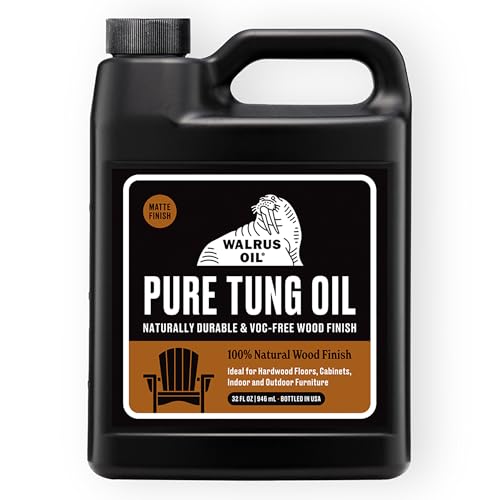
Easy to Use - Tung oil is a natural oil recognized by craftsmen to offer the ultimate hand-rubbed finish for all fine woods; just wipe on and allow the oil to cure at room temperature
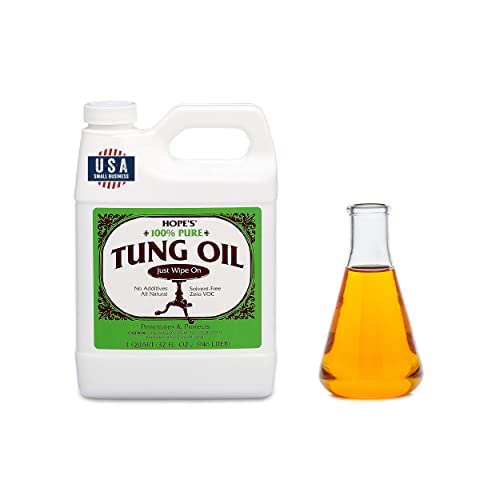
Easy to Use - Tung oil is a natural oil recognized by craftsmen to offer the ultimate hand-rubbed finish for all fine woods; just wipe on and allow the oil to cure at room temperature
Combining Joinery Techniques With Proper Wood Selection
Because a superior joint alone won’t guarantee outdoor furniture longevity, you’ll need to deliberately pair your chosen joinery method with wood species that naturally resist decay and moisture damage. Your joinery combinations should strategically match construction methods with proven timber selections. Mortise and tenon joints excel when paired with cedar, teak, or white oak, while dovetail joinery performs exceptionally with iroko and black walnut. Reinforced halving joints benefit considerably from premium oak’s superior density. Redwood’s Janka hardness rating of approximately 450 lbf makes it particularly suitable for furniture experiencing significant wear and heavy-duty applications. Additionally, integrate wood treatments and corrosion-resistant fasteners—stainless steel or galvanized screws—into your design strategy. Blue-Kote™ screws offer 400% greater rust resistance than standard fasteners. When attaching outdoor structures like pergolas to your home, ensure proper flashing and sealing techniques are applied to protect joints from water infiltration and structural compromise. This synergistic approach combining thoughtful joinery selections, appropriate wood species, and quality hardware creates outdoor furniture capable of withstanding decades of environmental exposure.