Is Lacquer a Good Finish for Outdoor Furniture?
You shouldn’t use lacquer for outdoor furniture because it’ll fail within 6–12 months under UV radiation, causing yellowing, chalking, and cracking. Lacquer lacks UV stabilizers and fungicides, making it vulnerable to moisture penetration and delamination. While it lasts only 2–3 years outdoors, polyurethane extends to 3–5 years with superior moisture resistance. Spar urethane remains the gold standard, lasting 4–5 years with excellent UV and water protection. Understanding the right finish and maintenance approach will transform your outdoor furniture’s longevity.
Why Lacquer Fails in Outdoor Environments
Although lacquer performs admirably indoors, it’s fundamentally incompatible with outdoor conditions due to its vulnerability to ultraviolet radiation. UV exposure breaks down the resin bonds, causing embrittlement and loss of flexibility within 6–12 months of direct sunlight. You’ll notice yellowing, chalking, and increased cracking susceptibility.
Lacquer lacks the weather resistance additives found in outdoor finishes—no UV stabilizers, fungicides, or flexibilizers protect it from environmental stressors. Moisture penetrates micro-cracks, causing swelling and delamination, while temperature fluctuations make brittle lacquer prone to failure. Seasonal humidity swings stress the finish as wood expands and contracts beneath it.
These combined factors rapidly compromise adhesion, causing peeling and flaking that expose wood to accelerated weathering and decay.

Protects against harmful UV light rays

Ideal for use on exterior wood surfaces above the water line, including trim, railings and wood furniture

WATERPROOFING STAIN – Bring out the beauty of your outdoors with Thompson’s WaterSeal Clear Multi-Purpose Waterproof Stain. Proven to waterproof concrete, brick, exterior wood and other exterior surfaces.
Durability Comparison: Lacquer vs. Polyurethane
How do lacquer and polyurethane actually stack up when exposed to outdoor conditions? Lacquer durability typically maxes out at 2–3 years outdoors, while polyurethane finishes last 3–5 years with proper maintenance. You’ll find that polyurethane’s thicker, more resilient coating outperforms lacquer’s thin film against abrasion, moisture, and chemical damage. When scratches occur, lacquer repairs are simpler for minor flaws, but polyurethane benefits shine through its superior impact resistance—crucial for high-traffic furniture. Polyurethane’s moisture resistance surpasses lacquer, which bubbles and peels in humid climates. For UV protection, spar urethane maintains color longer than standard lacquer, which yellows within 6–18 months. Water-based polyurethanes offer the added advantage of faster drying times while resisting yellowing better than oil-based alternatives. You’ll need fewer touch-ups with polyurethane, making it the more durable choice for outdoor applications despite its longer curing time.

PROTECTIVE CLEAR FINISH – Minwax Helmsman Spar Urethane is specially formulated as a protective varnish for wood for interior and exterior projects. It contains special UV blockers that reduce the sun’s graying and fading effects.

PROTECTIVE CLEAR FINISH – Minwax Helmsman Spar Urethane is specially formulated as a protective varnish for wood for interior and exterior projects. It contains special UV blockers that reduce the sun’s graying and fading effects.
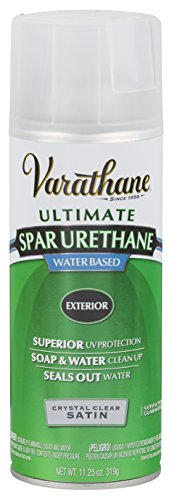
Protects outdoor wood surfaces such as furniture, fences, boats, trim and more
Varnish as a Superior Alternative for Outdoor Use
Since lacquer falls short for outdoor furniture, varnish emerges as a more reliable alternative that you’ll find considerably better suited to weathering harsh environmental conditions. Varnish properties include superior water resistance and robust UV protection, creating a thicker protective shield than lacquer can provide. You’ll appreciate its oil-based composition, which forms a durable seal against moisture penetration and sun damage. For outdoor durability, consider spar varnish—a marine-grade formulation engineered to expand and contract with wood, preventing cracks during temperature fluctuations. You can apply varnish in fewer coats than lacquer, though longer drying times require patience. Unlike lacquer, you can repair varnish finishes locally without complete stripping, making maintenance considerably more practical for outdoor pieces exposed to demanding environmental stress. To maintain the longevity of your varnish finish, apply UV wood sealer as a topcoat to protect against sun damage and weathering. Polyurethane, by contrast, tends to form a hard, non-breathable layer that can trap moisture and cause wood to crack or split due to restricted expansion and contraction.

Protects outdoor wood surfaces such as furniture, fences, railings, trim and more

3X‑THICK ONE‑COAT PROTECTION: Formulated to be three times thicker than Varathane Ultimate Water‑Based Spar Urethane, allowing excellent durability and project completion up to three times faster in just one coat
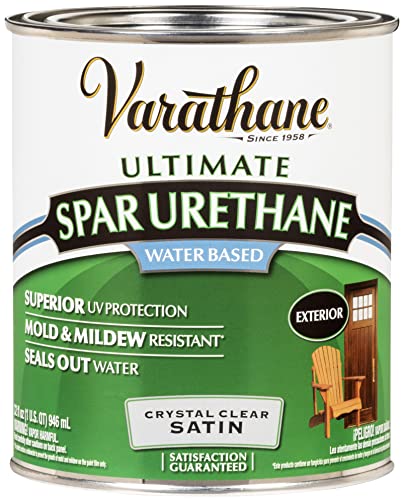
Durable, poly for outdoor wood surfaces such as furniture, doors, windows, fences, trim and more
The Benefits of Lacquer for Indoor Applications
While lacquer proves inadequate for exterior exposure, it truly excels as an indoor furniture finish, offering distinct advantages that make it the preferred choice for interior applications. You’ll appreciate the superior Finish Quality that lacquer delivers—its high-gloss, glass-like surface enhances wood grain while resisting scratches and yellowing. The finish maintains clarity indefinitely, preserving your furniture’s aesthetic appeal for years.
Application Techniques make lacquer remarkably efficient for indoor use. You can apply it via spray gun, brush, or pour method, achieving professional results quickly. Its extremely fast drying time enables rapid recoating, requiring only two coats for thorough coverage. This accelerated production cycle reduces labor costs considerably. For indoor spaces, lacquer’s minimal maintenance requirements and long-lasting durability make it an exceptional investment in your furniture’s protection and appearance.
Specialty Lacquer Options and Their Limitations
You might assume that specialty lacquer formulations solve outdoor durability challenges, but each variant carries significant performance limitations that ultimately reinforce lacquer’s unsuitability for exterior furniture.
Catalyzed lacquers cure chemically to create harder protective layers, yet their moisture barriers remain inferior to epoxy-based sealers. Waterborne lacquers offer environmental benefits but compromise exterior performance, proving inadequate for humid climates. Japanese urushiol-based lacquers deliver premium finishes but lack essential water resistance for outdoor applications.
While acrylic lacquers resist yellowing better than nitrocellulose variants, they still remain vulnerable to weathering and moisture penetration. Even advanced specialty formulations struggle against constant salt spray, UV exposure, and temperature fluctuations. These performance limitations demonstrate that no lacquer variant provides adequate outdoor protection.
Spar Urethane and Other Recommended Outdoor Finishes
Given lacquer’s consistent performance failures across all formulations, spar urethane emerges as the practical gold standard for exterior furniture protection. You’ll benefit from its film-forming finish that lasts 4-5 years before reapplication, notably outlasting marine varnish’s 1-2 year cycle. Spar urethane’s exceptional weather resistance stems from its flexibility—it moves with wood expansion and contraction rather than cracking.
You can choose between oil-based and water-based formulations. Water-based options offer faster drying times and soap cleanup, while oil-based versions provide superior durability. Both deliver outstanding UV protection and resist water, chemicals, and deterioration effectively. For those seeking maximum durability without finishing concerns, naturally resistant wood like teak eliminates the need for frequent refinishing altogether.
For specialized applications, consider epoxy-based sealers for extreme humidity, or combination stain-and-sealer products for low-maintenance solutions. Proper material selection requires following manufacturer specifications to ensure optimal performance and longevity. Spar urethane remains your most reliable choice for consistent, long-term outdoor furniture protection.

Protects outdoor wood surfaces such as furniture, fences, railings, trim and more

Protects outdoor wood surfaces such as furniture, fences, railings, trim and more
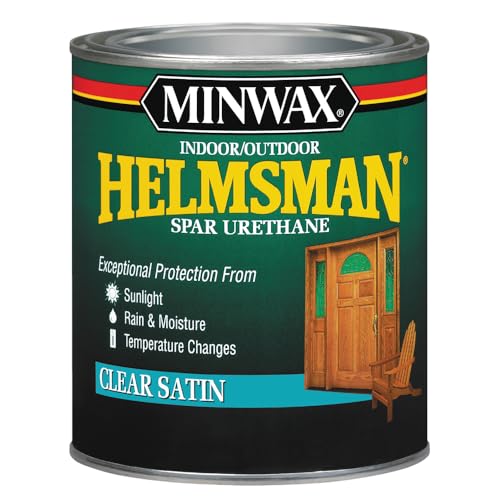
Contains UV blockers to reduce the sun's graying and fading effects
Essential Maintenance Strategies for Outdoor Wood Furniture
Because even the finest finishes can’t protect furniture that’s neglected, a structured maintenance regimen is essential for maximizing the lifespan of outdoor wood pieces. Your furniture cleaning routine should begin with sweeping debris, then using mild soap and soft brushes to scrub along the wood grain. Rinsing thoroughly with a garden hose—never power wash, as this damages the finish—removes all soap residue and prevents buildup. To ensure optimal adhesion and durability of your finish, allow adequate drying time between coats when reapplying protective treatments.
Inspect hardware seasonally and replace corroded components with stainless steel alternatives. For moisture protection, elevate furniture on pallets or blocks to prevent ground contact and water absorption. Apply breathable covers during extended periods of non-use, and remove any caps that could trap water. In coastal environments, rinse with fresh water to eliminate salt residue. Store cushions indoors and flip furniture regularly to inspect undersides for mold development. Annual application of protective coatings will further extend the life and appearance of your outdoor wood furniture.

Prevents further drying and fading of wood finishes due to sun exposure, temperature variations, and moisture both indoors and outdoors

MARINE SEALANT: Our liquid formula creates a UV-stable coating for protection against the elements, saltwater spray, and water damage. Marine is a protector for outdoor furniture, thermally modified wood, and boat docks. Marine is safe for use over open water and is non-hazardous to aquatic life. ** This product is NOT intended for hardwoods such as ipe, mahogany and teak. NOT intended for wood submerged under water or on wooden boats **

Repels moisture as it enhances wood's natural beauty. Protect your outdoor furniture from mother nature and protect your investment.