
How Much Deck Stain Do You Need? A Simple Guide
To determine how much deck stain you’ll need, measure your deck’s length and width, then multiply for total square footage. Next, check your stain’s coverage rate—it varies by type, ranging from 75 to 650 square feet per gallon. Consider how many coats you’ll apply, typically one to three depending on wood condition. Use this formula: (square footage × coats) ÷ coverage rate, then multiply by 1.03 for waste. The specifics of your wood’s age and your application method will greatly impact your final calculation.
Measuring Your Deck’s Total Square Footage
Before you can determine how much stain you’ll need, you’ve got to measure your deck accurately. Start by measuring the length and width of your main deck area in feet using a tape measure or laser distance measurer. For rectangular decks, simply multiply these dimensions together to get your total square footage.
If you’re working with an irregular shape, break the area into smaller rectangles or squares using deck measurement techniques. Measure each section separately, then add the totals together. Record all measurements to the nearest inch, then convert to feet by dividing by twelve.
Don’t forget to include attached sections like stairs and overhangs in your calculations. Irregular shape calculations require careful attention to guarantee you capture every usable surface that’ll receive stain. Before measuring, ensure your deck has been properly cleaned with a wood brightener to restore its natural pH balance and prepare the surface for accurate assessment. Accurate measurements are especially important since proper deck construction relies on joist spacing requirements that affect how your deck’s surface area is supported and distributed.
Understanding Coverage Rates by Stain Type
Understanding your stain’s coverage rate is essential for calculating how much product you’ll need, and these rates vary dramatically depending on the type you’ve chosen. Semi-transparent benefits include flexible coverage ranging from 100-650 square feet per gallon, adapting to varying wood porosity. Solid stain advantages deliver consistent 200-400 square feet per gallon coverage, offering superior opacity on weathered surfaces. Oil-based durability provides 75-400 square feet per gallon with deep penetration and natural aesthetics, though it commands premium pricing. Water-based performance delivers comparable coverage while offering environmental friendliness and mold resistance. Application method markedly impacts efficiency—spray application wastes 25-40% compared to brush application’s mere 5-10% waste. Rough, aged wood absorbs substantially more stain, reducing actual coverage by 40-100% compared to smooth surfaces. Before applying your chosen stain, sanding to smooth the surface will help ensure more consistent coverage and better adhesion to the wood. Keep in mind that environmental conditions like temperature and humidity can also affect how quickly your stain dries and cures, which may influence your application timeline and project planning.

NO LAPS, RUNS OR STREAKS: Goof Proof formula with no back brushing required; ideal for exterior wood projects

READY-TO-USE DECK STAIN & SEALER: Olympic WaterGuard acorn brown semi-transparent wood stain and sealant combines color and waterproofing in one water-based, ready-mix coat.

【PROFESSIONAL-GRADE WEATHER PROTECTION】 Provides outstanding weather resistance, effectively resisting harsh environmental factors such as rain, snow, and ultraviolet rays. The special flexible formula adapts to the thermal expansion and contraction of wood, preventing cracking and peeling.
Determining the Number of Coats Required
Once you’ve selected your stain type and calculated the coverage rate, you’ll need to determine how many coats your deck requires to achieve ideal protection and appearance. Oil-based stains typically need one to two coats, while water-based varieties generally require two to three thin coats for proper stain penetration. Your deck’s condition greatly impacts coat application needs—weathered surfaces benefit from multiple coats, whereas maintenance applications on well-maintained decks may only need one. Wood density also matters; dense hardwoods absorb less readily than softer woods. Always apply thin, uniform coats rather than thick layers to prevent tackiness and peeling. Allow each coat to dry completely before applying the next, ensuring consistent coverage and maximum durability. For best results, thoroughly clean your deck before staining to remove any dirt, mildew, or old coatings that could interfere with stain absorption and adhesion. Using natural vinegar cleaning methods can effectively eliminate mildew and mold that compromise stain adhesion. Following manufacturer recommendations remains essential for best results.
Calculating Your Stain Quantity Needs
Now that you’ve determined how many coats your deck needs, you’ll calculate the exact amount of stain required by measuring your deck’s surface area and dividing it by the stain’s coverage rate. Use this formula: (deck area in square feet × number of coats) ÷ coverage rate per gallon. Most stains cover 150–300 square feet per gallon, depending on the product and wood condition.
After calculating, multiply your result by 1.03 to account for spillage and waste during application. Round up to the nearest gallon. When selecting your stain color and application tools, remember that weathered decks absorb more stain than new ones, requiring additional product. For new decks, it’s important to wait around 3 months after installation before staining to allow the wood to dry and weather properly. To achieve the best results, ensure you apply even, thin coats following the wood grain using a quality applicator. If your calculation lands close to a whole number, purchase an extra gallon as insurance against running short mid-project.

READY-TO-USE DECK STAIN & SEALER: Olympic WaterGuard woodland cedar semi-transparent wood stain and sealant combines color and waterproofing in one water-based, ready-mix coat.
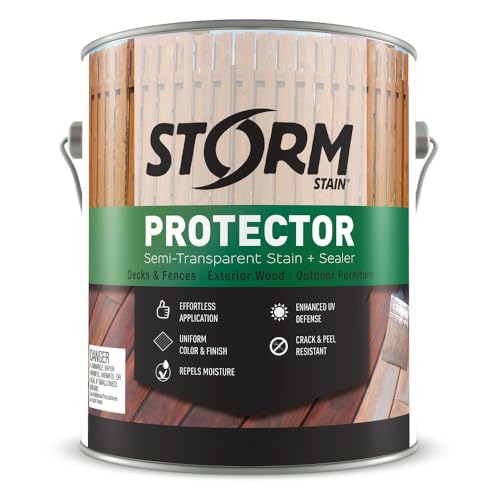
STORM PROTECTOR: Storm Protector is a penetrating, semi-transparent stain and sealer that highlights the natural beauty of the wood grain while providing protection from Mother Nature.

NO LAPS, RUNS OR STREAKS: Goof Proof formula with no back brushing required; ideal for exterior wood projects
Accounting for Wood Condition and Application Method
Your deck’s stain consumption depends heavily on both the wood you’re working with and how you apply the product. Rough, weathered surfaces and pressure-treated lumber absorb stain differently than smooth, untreated wood, requiring adjusted coverage calculations. Dense hardwoods like teak demand different stain compatibility considerations than softer species.
Your application method greatly impacts product quantity. Spray application delivers single-coat coverage with minimal waste, while brush techniques require two coats, doubling your stain needs. Rollers work twice as fast as brushes but need back-brushing for better penetration, increasing consumption.
Wood pre-treatment history matters too—previously stained decks need less product since existing coatings reduce absorption. Match your stain type to your chosen method: solid colors suit rollers, while transparent stains work best with sprayers. Before application, thoroughly clean your deck surfaces with gentle soap solutions to remove dirt and debris that could affect stain adhesion. For optimal results, always stir the stain before and during application to ensure consistent color and proper pigment distribution.
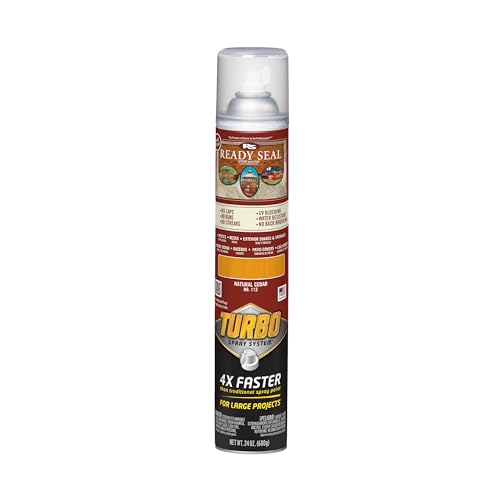
NO LAPS, RUNS OR STREAKS: Goof Proof, oil-based formula now equipped with the powerful Turbo Spray System; ideal for exterior wood projects

1-Gallon funnel-top, translucent tank for easy filling and cleaning

ONE‑COAT PROTECTION: Oil‑base formula seals and protects exterior wood surfaces in a single coat, delivering strong defense against water and UV exposure