

Is Cast Aluminum Good for Outdoor Furniture?
You’ll find cast aluminum excels for outdoor furniture because it resists rust naturally—lacking iron content that causes corrosion. Its protective oxide layer shields against moisture and salt exposure, making it ideal for coastal climates. The material’s solid construction resists warping and cracking better than wood or plastic. Powder coating further enhances durability, requiring only occasional cleaning. With a lifespan of 10-25 years and minimal maintenance demands, you’re investing in reliable performance. Uncovering how its design flexibility matches practical benefits reveals why it’s superior to traditional alternatives.
Rust and Corrosion Resistance
Cast aluminum won’t rust like iron-based metals because it lacks the iron content that triggers oxidation and structural degradation. Instead, a natural oxide layer forms on the surface, providing inherent rust protection without requiring intervention.
You’ll find that cast aluminum‘s corrosion prevention capabilities stem from this self-repairing protective layer. Even when scratched, the oxide reforms, maintaining your furniture’s integrity. While corrosion is possible under extreme conditions—prolonged salt air exposure or acidic environments—it’s far less likely than with steel or wrought iron.
For enhanced rust protection, consider powder coating or anodizing treatments. These protective finishes create durable barriers against moisture and UV damage. In coastal regions, marine-grade aluminum alloys offer superior corrosion resistance. Regular maintenance and covered storage further extend your furniture’s lifespan, making cast aluminum an excellent choice for outdoor durability.

All Weather Aluminum Chairs: These patio dining chairs are designed to withstand various weather conditions, making them perfect for outdoor use. Made from durable aluminum material, they are resistant to rust and corrosion

HAND-PAINTED SURFACE: Gorgeous and decent Nuu Garden patio dining chairs set full of luster come with lattice weave design, antique bronze finish, environmental-friendly and finely handcrafted gold-painted coating, giving a classic and modern appearance

【MATERIAL】: The outdoor side table is made of cast aluminum, Anti-rust , UV protection and weather resistance
Durability and Longevity
When you invest in outdoor furniture, longevity becomes a critical measure of value—and that’s where cast aluminum excels. You’ll typically enjoy 10 to 20 years of reliable performance with proper maintenance, though quality pieces can last up to 25 years.
Cast aluminum resists warping, cracking, and breaking better than wood or plastic, maintaining structural integrity through seasonal temperature shifts and harsh weather. Its UV stability prevents fading while preventing moisture absorption that compromises other materials.
You’ll minimize environmental impact by choosing cast aluminum’s extended lifespan over frequently replaced alternatives. Routine cleaning and periodic powder coating reapplication protect surfaces from degradation. Though heavier impacts cause dents due to aluminum’s softness, prompt repairs prevent further deterioration. Your maintenance commitment directly extends durability and maximizes your investment value.
Weight and Stability
One of the defining advantages of cast aluminum outdoor furniture lies in its carefully balanced weight profile. You’ll find that cast aluminum strikes an ideal middle ground—heavier than hollow aluminum variants yet considerably lighter than wrought iron. This weight management directly enhances stability, reducing tipping risks and wind displacement in exposed settings. The solid casting construction distributes weight evenly across rigid frames, lowering your furniture’s center of gravity and improving planted stability.
Despite this substantial heft, you’ll appreciate the reasonable furniture mobility it offers. Unlike wrought iron, cast aluminum remains portable enough for seasonal repositioning or storage without excessive effort. This balance between stability and practicality makes cast aluminum particularly suitable when you need both dependable anchoring against environmental conditions and the flexibility to rearrange your outdoor space when needed.
Weather Resistance and Environmental Adaptability
Because aluminum naturally forms a protective oxide layer when exposed to air, it resists rust and corrosion far more effectively than steel or wrought iron—a critical advantage in outdoor settings where moisture, humidity, and salt exposure are constant threats. You’ll find cast aluminum properties make it exceptionally suitable for coastal and humid climates, where salt spray typically degrades other metals rapidly. The material’s solid construction withstands temperature extremes without warping or becoming brittle, maintaining structural integrity across seasons. Powder-coated finishes provide additional UV and moisture protection, enhancing durability further. Your outdoor suitability concerns diminish considerably with cast aluminum since it requires only minimal maintenance—occasional soap and water cleaning suffices. You can confidently leave this furniture outdoors year-round, knowing it’ll endure decades of exposure while preserving both functionality and appearance.

ALUMINUM FRAME: The frame made of high-quality aluminum with black powder coating protects the outdoor patio bistro sets 3 piece from getting rust all weather and ensures the round dining table set durability for years to come

ALUMINUM FRAME: The frame made of high-quality aluminum with black spray-painted gold paint powder coating protects the outdoor patio bistro sets 3 piece from getting rust all weather and ensures the round dining table set durability for years to come

Cast Aluminum Patio Dining Set: The patio table and chairs are crafted from cast aluminum, a material renowned for its high strength, corrosion resistance, and weather resilience. This ensures not only stability and weight-bearing capacity but also long-lasting durability, making it an exquisite and high-quality furniture option.
Design Flexibility and Low Maintenance Requirements
Cast aluminum’s manufacturing process—where molten metal pours into molds—enables you to achieve intricate designs that hollow aluminum and other metals simply can’t match. You’ll find aesthetic versatility ranging from ornate traditional scrollwork to minimalist contemporary styles, with customization options spanning colors, finishes, and patterns that align with your outdoor décor scheme.
Beyond design capabilities, cast aluminum demands minimal upkeep. Its solid construction eliminates structural weaknesses inherent in jointed or hollow alternatives. Powder-coated finishes protect surfaces from environmental damage, peeling, and corrosion without requiring sanding, repainting, or sealing. You’ll only need occasional cleaning to maintain appearance. Cast aluminum furniture also resists rust and corrosion effectively, ensuring long-lasting durability across various climates and seasons. Like other premium outdoor materials, cast aluminum benefits from UV stabilization that prevents fading and surface degradation even under intense sun exposure.
This combination of design flexibility and low maintenance requirements positions cast aluminum as a practical investment for year-round outdoor use, delivering both visual sophistication and durability.
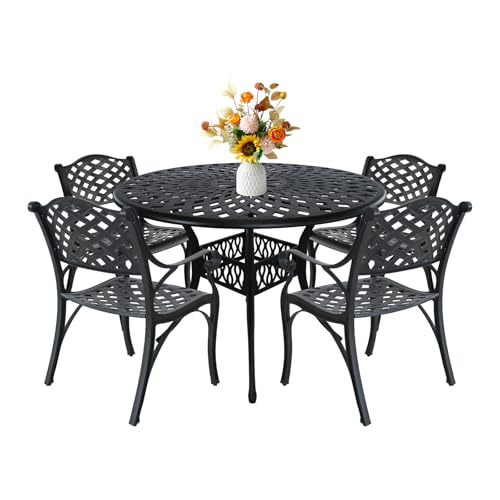
【Cast Iron Outdoor Dining Set】:Cast aluminum patio furniture set is made of high-quality cast aluminum, which is very sturdy and durable. The surface is coated with rust proof powder, which is weather resistant, rust proof, fade resistant, lightweight and durable. It can be used outdoors for many years and can prevent rust and corrosion in any weather, making it very practical.

All-Weather Cast Aluminum Frame:Each piece of this 5-piece outdoor dining set is crafted from strong yet lightweight cast aluminum and finished with a durable powder coating, providing excellent resistance to rust and all-weather conditions

【CAST ALUMINUM】 : Using high-density pure aluminum die-casting, to ensure the strength of the table and chair, no cracking, no deformation, no rust, smooth lines, beautiful appearance.


