The Ultimate Guide to Staining Outdoor Furniture
You’ll dramatically extend your outdoor furniture’s lifespan by selecting the right stain type—oil-based for moisture resistance, water-based for quick drying, or solid stains for UV protection. Proper preparation matters: sand with 120-150 grit sandpaper, remove dust thoroughly, and apply thin coats following the grain with natural bristle brushes. Top with spar urethane or polyurethane for lasting protection. Maintain your investment through routine cleaning and seasonal storage. The specific techniques that separate professional results from amateur mistakes deserve your attention.
Choosing the Right Stain Type for Your Outdoor Furniture
When you’re selecting a stain for outdoor furniture, you’ll encounter five primary options, each with distinct advantages and drawbacks. Oil-based stains penetrate deeply and resist moisture and mold effectively, though they require protective gear during application. Water-based stains dry quickly and offer easier cleanup with lower VOC emissions. Gel-based stains work well on vertical surfaces but demand careful application for uniformity. Hybrid stains combine water and oil benefits, providing convenient maintenance with solid durability. Oil-based stains do require more frequent recoating over time compared to water-based alternatives, as water-based stains peel less readily when properly applied.
Your stain selection criteria should prioritize outdoor durability factors specific to your environment. Consider your wood type—dense woods like maple need pre-stain conditioners for even penetration. Evaluate sun and shade exposure, as UV resistance varies markedly among formulations. Solid stains provide superior protection against UV rays and are ideal for concealing imperfections on older furniture. Assess your wood’s condition; newer furniture suits semi-transparent stains, while aged pieces benefit from solid coverage that conceals imperfections and maximizes protection.
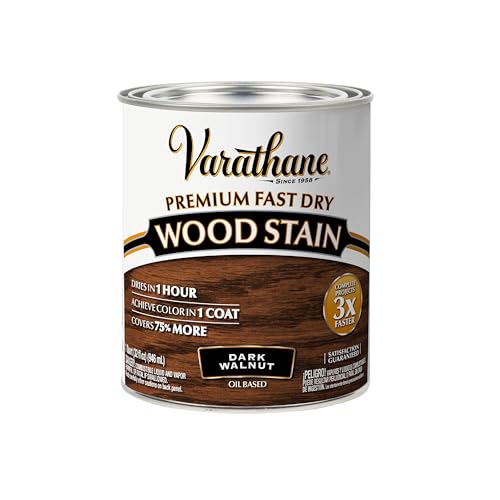
Ideal for use on all interior wood projects: furniture, cabinets, doors, trim and paneling

Ideal for use on all interior wood projects: furniture, cabinets, doors, trim and paneling
Understanding Stain Components and Their Environmental Impact
To make an informed decision about outdoor furniture stains, you’ll need to understand what’s actually in the product you’re applying. Stain composition includes four essential components: volatiles, pigments, resins, and additives. Volatiles—either mineral spirits or water—evaporate after application, leaving the protective film. Pigments provide color and UV resistance; iron oxides are superior for outdoor use. Resins bind pigments to wood and determine adhesion and weather resistance. Additives enhance performance through dispersants, thickeners, and water repellents.
Environmental safety hinges on volatile organic compounds (VOCs). Oil-based stains reach 550 g/L VOCs, while water-based alternatives stay below 250 g/L. Choosing low-VOC or zero-VOC options minimizes respiratory risks and environmental impact, making them ideal for outdoor furniture projects. Proper drying conditions, including maintaining temperatures between 50-90°F and humidity below 70%, are essential for ensuring your stain cures correctly and provides lasting protection.
Mastering Application Techniques for Even, Professional Results
Because proper preparation and technique directly determine whether you’ll achieve a professional finish or an uneven, blotchy result, you’ll need to master several critical application steps before opening your stain container. Start with sanding techniques using 120-150 grit sandpaper, working with the wood grain to open pores for ideal absorption. Never exceed 180 grit, as overly smooth surfaces reject stain. Remove all dust with a HEPA vacuum or tack cloth. For outdoor furniture like cedar pieces, applying stain every 2-3 years helps protect against UV damage and moisture damage that can compromise the wood’s integrity.
For brush selection, choose natural bristle brushes sized 2-3 inches for furniture projects. Apply stain in long, directional strokes following the grain, maintaining a continuous wet edge. To prevent lap marks and ensure even coverage, use back-brushing techniques that blend wet and partially set stain together seamlessly. Work systematically from top to bottom in small sections, applying multiple thin coats rather than one thick application. This methodical approach guarantees even penetration and professional results.

Use it by hand, on a sanding block, or cut it to size for a power tool sander

120 Grits: Includes 8 sanding blocks (120 grit, medium), our sanding sponge is reusable, washable, and suitable for all your sanding needs

High-Precision Abrasive Paper: This Shineboc sandpaper set comes with 21 sheets of 150 grit sandpaper, providing ample supply for demanding sanding tasks.
Selecting and Applying Protective Topcoats
Once you’ve applied your stain and allowed it to cure fully, protecting that finish with a quality topcoat becomes your next priority. Your protective topcoats comparison should weigh spar urethane against polyurethane options based on outdoor environment considerations specific to your location.
Spar urethane delivers superior flexibility and UV protection, making it ideal for high-exposure areas. It maintains a 4-5 year durability rating and accommodates wood movement across temperature and humidity fluctuations. Oil-based polyurethane provides excellent water resistance and enhanced grain visibility but requires 8-24 hour drying times between coats. Traditional polyurethanes lack the UV resistance and flexibility needed for outdoor furniture to prevent cracking and peeling over time.
For marine or salt-exposed environments, marine varnish or epoxy-based sealers offer maximum protection. Water-based polyurethane serves as a faster-drying alternative with environmental benefits and resists yellowing for a more natural appearance. Apply thin, even coats, sanding lightly between applications for best adhesion and professional results.

3X‑THICK ONE‑COAT PROTECTION: Formulated to be three times thicker than Varathane Ultimate Water‑Based Spar Urethane, allowing excellent durability and project completion up to three times faster in just one coat

Protects outdoor wood surfaces such as furniture, fences, railings, trim and more

3X‑THICK ONE‑COAT PROTECTION: Formulated to be three times thicker than Varathane Ultimate Water‑Based Spar Urethane, allowing excellent durability and project completion up to three times faster in just one coat
Maintaining Your Stained Furniture for Long-Lasting Beauty
Your stained outdoor furniture won’t maintain its beauty without consistent care—establishing a routine cleaning schedule is essential to preserving both the stain’s appearance and the wood’s structural integrity. Dust weekly with a microfiber cloth, then clean monthly using a mild soapy solution. Rinse thoroughly to prevent residue buildup. For stain removal, address spills immediately to avoid permanent marks. Perform deep cleaning twice yearly with wood-specific cleaners or vinegar solutions for mold. Scrub gently along the wood grain to prevent damage. Inspect high-traffic areas regularly for water damage, sun bleaching, and scratches. Sand minor damage and touch up with matching stain as needed. Before applying touch-up stain, ensure all loose previous stain is removed to allow proper adhesion. Consider using mildew-resistant stains to protect your furniture from moisture and fungal growth. Store furniture in dry, covered spaces during off-seasons, and sweep away debris to minimize moisture retention and extend your furniture’s lifespan.
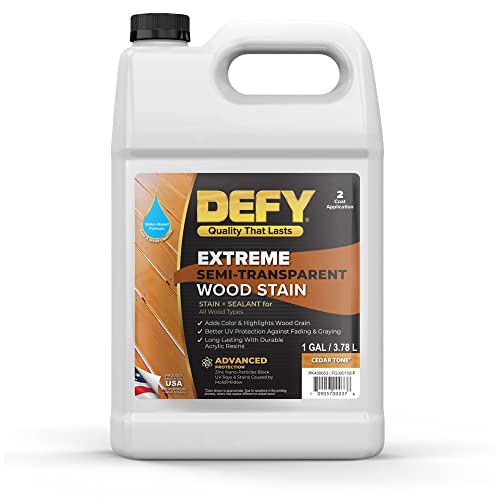
ADVANCED PROTECTION FOR OUTDOOR WOOD: DEFY Extreme wood stains offer high-performance deck stain and sealer products that prevent graying & weathering while also extending the life of exterior wood surfaces

SUPERIOR WEATHER PROTECTION — TWP 101 Pro-Series provides broad-spectrum weather protection that resists water absorption, helping prevent warping, cracking, splitting, and freeze damage in colder climates, keeping your wood beautiful and structurally sound season after season

OIL-BASED WOOD STAIN - Cabot Semi-Solid Stain + Wood Sealer is formulated to provide long lasting beauty and wood protection. The wood protector hides some wood grain to form a stronger weather barrier.