Are Decking Boards a Good Option for Building Raised Beds?
Decking boards offer mixed results for your raised beds. Treated boards deteriorate within 8-9 years and risk chemical leaching into edible plants, while cedar lasts 10-15 years but requires regular maintenance. Composite options exceed 25 years with minimal upkeep, though they retain more heat. You’ll find recycled plastic beds provide the longest lifespan at 50 years. Material choice substantially impacts your long-term costs, environmental footprint, and plant health outcomes—factors worth examining more closely.
Durability and Longevity of Decking Boards
When you’re selecting decking boards for raised beds, you’ll want to understand how different materials perform over time. Treated decking boards deteriorate within 8-9 years, similar to standard wood, compromising your structural integrity. Their chemicals leach into soil, potentially contaminating edible plants.
Naturally rot-resistant alternatives like cedar outperform treated options, lasting 10-15 years minimum. Cedar’s tannins prevent decay and pest damage. However, composite decking substantially exceeds both options, resisting rot, degeneration, and insect damage while maintaining weather resistance across extreme temperatures. Like transformers used in outdoor lighting systems, proper elevation above ground protects decking materials from moisture damage and extends their lifespan. Larch wood, particularly Siberian larch, offers another naturally durable option with high density and resin content that resists decay and warping effectively.
Your board thickness directly impacts longevity. Two-inch boards absorb environmental stress more effectively than thinner alternatives, which bow and degrade rapidly. HDPE recycled plastic beds represent the longest-lasting solution, carrying lifetime warranties with 50-year life expectancies and complete resistance to warping and chemical leaching.

【Anti-Slip & No Maintenance】: The surface is treated with special anti-slip treatment, which makes it anti-slip even on rainy days and easily withstands daily walking and furniture friction. Composite wood materials do not require regular maintenance. Dirt can be easily wiped off with just water, saving time and effort.

Authentic Wood Aesthetic - Expertly crafted texture that flawlessly mimics the richness and elegance of real wood, offering a breathtakingly natural and timeless look that transforms your outdoor space into a luxurious retreat.

【Explore all colors with ease】Find the decking color that perfectly matches your space through color sample boards. The 3 sample plates include 6 colors.
Maintenance and Upkeep Requirements
Selecting durable decking materials sets the foundation for your raised bed’s longevity, but your maintenance practices ultimately determine how well those materials perform. You’ll need to conduct routine checks of deck boards, joists, and fasteners for rot, rust, and looseness that compromise structural integrity. Regular cleaning removes debris that traps moisture in seams and crevices, reducing rot risk considerably. Power washing effectively eliminates mould and mildew, though you must avoid excessive pressure that damages wood fibers. Implement repair techniques promptly: replace split or rotting boards, tighten loose fasteners, and swap rusted hardware for corrosion-resistant components. Sealing gaps between boards with clear silicone extends longevity by five to ten years. Like patio furniture exposed to the elements, raised beds benefit from water-resistant materials that prevent moisture damage and extend the life of your structure. For additional moisture protection, consider applying waterproofing sprays to exposed wood surfaces, which creates a protective barrier similar to techniques used for outdoor furniture. These systematic maintenance protocols preserve your investment and guarantee reliable performance.

WATERPROOFING STAIN – Bring out the beauty of your outdoors with Thompson’s WaterSeal Clear Multi-Purpose Waterproof Stain. Proven to waterproof concrete, brick, exterior wood and other exterior surfaces.

The information below is per-pack only

CLEAR WATERPROOFING WOOD SEALER: Olympic WaterGuard clear sealer waterproofs and protects exterior wood and masonry without changing the surface's natural look.
Cost Considerations and Budget Planning
Because material selection fundamentally shapes your total project expenditure, you’ll want to understand how different decking options compare both upfront and over time. Your budget forecasting should account for replacement cycles: cedar requires renewal every six years, while composite materials last 25+ years. A wooden bed costing $210 multiplies to approximately $840 across necessary replacements over two decades. Conversely, prefabricated composite kits run $509 for equivalent lifespans, offering superior per-year economics. Your investment analysis reveals composite decking costs roughly double pressure-treated wood ($2.40 versus $1.40 per linear foot), yet eliminates expensive replacements. pressure-treated wood provides exceptional durability for raised beds when properly maintained, potentially lasting 15-30 years and reducing replacement frequency compared to untreated alternatives. To maximize the lifespan of wooden decking materials, applying protective deck coatings can significantly extend their longevity and reduce maintenance costs over time. Medium-sized composite beds require $200-$250 budgets including soil. Professional installation triples material costs substantially, making DIY approaches financially advantageous for budget-conscious gardeners.

DIMENSIONS: 48 in. W x 48 in. D x 29. 12.6 in. H
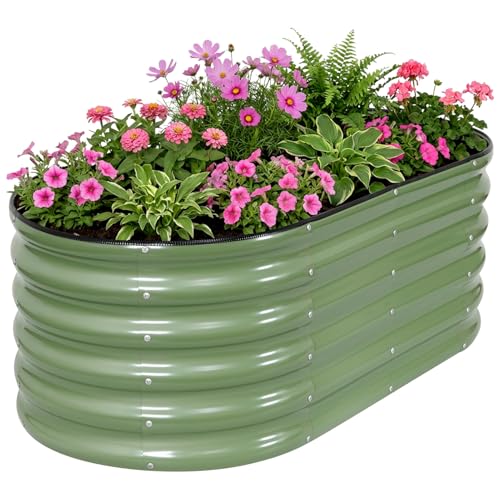
【Large & Deep Root Space】 This 17-inch tall metal garden bed lets you garden without the back and knee strain. Its generous size provides ample space for growing a variety of crops together. This 4x2x1.4FT large raised garden bed outdoor gives you the freedom to plant deeper-rooted vegetables like carrots and potatoes in one organized, productive layout.

Ergonomic Height: Standing at 30 inches tall, it reduces strain from bending and kneeling, promoting more comfortable gardening.
Environmental and Safety Factors
While your material choice directly affects your garden’s economics, it equally influences environmental impact and safety profiles—factors that shouldn’t be overlooked in raised bed planning. Modern pressure-treated lumber uses safer preservatives like ACQ and CA, producing negligible chemical leaching confined to soil within one inch of wood edges. Research confirms no detectable increase in vegetable contamination after multiple seasons. Redwood offers superior environmental benefits, absorbing more carbon during growth than production emissions generate. Conversely, plastic and composite decking consume ten times more manufacturing energy and produce greater air pollution. Composite materials may present hormone-disrupting chemical leaching risks, though certified safe options exist. Resin-based composite materials, however, demonstrate exceptional resistance to cracking and fading, making them a durable alternative for raised bed construction. For wood surfaces, applying decking oil or stain provides additional protection while enhancing durability and reducing chemical migration into your garden soil. Safety concerns during construction—dust inhalation and dermal contact—outweigh post-installation risks. Applying latex paint, oil-based stain, or plastic liners further mitigates any potential chemical migration while extending wood longevity.
Impact on Plant Growth Conditions
Your choice of decking material fundamentally shapes the microenvironment within your raised bed, directly influencing soil temperature, moisture retention, nutrient availability, and root development. Composite decking retains considerably more heat than natural wood, potentially elevating soil temperatures that can stress plants in warm climates. You’ll benefit from mulching to moderate these temperature fluctuations and preserve soil moisture—critical for peak root function and nutrient uptake.
The concentrated growing conditions in decking raised beds enable you to maintain superior drainage and aeration compared to in-ground gardens. You’ll achieve healthier root systems through reduced soil compaction. However, you must guarantee adequate drainage design to prevent waterlogging, which causes root diseases. Incorporating organic, nutrient-rich soil and conducting regular testing allows you to control growing conditions precisely, maximizing plant vigor and productivity.
Structural and Design Considerations
Once you’ve optimized your raised bed’s growing environment, you’ll need to confirm the structural framework can reliably support the significant weight of soil, water, and plants over extended periods. Composite decking boards offer superior engineering for this purpose, resisting warping, splitting, and rot inherently. You should space support every 16–24 inches to prevent sagging and use composite-specific screws with pre-drilled holes to minimize cracking. For optimal stability, position two screws per joist when fastening boards to support beams, ensuring secure fastening and structural integrity. Overlapping joints and metal corner brackets enhance rigidity while preventing soil leakage. Your design flexibility increases when you stack boards vertically or arrange them in custom configurations; however, taller beds demand additional internal bracing. If you later need to disassemble your raised bed, understanding nail removal techniques can help preserve boards for reuse or repurposing in other projects. These structural techniques, combined with regular fastener inspections, confirm long-term stability without compromising your garden’s functional capacity.

Designed for Composite Materials: Specially formulated composite decking screws are excellently designed and specifically engineered for composite/PVC and wood decking applications, ensuring optimal performance for home renovation and general household use in both indoor and outdoor projects
Designed for Composite Materials: Specially formulated composite decking screws are excellently designed and specifically engineered for composite/PVC and wood decking applications, ensuring optimal performance for home renovation and general household use in both indoor and outdoor projects
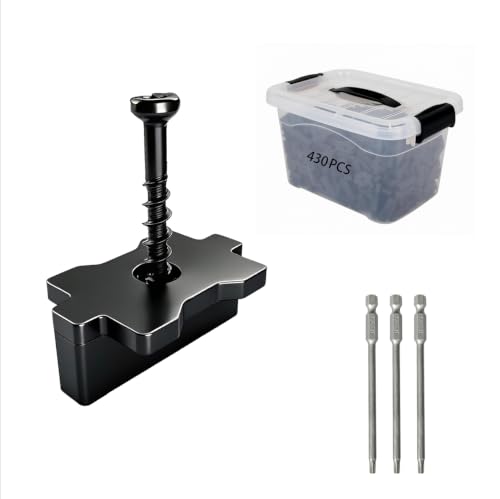
【Anti rust coating】: Our star hole screws are coated with three layers of anti rust coating, which has high corrosion resistance and is suitable for external and internal projects. It provides reliable anti rust and anti-corrosion protection while reducing friction during use, ensuring smooth installation and long-lasting performance.
Comparing Decking Boards to Alternative Materials
When you’re selecting materials for your raised bed, you’ll find that composite decking boards aren’t your only option—and comparing them systematically against alternatives like untreated cedar, pressure-treated lumber, and recycled plastic helps you make an informed choice aligned with your priorities. Untreated cedar delivers natural rot resistance and design versatility but commands premium pricing. Pressure-treated lumber offers affordability and availability, though chemical concerns persist for edible gardens. Recycled plastic decking provides exceptional durability—potentially 50+ years—with zero maintenance and no leaching risks, though initial costs run higher. Composite boards balance moderate pricing with low upkeep, though they may bow under pressure in taller installations. Each option trades off cost, longevity, maintenance demands, and environmental impact differently, requiring you to weigh your specific gardening needs against budget constraints and aesthetic appeal.

BUILT TO LAST: Made of natural Chinese Fir wood to provide a gardening solution constructed to last through every season without discoloring or breaking down over the years

【Spacious and Versatile Design】: The CATMANOR raised garden beds outdoor provide ample growing space for a variety of vegetables, herbs, and flowers. The raised bed design maximizes planting capacity, making it an ideal solution for gardening enthusiasts who want to grow medium to deep-rooted plants such as broccoli, beans, and more.

【Maintenance-Free Vinyl Construction】: Built from premium vinyl, this raised garden bed resists rust, rot, fading, and harsh weather without painting or sealing. Unlike traditional wood or metal beds, it stays beautiful season after season with minimal maintenance