How Far Can a 6×6 Beam Span for Your Pergola?
You can span up to 18 feet with a standard Douglas fir 6×6 beam under typical pergola loading. However, you’ll need to reduce this distance considerably when accounting for wind loads, snow accumulation, and local building code requirements. For spans exceeding 8 feet, doubled beams or intermediate supports become necessary. Knee braces and intermediate posts spaced every 9-12 feet dramatically improve load distribution and structural performance. Material selection, environmental factors, and professional calculations will ultimately determine your ideal span distance.
Standard Span Capabilities for 6×6 Beams
Several factors determine how far a 6×6 beam can span in your pergola design, with lumber species and grade serving as the primary variables. You’ll find that Douglas Fir 6×6 beams achieve maximum spans of 18 feet under standard loading conditions, making them a popular choice for residential applications. Your span limitations depend directly on the modulus of elasticity, which ranges from 1,200 to 1,900 kilopounds per square inch depending on wood type. Higher lumber grades enable longer spans for identical beam specifications compared to lower grades. Understanding these beam specifications helps you plan realistic pergola dimensions. Support configuration also affects your achievable span, with multiple support points distributing loads more effectively than single-span configurations, allowing you to extend your design possibilities within structural safety parameters. Spans over 20 feet are not advisable for 2×12 lumber without intermediate supports, which similarly applies to larger beam dimensions. For spans exceeding typical residential lengths, environmental factors like wind can significantly impact beam performance and structural integrity over time.

By Crafters, For Crafters: Crafting and building with wood is our number one priority. Bringing you more of the wood craft supplies you love is our job

The information below is per-pack only
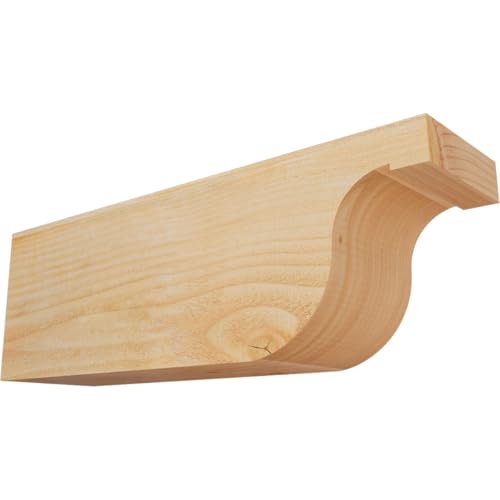
Proudly handcrafted from the finest North American woods, bringing old-world timber style into modern spaces
Load-Bearing Considerations for Pergola Structures
While maximum span distances provide the framework for your pergola design, the actual weight your structure must support determines whether a 6×6 beam will perform safely over time. A single 6×6 cedar timber weighs approximately 122 lbs, and your total rafter weight typically ranges from 300-414 lbs depending on moisture content. You’ll need robust support structures to prevent sagging and warping under these loads.
Additional features—roofs, shade panels, or swing fixtures—demand substantial structural reinforcement beyond basic load distribution calculations. Your posts and foundations must accommodate the full weight of beams plus any supplemental loading. For pergolas with beam spans exceeding 8 feet, consider doubled beams or stronger posts to ensure adequate support capacity. Knee braces function as critical elements, reducing unsupported span lengths and improving load distribution across your support structures. For longer spans exceeding 18 to 20 feet, engineered lumber options like LVL can provide superior performance compared to standard dimensional lumber. For complex designs, engineering consultation guarantees your 6×6 beams adequately support your specific installation requirements.
Extending Spans Through Support Systems
Because a single 6×6 beam’s load-carrying capacity depends on unsupported span length, you can dramatically increase allowable spans by introducing intermediate support systems. Knee braces enhance knee brace efficiency by reducing effective span—a 12-foot beam behaves like a 9-foot span with proper bracing. Intermediate posts spaced evenly every 9 to 12 feet extend effective spans beyond 18 feet by distributing loads across multiple support points. Metal reinforcement—steel plates or rods fastened to beams—increases bending strength for spans exceeding 12 feet, ensuring beam stability under load. Built-up laminated beams from multiple plies offer superior stiffness and dimensional stability compared to solid timber, enabling custom engineering for your specific requirements. Each system strategically reduces deflection and bending moment, preventing sag while maintaining structural integrity. Proper installation using heavy-duty post base brackets and concrete footings ensures your support system remains stable and secure over time. Maintaining consistent spacing between support posts and braces helps distribute loads evenly and prevents structural failure.

Durable Carbon Steel: Inside mount angle bracket are made from heavy duty Q235B Carbon steel,no deformation;Black powder coated for a rust free, strong and durable.

Heavy-Duty Carbon Steel:45 degree angle brackets made of rust-resistant Q235B carbon steel with powder-coated finish, durable and stable.

Sturdy & Durable: This pergola bracket is integrally formed with thickened rectangular high-strength carbon steel tubes, paired with a quadrangular load-bearing structure to expand the bearing contact area. It can hold up to 800 lbs, effectively preventing pergolas, porches and treehouses from shaking or tipping over, and ensuring the overall stability and long service life of your wood structure.
Material Alternatives and Comparable Options
Your choice of beam material fundamentally determines both span capability and long-term performance of your pergola structure. Pressure-treated lumber delivers reliable 12-14 foot spans at moderate cost, though maintenance requirements necessitate periodic treatments. Douglas fir and Southern pine offer comparable performance with improved design aesthetics, balancing strength and affordability effectively.
Western red cedar combines natural decay resistance with superior visual appeal, reducing maintenance requirements while supporting standard spans. Double 2×10 configurations achieve comparable spans to single 6x6s at potentially lower material costs. Composite materials eliminate ongoing maintenance requirements entirely, though higher upfront costs demand careful budget consideration. Steel beams permit extended spans exceeding timber alternatives but require specialized installation expertise and different connection methods. Before selecting your material, verify that your chosen option complies with materials compliance requirements in your local building codes. Each material presents distinct trade-offs between performance, maintenance requirements, design aesthetics, and initial investment that warrant careful evaluation against your specific project needs.

Heavy Duty Lag Screw Alternative: Eliminates pre-drilling in most woods with Zip-Tip technology. Installs 3x faster than traditional lag screws
Heavy Duty Lag Screw Alternative: Eliminates pre-drilling in most woods with Zip-Tip technology. Installs 3x faster than traditional lag screws

Environmental Factors and Local Building Codes
Material selection provides a foundation for your pergola’s performance, but the environment where you’ll build and local regulations will ultimately determine whether your chosen beam can safely span the distance you’re planning. Your local building code establishes mandatory span tables and post-sizing requirements specific to your jurisdiction. Weather exposure considerably impacts structural integrity, as freeze-thaw cycles, moisture infiltration, and UV radiation accelerate wood degradation over time. Wind and snow loads directly reduce allowable spans—high-risk areas require larger posts and shorter distances than mild climates. You’ll need permit approval with documented load calculations before construction begins. Professional engineer consultation becomes mandatory for non-standard designs. Proper fastener placement and spacing ensure your structure maintains integrity throughout its lifespan, much like careful attention to installation details protects deck systems from structural failure. These regulatory and environmental factors aren’t optional considerations; they’re essential parameters that govern your actual safe span capability.