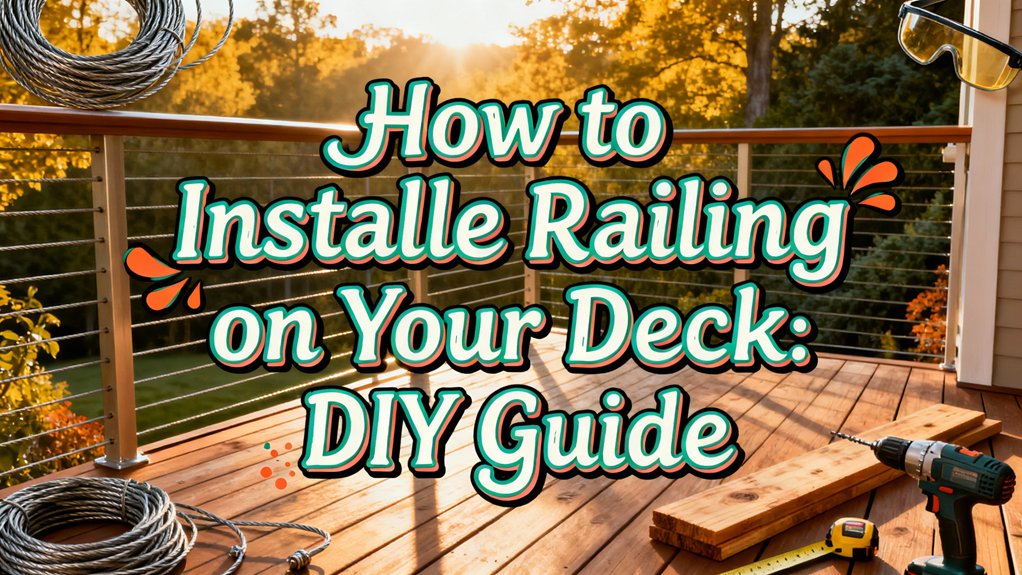
How to Install Cable Railing on Your Deck: DIY Guide
You’ll start by preparing your deck frame with blocking at post locations, then install posts no more than 4 feet apart for code compliance. Next, you’ll attach saddle brackets to your top rail and secure it with upward-driven screws. Thread stainless steel or aluminum cables through intermediate posts using the through-post system. Tension each cable to deflect approximately 1/4″ per foot, then recheck after 24-48 hours. The complete installation process involves several critical steps that’ll guarantee your railing meets safety standards.
Planning and Preparation
Before you purchase materials or pick up a drill, you’ll need to define your project’s scope by determining the total linear footage of railing required for your deck perimeter and identifying whether you’re installing on level surfaces, stairs, or both. Next, consult local codes regarding railing height and infill spacing requirements. Select your deck materials—aluminum, stainless steel, or composite—and specify cable specifications like diameter and tensioning system. Measure exact spans between end posts and mark locations at consistent intervals. Create a detailed tool checklist including tape measure, level, drill, cable cutters, and crimping tools. Gather safety equipment and verify all components are compatible before beginning installation. After installation is complete, plan for regular maintenance and occasional cleaning of hardware using gentle cleaning methods to keep your cable railing system looking its best and extend its lifespan. Double-check measurements to prevent costly errors during construction. Ensure that railing posts are securely mounted to the deck structure at evenly spaced intervals to provide a stable foundation for your cable system.
Deck Frame Preparation and Blocking
The foundation of your cable railing installation depends entirely on proper blocking installation and frame preparation. You’ll need to install wood blocking horizontally, level with your joist tops, positioning blocks between framing at band joists to create secure attachment points.
Your blocking methods should include two 2x6s layered flat at marked post locations for increased structural support. Position posts over spaces without joists beneath them to maintain nut and bolt access. Secure blocking directly to rim joists using eight exterior-grade screws—four on each side—ensuring fasteners penetrate dense face grain rather than weak end grain.
Before installation, apply joist tape to all horizontal framing components to prevent water accumulation. Mark post locations clearly on your deck framing using painter’s tape or Gorilla Clear Tape with Sharpie markings for precise guidance throughout the installation process. Two bolts should be positioned strategically through the blocking and rim joist to ensure the post remains secured against structural movement. Similar to how multiple thin coats prevent peeling and ensure proper absorption, using properly prepared blocking creates a durable foundation that allows fasteners to penetrate securely into the wood structure.
Post Installation and Alignment
With your blocking properly secured and marked, you’re ready to install posts at precise intervals—no more than 4 feet apart—to maintain code compliance and guarantee even cable tension throughout your railing system. Select appropriate post types for your layout: standard posts for straight sections, doubled corner posts for added strength, and connector posts to maintain tension across longer runs.
Mount each post using the method suited to your deck structure—surface mount, side mount, or slope mount for stairs. Secure fasteners into blocking or joists using stainless steel or galvanized anchor bolts. Before final tightening, verify each post is plumb using a level. Adjust positioning as necessary to eliminate misalignment that could cause uneven cable tension and visible gaps. Double-check all posts after installation for stability and proper alignment. Your posts must be installed to support guardrails that are a minimum of 36 inches in height to meet New Jersey deck safety requirements. These height standards are established by the International Residential Code to prevent accidental falls and enhance overall safety.
Top Rail and Bracket Installation
Once your posts are plumb and verified for stability, you’ll install the top rail and brackets that form the structural backbone of your cable railing system. Begin with precise top rail measurement between posts, accounting for horizontal span and any angular requirements on stairs. Cut your top rail using a carbide 80-tooth miter saw blade for exact specifications. Attach saddle brackets to the top support rail using self-drilling #10 x 1″ screws, ensuring bracket alignment along a level string. Position brackets flush to the rail face to prevent cable binding. Secure the top rail over the support rail with 1 5/8″ to 2 5/8″ screws driven upward through the bottom. This configuration allows proper deflection under cable tensioning while maintaining structural integrity. Ensure all fasteners meet building code requirements for your jurisdiction to guarantee a safe and compliant installation. To ensure your cable railing remains visually appealing and durable over time, consider applying a protective sealer to wooden rail components after installation is complete.
Cable Installation and Tensioning
Now that your top rail and brackets are secured, you’re ready to thread and tension the cables that’ll form your deck’s protective barrier. Begin cable threading by inserting cables through intermediate posts using the through-post system, then pull them toward tensioning fittings. Cut each cable at the witness line marked on the fitting.
For tension verification, use a 3/32 Allen wrench to advance set screws, applying handheld pressure rather than power tools to avoid stripping. The International Building Code requires 200 pounds of tension per cable. Properly tensioned cables deflect approximately 1/4″ per foot under 50-pound load and feel taut like bass guitar strings. Start tensioning from the innermost cable outward, then recheck tension after 24-48 hours for consistency.
Finishing and Inspection
After you’ve verified that your cables maintain proper tension and feel taut throughout the system, you’ll shift focus to completing the visual and structural components of your railing while conducting a thorough quality assessment.
Begin your finishing touches by installing end caps on cable termination points, ensuring they’re constructed from stainless steel or aluminum for corrosion resistance. Sand all cut edges and joints smooth, then apply protective coatings to metal components. Install handrails and verify all fasteners are tightened securely.
Use your inspection checklist to confirm uniform cable tension without slack, verify handrail height and spacing compliance with local building codes, and inspect for any sharp edges or hazardous protrusions. Perform a final walkthrough, documenting that all structural components are firmly anchored and the system functions properly before project completion.
Safety Considerations and Maintenance
Your cable railing system’s longevity and safety depend on understanding critical code requirements and establishing a consistent maintenance schedule. You must comply with local building codes, including the 4-inch sphere rule for all openings and minimum guardrail heights of 36 to 42 inches, depending on your jurisdiction. For optimal stability and support, ensure your railing posts are properly spaced according to your post size and local structural requirements. Additionally, footing depths must meet frost line specifications to ensure your deck foundation remains stable through seasonal ground movement.
You’ll need to inspect your cables regularly for tension loss and re-tension them according to manufacturer specifications. Check for corrosion, wear, or damage, particularly if you’ve installed marine-grade stainless steel components. You should clean your railing periodically with mild soap and water to maintain its appearance and function.
You must address any damaged components immediately through repair or replacement. Your maintenance schedule’s frequency depends on your climate and environmental exposure.