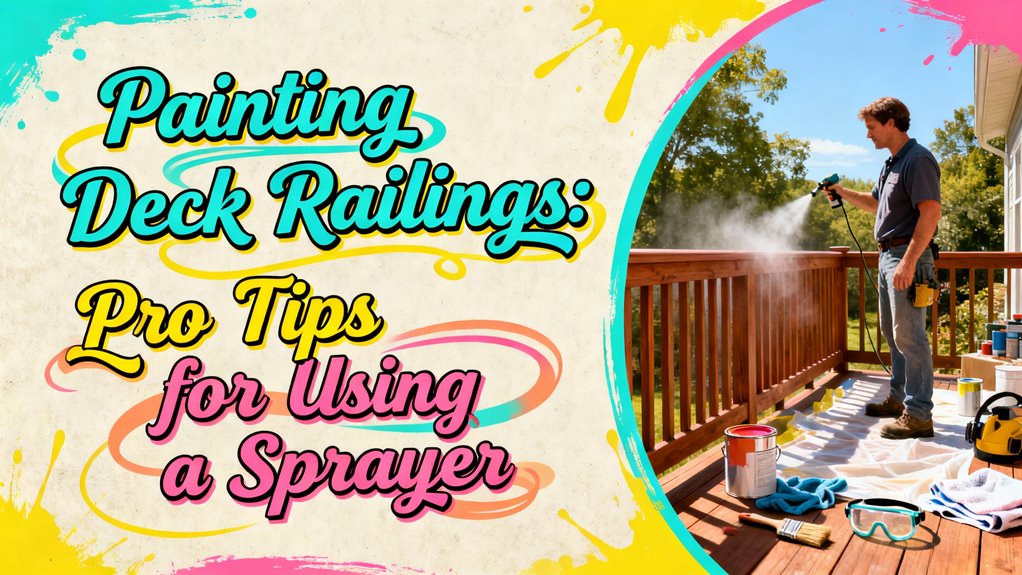
Painting Deck Railings: Pro Tips for Using a Sprayer
You’ll master deck railing spraying by prepping surfaces thoroughly, sanding flaking paint, and protecting surrounding areas. Hold your sprayer 8–12 inches away, applying light, even coats with 50% overlap on each pass. Alternate vertical and horizontal motions to follow wood grain and prevent runs. Wear proper safety gear including a respirator and gloves. Clean your equipment immediately after finishing. The following sections reveal detailed techniques for achieving flawless, professional-quality results.
Preparation Steps
Surface preparation—the foundation of any successful deck railing paint job—requires you to remove all contaminants before you apply primer or paint. Start with effective cleaning methods: use a pressure washer or deck cleaner for wood surfaces, and mild detergent or mineral spirits for metal railings. Rinse thoroughly and allow complete drying, typically requiring 24 to 48 hours for optimal results.
Next, sand rough patches and flaking paint with 80–120 grit sandpaper to improve adhesion. For metal surfaces, lightly sand or wire brush to create texture for better bonding.
During your surface inspection, check for loose boards, nails, and corrosion. Tighten fasteners, fill cracks with wood putty, and remove rust with scrapers or chemical removers. Remove all sanding dust with clean cloths before proceeding to masking and primer application. Proper stain adhesion depends on eliminating every trace of dust and debris from your prepared surfaces.
Equipment and Supplies
Before you begin painting your deck railings, you’ll need to assemble the right tools and materials to guarantee a professional finish. For sprayer types, an airless sprayer delivers high output and efficiency for large surfaces, while HVLP sprayers suit detailed areas with minimal overspray. Electric sprayers provide consistent pressure for even coverage on DIY projects.
Select appropriate spray accessories including narrower tips (.013 hole) designed specifically for railings and trim work. Magnum tip extensions help you reach difficult spots without ladders. Spray shields minimize overspray and protect adjacent surfaces.
Gather high-quality exterior paint or stain, paint strainer bags to prevent tip clogs, and stir sticks for thorough mixing. Stock cleaning rags, empty buckets, tarps, masking tape, safety glasses, and dust masks. Include pump armor for storage and stiff nylon brushes for equipment maintenance. Proper fastener placement and board alignment during preparation ensures surfaces are ready for painting. Applying weather-resistant finishes to every surface ensures maximum protection against the elements and extends your deck railings’ lifespan.
Spray Technique
With your equipment and supplies ready, mastering proper spray technique will make the difference between a mediocre finish and a professional result. Hold your sprayer 8–12 inches from the surface and move steadily in overlapping passes to achieve coverage consistency. Alternate between vertical and horizontal motions following the wood grain. Apply light, even coats—typically two to three—rather than heavy applications that cause runs and drips. You’ll enhance spray efficiency by back-brushing immediately after spraying, which drives the finish into wood grain and blends imperfections. Pay particular attention to spindles and joints where pooling occurs. When spraying around metal balusters, use careful brush techniques or wipe off unabsorbed stain quickly since penetrating stains soak into wood but sit on metal surfaces. Allow each coat to dry completely per manufacturer instructions before recoating. For optimal results, consider using water-based primers to improve paint adhesion and ensure a smoother finish. View your work from multiple angles to verify uniform coverage before moving to the next section.
Stain and Paint Application
Properly preparing your deck surfaces before spraying stain or paint is essential for achieving professional results and ensuring long-lasting protection. You’ll want to thoroughly clean all surfaces with a pressure washer and appropriate cleaners, then sand rough spots and peeling areas for uniform adhesion.
For stain selection, choose semi-transparent or solid stains with UV protection and water resistance. Select products formulated specifically for exterior wood decks. Mix your chosen stain thoroughly using a drill mixer to distribute pigments evenly, ensuring spray consistency throughout application.
Dilute products according to your sprayer’s manufacturer guidelines to prevent clogging. Use water-based options when possible for environmental safety. Before spraying, allow your deck to cure completely—at least three dry days—to optimize absorption and prevent sticking to protective coverings. Applying thin, even coats along the wood grain helps avoid peeling and streaking on your finished surfaces. When applying stain, maintain 50% overlap on each pass to ensure even coverage and consistent color throughout your deck surfaces.
Safety and Protection
Because spray painting and staining involve hazardous materials and equipment, you’ll need thorough protective measures to guarantee a safe work environment. Your protective gear essentials include gloves, safety glasses, a spray hood, hat, and proper footwear. Wear a dust mask or respirator to prevent inhalation of paint particles. Select natural fiber clothing like cotton; synthetic materials are flammable and generate static electricity. Fire-resistant uniforms provide superior protection for frequent spray work.
Develop hazard awareness by inspecting all equipment before use and maintaining proper ventilation to reduce vapor buildup. Ground paint containers to prevent static electricity hazards. Post warning signs prohibiting smoking and welding near your work area. Install fire extinguishers nearby for emergency response. Never spray toward people, animals, or unintended surfaces. Keep hands away from the spray tip to avoid injection injuries. Just as proper measuring and planning ensures successful pergola installation, thorough preparation of your spray painting workspace prevents accidents and ensures professional results.
Order and Workflow
Once you’ve completed your safety preparations, establishing a logical workflow guarantees efficient execution and professional results. Start at the top—paint handrails and upper edges first, working downward to prevent drips on freshly painted sections below. Use your angled brush for edges and corners, controlling coverage precisely before moving to larger surfaces.
Apply painting techniques systematically: tackle spindles individually for complete coverage, then move to main railings and posts. Your workflow efficiency improves when you paint in small, manageable sections, maintaining a wet edge with consistent back-and-forth sprayer motions. Apply thin, even coats rather than thick layers to avoid blistering and dripping. Before painting, ensure proper surface preparation by using a stain-blocking primer to prevent bleed-through and promote durability on previously stained railings. Protect surrounding areas with drop cloths to prevent overspray from coating nearby surfaces. This methodical approach assures professional coverage while maximizing your sprayer’s effectiveness and minimizing application errors.