Acacia vs. Eucalyptus: Which Wood Is Best for Patio Furniture?
You’ll find eucalyptus outperforms acacia for durability—it’s 21% harder and resists moisture better in humid climates, lasting 15-20 years outdoors. Acacia’s warmer, golden-brown aesthetic appeals to those seeking visual warmth, though it suits dry climates better. While eucalyptus costs more upfront ($400-$1,200 versus $200-$600), its reduced maintenance needs improve long-term value. Both require minimal upkeep and offer sustainability. Your ideal choice hinges on climate conditions, aesthetic preferences, and budget considerations—though the full comparison reveals additional nuances worth exploring.
Hardness and Density Comparison
When you’re choosing between acacia and eucalyptus for patio furniture, understanding their hardness and density is essential to making an informed decision. Acacia wood rates at approximately 700 kg/m³ on the Janka hardness scale, while eucalyptus reaches up to 850 kg/m³—making it roughly 21% harder. This durability comparison matters because hardness directly correlates with resistance to dents and scratches.
Your weight analysis reveals that eucalyptus’s superior density contributes considerably to its longevity. Both woods rank as dense hardwoods, but eucalyptus’s greater density enhances structural integrity and reduces warping risk. Dense woods inherently resist deformation better than lighter alternatives, providing superior stability outdoors. While acacia offers solid performance for outdoor furniture, eucalyptus’s higher density delivers enhanced impact resistance and extended furniture lifespan, making it the more durable choice for high-traffic patio areas.

ALL-WEATHER COMFORT - Sink into cozy relaxation with this premium lounge chair featuring deep-seating dimensions and high-performing, low-maintenance Nuvella fabric outdoor cushions

CUSHIONED SOFA: Looking for something more refined in your outdoor space? This sofa fulfills with comfy cushions and eucalyptus wood that's protected to weather the elements with ease

RUGGED EUCALYPTUS WOOD BUILD: Crafted from durable eucalyptus wood for long‑lasting outdoor performance, giving you a reliable outdoor coffee table that handles everyday use on patios, decks and garden seating areas
Moisture Resistance and Rot Prevention
Beyond structural integrity, moisture resistance separates these two woods in real-world outdoor conditions. Eucalyptus demonstrates superior decay resistance in humid and coastal climates due to its high oil content and natural tannins, which actively repel moisture absorption. Its dimensional stability prevents warping and cracking when exposed to persistent moisture.
Acacia, conversely, exhibits higher moisture absorption rates and performs better in hot, dry climates. While it possesses natural decay resistance, you’ll need regular oiling every few months to maintain its protective properties. In humid regions, eucalyptus requires less maintenance and demonstrates exceptional longevity. Acacia typically lasts 15-20 years in outdoor furniture applications, making it less suitable for those prioritizing long-term durability.
Both woods contain inherent oils providing water repellency, yet eucalyptus’s composition offers superior protection in wet environments. Your climate ultimately determines which wood best suits your patio furniture investment.

CONTEMPORARY DECK FURNITURE: Discover a high style alternative to traditional outdoor furniture. With its antiqued teak-like finish, this end table definitely has the corner on style

WEATHER-READY COMFORT - Transform your outdoor seating area with comfy removable cushions. This coastal patio couch features a sturdy eucalyptus wood frame designed to weather the elements with ease

ENJOY LASTING DURABILITY - Appreciate the warm aesthetic of real wood products crafted from dense eucalyptus wood making this outdoor side table exceptionally resilient
Appearance and Aesthetic Appeal
While moisture resistance determines durability, appearance and aesthetic appeal drive your initial selection and long-term satisfaction with patio furniture.
Acacia delivers a warm, golden-brown aesthetic with complex grain patterns that create substantial texture variety across each piece. You’ll notice its color evolution as sunlight exposure naturally deepens the wood, developing richer reddish-brown tones that enhance character over time.
Eucalyptus offers a contrasting aesthetic: lighter, more uniform coloring with straightforward grain patterns suited for contemporary designs. Its color evolution follows a different trajectory, developing a subtle silver-gray patina while maintaining consistency throughout the aging process.
Your choice hinges on design preferences. You’ll prefer Acacia for traditional or rustic settings where evolving depth adds visual interest. You’ll select Eucalyptus for modern spaces demanding uniformity and restraint. Both woods age distinctly, so consider how you want your furniture’s appearance to transform.
Cost and Value Analysis
Because initial cost and long-term value rarely align, you’ll need to evaluate patio furniture investments across multiple dimensions. Acacia ranges from $200–$600, offering budget-friendly entry points, while eucalyptus typically costs $400–$1,200 for mid-range options. Teak commands $1,200–$3,000+, positioning itself as the premium choice.
Consider value longevity alongside upfront expenses. Acacia lasts approximately 20 years; eucalyptus extends to 25 years; teak surpasses both with exceptional durability. However, maintenance costs greatly impact overall value. Eucalyptus requires less frequent upkeep due to higher natural oil content, reducing lifetime ownership expenses. Acacia demands regular sealing, adding ongoing costs. The wood’s resistance to moisture, rot, decay, and insects makes eucalyptus particularly suited to withstand various outdoor elements with minimal intervention. Pairing eucalyptus furniture with adjustable pergola roofs can further enhance protection and extend your outdoor furniture’s lifespan in challenging weather conditions.
Eucalyptus delivers superior cost efficiency—approximately three times cheaper than teak while maintaining comparable durability. This balance makes eucalyptus your best choice for maximum value without premium investment levels.

Solid Wood Frame with Premium Rattan: The frame of our 3pcs patio furniture set is made of eucalyptus wood which ensures the stability and durability. And the seat and backrest are crafted of premium wicker. The surface of the set is painted, which ensures the function of waterproof and scratch resistant.

【Eucalyptus Wood Construction】: Crafted from solid Eucalyptus Wood with heavy-duty hardware, this patio sofa set supports up to 400 lbs per seat. The naturally dense eucalyptus wood offers exceptional hardness, elegant grain patterns, and long-lasting durability for outdoor use.
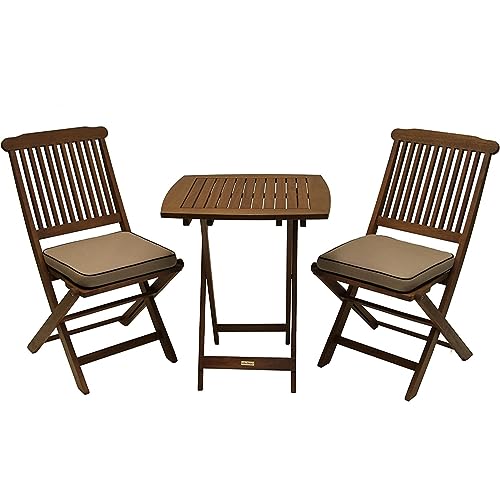
Fully Assembled 3-Piece Bistro Set: Includes a contemporary folding table, two chairs, and two removable weather-resistant seat cushions for instant outdoor enjoyment.
Climate Performance and Environmental Factors
You’ve identified eucalyptus as the superior value choice, but your patio furniture’s longevity ultimately depends on how well it withstands your regional climate. Eucalyptus excels in humid coastal areas with superior moisture resistance and uniform grain structure that resists warping. Acacia performs excellently in hot, dry regions where its dense grain minimizes moisture absorption. However, acacia’s sensitivity to freezing temperatures makes it vulnerable in cold climates, while eucalyptus’s lower moisture content provides better freeze-thaw protection. Regarding sustainability, eucalyptus’s rapid growth and growth resilience support efficient replenishment, though acacia also grows quickly. Both woods exhibit climate adaptability through natural oils that resist decay, which is particularly valuable in humid and wet conditions where moisture damage poses the greatest risk. Eucalyptus’s higher density—up to 850 kg/m³—enhances weathering resistance, while acacia’s Janka hardness rating (700–2,200) guarantees durability across varied conditions. Unlike softer hardwoods such as beech, both eucalyptus and acacia offer natural resistance to decay that makes them substantially more suitable for continuous outdoor exposure.
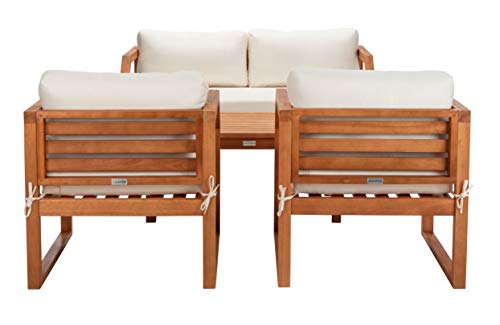
[4 PIECE PATIO SECTIONAL SOFA SET]: SAFAVIEH Dren Patio Sectional Sofa Set is an outdoor couch and outdoor sectional that suits the patio, deck, covered porch or backyard, arranging as one run or splitting into separate seats as the space allows.

Comfortable Textile Material: The back and seat of the chair are made of textile materials with many meshes. It is one of the selected materials for outdoor furniture. This quality material is very breathable and you will enjoy it even in the summer. When it’s dirty, just wipe it with a wet or dry cloth.

Modern and Ergonomic Design: The design of our patio furniture set is simple, stylish and Ergonomic. It is perfect to decorate your your yard, poolside, balcony, patio and indoor area. Provide great comfort for you while you are enjoying your leisure time
Maintenance Requirements and Sustainability
Acacia furniture demands considerably less upkeep than many outdoor wood alternatives, though you’ll need to establish a consistent care routine to maximize its lifespan. Your maintenance frequency should include monthly cleaning with mild dish soap and soft-bristled brushes, plus biannual oiling applications. These cleaning procedures prevent mold and mildew accumulation while preserving the wood’s natural protective oils.
Acacia’s inherent density and natural oil composition provide superior water and scratch resistance, greatly reducing long-term maintenance demands compared to softer wood species. You’ll benefit from its natural termite and rot resistance, extending furniture durability enormously. Unlike resin furniture which benefits from UV stabilization to prevent fading and cracking, acacia relies on its natural properties to withstand harsh weather conditions. Professional deep cleaning and resealing every few years restores luster and reinforces protective finishes. While finishes like lacquer are better suited for indoor furniture due to their susceptibility to UV damage and environmental wear, acacia’s natural properties offer outdoor durability without specialized exterior coatings. This minimal maintenance requirement, combined with acacia’s durability characteristics, positions it as a sustainable, cost-effective choice for outdoor furniture investments.

🌱 UNLEASH THE BEAUTY OF YOUR OUTDOOR WOOD WITH TEAK OIL: Our premium wood finish and sealer is specially formulated for outdoor furniture, providing waterproof protection and enhancing the natural color and structure of teak, mahogany, pine, beech, oak, and other wood types. Preserve and beautify your outdoor wood with confidence.

ENHANCES THE BEAUTY OF THE WOOD: Teak Oil restores the beauty of grey, old and weathered teak furniture to give a golden-brown natural finish.

Wet-Area Ready, No Sealing Required: Pre-finished with cured linseed oil — a natural plant-based wood finish — these tiles install straight from the box — no sealant, no prep, no waiting. Raised base channels water underneath for patios, balconies, pool surrounds, and shower floors