Tung Oil vs. Linseed Oil: What’s Best for Outdoor Furniture?
You’ll find that tung oil outperforms linseed oil for outdoor furniture due to superior water resistance and durability—it fully cures in 2–3 weeks and resists mildew better in humid climates. However, linseed oil dries faster initially and costs less upfront. Tung oil requires recoating every several months versus linseed oil’s annual maintenance, making it more cost-effective long-term despite its 50% higher price per quart. Both oils are non-toxic once cured, though your choice depends on your climate and budget priorities—deeper insights reveal application nuances worth exploring.
Understanding Tung Oil and Linseed Oil Origins
When you’re selecting a finish for outdoor furniture, knowing where these oils come from and how they’ve been used historically can help you make an informed decision. Tung oil originates from seeds of the Aleurites fordii tree, native to southern China, where Confucius documented its use around 400 B.C. for waterproofing and wood finishing. Tung oil benefits include superior water resistance and durability for exterior applications.
Linseed oil history traces back to ancient Egypt and Mesopotamia, derived from flax plant seeds native to the eastern Mediterranean region. The Greeks and Romans later adopted it for ship coatings and wood protection. While linseed oil history demonstrates centuries of proven use, tung oil’s superior moisture repellency makes it particularly effective for outdoor furniture exposed to harsh weather conditions. Materials like rubberwood, which absorb moisture readily, are not recommended for outdoor applications despite their indoor benefits. For truly exceptional durability in outdoor settings, some experts recommend considering teak wood’s natural oil content, which provides inherent protection without requiring additional finish applications.
Drying Times: Which Oil Cures Faster?
Since you’re planning a finishing schedule for your outdoor furniture, understanding how quickly each oil dries and cures is critical to your project’s success. Tung oil outperforms raw linseed oil considerably—it reaches touch-dry in 12–24 hours per coat versus linseed’s 3–10 days. However, boiled linseed oil (BLO) matches tung oil’s drying processes, typically curing within 24–72 hours.
For complete curing techniques, tung oil requires 2–3 weeks while BLO needs 1–2 weeks. Raw linseed oil demands several weeks to months. Polymerized tung oil accelerates both processes, often fully curing within 24 hours.
Temperature, humidity, and application thickness dramatically affect outcomes. Thin, well-wiped coats cure faster than thick applications. Maintain 55–75°F temperatures and humidity below 65% for ideal results. Multiple thin coats prove superior to single heavy applications. For outdoor furniture exposed to prolonged sun and moisture, oil finishes alone lack the weather resistance that varnish formulations provide, especially when considering UV protection and durability in changing outdoor conditions. For outdoor furniture exposed to prolonged sun and moisture, consider that spar urethane provides superior UV resistance and weather protection compared to oil finishes alone.
Application Methods and Ease of Use
Now that you’ve mapped out your curing timeline, you’ll need to understand how to actually apply these oils—a process that differs considerably between the two options. Pure tung oil demands multiple thin coats with sanding between each layer, requiring soft, lint-free cloths for traditional application. This technique presents notable application challenges for most users. Linseed oil, by contrast, needs fewer coats and allows brush or cloth application, making it more accessible. However, boiled linseed oil‘s thick consistency complicates handling. Wiping varnishes combining tung oil with resins simplify application considerably. For outdoor furniture specifically, consider that specialized spar urethane and other exterior finishes may offer additional UV protection that penetrating oils alone cannot provide. Despite tung oil’s steeper learning curve, its superior product longevity justifies the effort for outdoor furniture, requiring less frequent maintenance than linseed oil over time.

Easy to Use - Tung oil is a natural oil recognized by craftsmen to offer the ultimate hand-rubbed finish for all fine woods; just wipe on and allow the oil to cure at room temperature
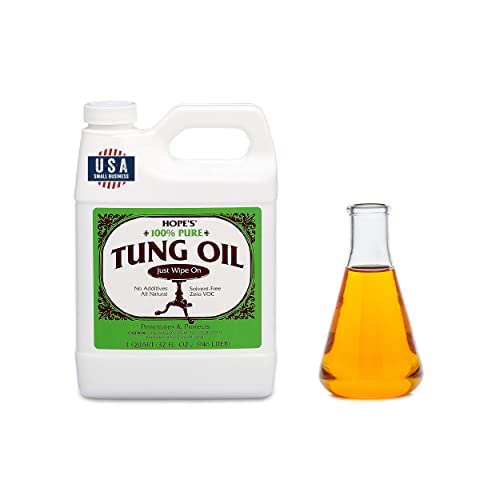
Easy to Use - Tung oil is a natural oil recognized by craftsmen to offer the ultimate hand-rubbed finish for all fine woods; just wipe on and allow the oil to cure at room temperature
Water Resistance and Weatherproofing Capabilities
How well does your outdoor furniture oil actually protect wood from moisture? Tung oil benefits considerably outperform linseed oil drawbacks in this critical area. When you apply tung oil, its alpha-eleostearic acid polymerizes upon air exposure, creating a hard, waterproof barrier that beads water effectively. This superior moisture resistance makes tung oil ideal for outdoor furniture exposed to rain and spills.
Linseed oil lacks meaningful water resistance capabilities, leaving your wood vulnerable to damage. You’ll also notice tung oil resists mildew better than linseed oil, particularly in humid climates. Additionally, tung oil preserves your wood’s original color without yellowing, while linseed oil darkens over time outdoors. For long-term outdoor protection, you’ll need to recoat tung oil periodically, but it’ll withstand weathering far better than linseed oil’s softer finish. However, even with protective coatings like tung oil, woods with moderate hardness and density such as mango wood remain more vulnerable to moisture and extreme temperature changes compared to naturally weather-resistant woods.

ENHANCES THE BEAUTY OF THE WOOD: Teak Oil restores the beauty of grey, old and weathered teak furniture to give a golden-brown natural finish.

[FOOD GRADE PURE TUNG OIL & NO ADDITIVE] OLASIR 100% pure tung oil is extracted from the seeds of high-quality tung seed crops in East Asia. It is environmentally friendly, non-toxic, and food grade tung oil, emitting the aroma of natural tung oil. Can be safely used in wooden chopping boards, wooden tableware, and other areas that come into contact with food.Important Safety Note:While safe for food-contact surfaces, this oil is not intended for ingestion. Avoid direct consumption and keep out of reach of children.

【100% Pure Tung Oil (For Wood)】100% Pure Natural! OAIEGSD tung oil food grade is 100% pure natural, which is extracted from natural tung seeds, without any additives and chemical ingredients, so it can be great for contact with food, you can use it safely. After using the pure tung oil, your wood products will have a longer life.
Durability Comparison for Outdoor Exposure
When you’re choosing between tung oil and linseed oil for outdoor furniture, durability under weathering becomes the decisive factor. Your durability assessment reveals that tung oil outperforms linseed oil notably in outdoor applications. Tung oil’s hardened surface resists environmental wear better than linseed oil’s softer finish, particularly when exposed to moisture and UV radiation.
Climate effects greatly influence longevity. In temperate zones, tung oil finishes endure considerably longer, while linseed oil deteriorates rapidly in humid or rainy climates. Tung oil maintains protective qualities for extended periods and yellows less than linseed oil alternatives. Woods with naturally high resin content, such as Siberian larch, provide additional decay resistance when combined with quality oil finishes.
You’ll notice extended reapplication intervals with tung oil—sometimes stretching months longer between maintenance cycles compared to linseed oil’s yearly requirement. This superior durability makes tung oil the practical choice for exposed wood structures, boat rails, and garden boxes. Selecting quality hardwoods like teak or acacia combined with tung oil finishing provides optimal protection and longevity for your outdoor furniture investment.

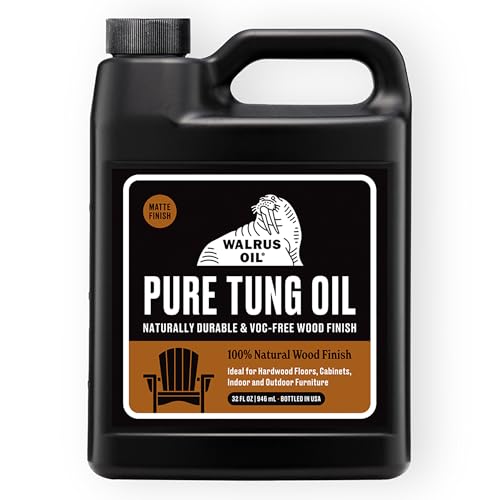
Crafted from 100% pure tung oil, derived naturally from plant nuts, this wood finish is non-toxic and completely free of VOCs. Once dry, it poses no harm to human health, making it a safe and natural choice for interior wood applications. It deeply penetrates wood fibers to enhance the natural grain while forming a durable, protective layer — ideal for surfaces where a pure, plant-based, and eco-conscious finish is desired.

【100% Pure Tung Oil】NetLea 100% pure tung oil, derived naturally from plant nuts, this wood finish is non-toxic and completely free of VOCs. Once dry, it poses no harm to human health, making it a safe and natural choice for interior wood applications. It deeply penetrates wood fibers to enhance the natural grain while forming a durable, protective layer — ideal for surfaces where a pure, plant-based, and eco-conscious finish is desired.

Great for Cabinets, Doors, and Hardwood Floors
Chemical and Abrasion Resistance Properties
Beyond raw durability, the chemical and abrasion resistance properties of these oils determine how well your outdoor furniture withstands actual use and environmental assault. Tung oil’s high alpha-eleostearic acid content—77–82%—creates extensive cross-linking that delivers superior chemical stability and surface hardness. You’ll find it resists water, acids, alkalis, and mildew far better than linseed oil. Its harder, more resilient finish outperforms linseed oil in high-traffic settings where scratches and wear matter. Linseed oil’s slower, incomplete polymerization leaves your surfaces softer and more vulnerable to chemical damage and physical wear. While both oils degrade under prolonged solvent exposure and UV radiation, tung oil maintains its protective properties through temperature and humidity fluctuations that compromise linseed oil’s integrity.
Appearance and Finish Quality Over Time
While both tung oil and linseed oil enhance wood’s natural character, they diverge markedly in how their appearance evolves over time. Tung oil maintains superior color consistency, resisting the yellowing that darkens linseed oil considerably after years of exposure. You’ll notice tung oil’s visual aging is minimal—it preserves your wood’s original tone and remains clear indefinitely. Conversely, linseed oil develops pronounced ambering, especially on lighter woods like birch and maple. Tung oil cures to a harder, smoother matte-to-satin finish that stays stable, while linseed oil’s softer surface shows more wear patterns. Unlike traditional wood oils, recycled polyethylene lumber used in modern outdoor furniture requires no oil treatments and maintains consistent appearance without yellowing or fading concerns. For optimal results with natural wood teak furniture, applying sealants or teak oil provides long-term protection while maintaining the wood’s golden appearance. For outdoor furniture, tung oil’s consistent appearance outperforms linseed oil’s dramatic color shifts, ensuring your investment maintains its intended aesthetic long-term.
Maintenance Requirements and Recoating Schedules
Because tung oil and linseed oil cure differently and offer distinct durability profiles, their maintenance demands diverge greatly for outdoor furniture. You’ll need to recoat linseed oil at least annually, sometimes more frequently depending on exposure and usage intensity. Tung oil maintains its protective qualities longer, requiring less frequent recoating overall. However, you shouldn’t neglect either finish—regular cleaning preserves water resistance and prevents deterioration. Your maintenance frequency depends on environmental factors like sun exposure, moisture, and foot traffic. Tung oil’s superior durability means you’ll spend less time maintaining it compared to linseed oil. Still, both oils demand consistent care to sustain their protective coatings and aesthetic appeal. Plan your recoating schedule based on your furniture’s location and climate conditions for ideal longevity.

【100% Pure Tung Oil for Wood Outdoor/Indoor】Natural wood oil is made of seed from premium tung nut crops in East Asia. The waterproof sealer for wood is environment friendly, non toxic, food grade and emits the fragrance of natural tung oil. Garifon food safe wood oil for wood finishing brings protection & high gloss to your wood product.

100% PURE & ALL-NATURAL WOOD FINISH:Experience the beauty of raw wood enhanced by our 100% pure tung oil. This natural wood oil penetrates deep to protect and nourish wood fibers from within, showcasing the unique grain with a warm, rich luster. It contains no additives or synthetic chemicals.

【100% Pure Tung Oil for Wood Outdoor/Indoor】Natural wood oil is made of seed from premium tung nut crops in East Asia. The waterproof sealer for wood is environment friendly, non toxic, food grade and emits the fragrance of natural tung oil. Garifon food safe wood oil for wood finishing brings protection & high gloss to your wood product.
Cost Considerations and Budget Planning
When you’re planning your outdoor furniture finishing project, the initial cost difference between tung oil and linseed oil markedly impacts your budget decisions. Tung oil costs roughly 50% more per quart, but you’ll recoup this through superior durability and extended reapplication intervals. Linseed oil requires annual recoating, accumulating significant maintenance expenses over your furniture’s lifespan. Your cost efficiency improves substantially with tung oil for outdoor applications due to its water resistance and harder finish that resists scratches. Consider your budget strategies carefully: while linseed oil appears economical upfront for large projects, tung oil’s longer intervals between reapplications and reduced refinishing frequency deliver better long-term value. Just as outdoor deck structures must meet structural safety requirements to protect homeowners, outdoor furniture demands tung oil’s protection, justifying the premium investment. Proper material selection for outdoor pieces, similar to how decking materials must conform to manufacturer specifications, ensures your furniture investment withstands years of weather exposure.
Environmental Impact and Health Safety
Beyond the financial considerations of your finishing project, the environmental footprint and health implications of your choice between tung oil and linseed oil deserve careful examination. Both oils are biodegradable and non-toxic once cured, making them safer than synthetic alternatives. Tung oil applications require fewer reapplications, reducing long-term environmental impact and potential ecosystem leaching. Linseed oil biodegradability is comparable, but frequent reapplication increases runoff risk in outdoor settings. Transportation emissions favor linseed oil since it’s widely cultivated, whereas tung oil production concentrates in specific regions. During curing, both release similar volatile compounds—aldehydes, hydrocarbons, and ketones—at non-toxic levels, though chemically sensitive individuals may experience reactions. Once fully cured, both finishes are food-safe and suitable for surfaces contacting children and pets.