How to Measure Your Patio Furniture for Perfect Covers
You’ll need to measure width armrest-to-armrest, depth from front to back edge, and height from ground to the furniture’s highest point. Document cushion thickness separately and account for protruding elements like armrests and decorative trims. Use a retractable tape measure held parallel to the ground for accuracy. Triple-check all figures in inches, mark start and end points with masking tape, and verify measurements against manufacturer size charts. Understanding these systematic techniques guarantees your covers fit precisely and protect your investment effectively—discover specific measurement strategies for each furniture type within.
Identify Your Furniture Type and Shape
Before you can accurately measure your patio furniture, you’ll need to identify its specific type and shape. Start by determining whether you’re working with an outdoor sofa, sectional, lounge chair, dining set, or Adirondack chair. Each type demands different measurement approaches.
Next, examine the configuration. Sectionals may be U-shaped, L-shaped, or linear, requiring individual measurements for modular pieces. Dining tables might be rectangular, square, round, or oval—each needing specific dimensional data.
Consider your furniture materials and style preferences when measuring. Synthetic wicker, hardwood, aluminum, or composite materials all factor into cover requirements. Note distinctive features like reclining mechanisms, armrest width, or backrest height that affect coverage accuracy.
Finally, assess curves and contours. Furniture with rounded arms, angled backs, or non-standard shapes demands precise contour measurements for ideal cover fitting.

【Enzeno Patio Furniture Set Covers】-- Is your expensive furniture damaged by rain, sun exposure, dust ? The new Outdoor table covers has been tested to withstand 10,000pa of water pressure and can stay dry for 1800 hours when water is accumulated. The interior is coated with an environmentally friendly silver-coated coating that absorbs UV and other visible light to prevent furniture aging.

TRIPLE WATERPROOF PROTECTION: Vailge outdoor sofa cover is built with heavy-duty 600D Oxford fabric with a water-resistant coating and taped interior seams. Prevents water leakage through stitching during heavy rain, protecting your patio sofa from moisture.

【Kipiea Outdoor Furniture Covers】 Would you like to protect your precious patio furniture from the elements with a high-quality cover? Kipiea patio furniture covers feature a double-layer PU waterproof coating on higher-density 420D fabric and quality waterproof tape at the seams to ensure the cover withstands up to 200,000 PA of water pressure and keeps your furniture dry even after years of use
Measure Width and Armrest-to-Armrest Distance
Getting accurate width measurements is crucial for selecting patio furniture covers that’ll fit properly and protect your investment. You’ll want to measure from the outer edge of one armrest to the outer edge of the other, capturing the complete seating area including any protruding armrest styles.
Use a retractable tape measure as your primary measurement tool, positioning it parallel to the ground across the widest section. For chairs lacking armrests, measure the seat width directly. When dealing with unusually shaped or extended armrests, trace around them to capture maximum distance.
Double-check your measurements twice to eliminate operator error. Record everything in inches for standardization. These precise dimensions guarantee covers won’t be too tight or loose, preventing wind damage and providing the best protection from weather elements.

| Premium Patio Furniture Cover | - Measures 96" x 72" x 38" (Length x Width x Height), Zettum patio furniture covers are perfectly compatible with most outdoor table and chair set. This 96 inch patio furniture cover is designed to fit most rectangle patio table with 6 - 8 standard chairs combo, it allows you to cover outdoor furnitures set up to 96"(L) x 72"(W) in size. (Please measure the size of your furniture set carefully!).

All-Weather Protection: Say goodbye to weather-related worries with FORSPARK chair covers. Equipped with a heavy-duty PVC backing and waterproof coating, they protect outdoor furniture from heavy rain, snow, and bird droppings

Weatherproof Shield: Made from heavy-duty 420D Oxford fabric with a PU waterproof coating, these outdoor furniture covers waterproof help protect your patio furniture from rain, snow, and dust; Designed for reliable year-round outdoor protection with durable, easy-to-maintain fabric
Determine the Correct Height Measurements
Once you’ve captured the width dimensions, you’ll need to measure your patio furniture’s height to confirm proper fit and functionality. Start by measuring from the ground to the top of the table surface using a tape measure held vertically. For chairs, measure from the ground to the seat’s highest point, including any cushions that add elevation.
Understanding height standards helps you confirm proper proportions. Dining tables typically range from 28 to 30 inches, while counter height tables measure 31 to 39 inches. Bar height tables reach 40 to 49 inches and require corresponding stools at 28 to 33 inches.
Apply these measurement techniques consistently across all pieces. Record each height in inches for accuracy. Include armrests and backs if they extend above the seat, accounting for cushioning that affects overall dimensions and cover requirements. When selecting covers for wood furniture, ensure compatibility with your material type, similar to how fasteners must be ACQ-compatible with pressure-treated lumber and other deck materials. Properly fitted covers are particularly important for protecting your plastic furniture when not in use, as they help prevent dirt and grime accumulation that can compromise the material’s appearance over time.
Calculate Depth From Front to Back
Accurate depth measurement is essential for ensuring your furniture covers fit properly and provide complete protection. You’ll measure from the front edge of your furniture frame to where the seat meets the back frame, using a rigid tape measure held straight and level across the seat surface. Record measurements in inches for standard sizing.
Your depth measuring techniques must account for furniture variations. Dining chairs typically measure 16–18 inches deep, while sofas and loveseats range from 30–42 inches. For irregular shapes, measure the longest straight line from front to back at the deepest point.
This furniture coverage importance cannot be overstated—accurate depth prevents gaps, excess material, water pooling, and debris collection. Avoid measuring armrest-to-armrest or neglecting cushion thickness, as these errors compromise cover effectiveness and protection.
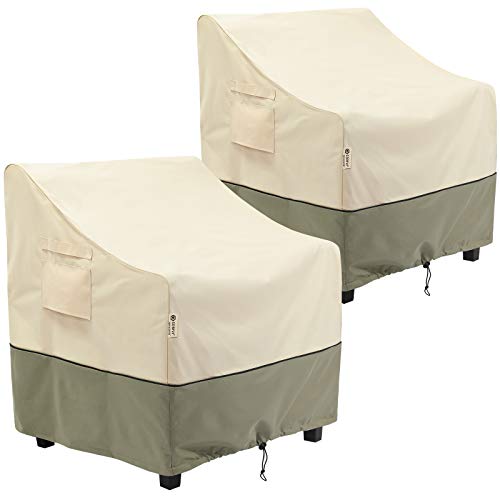
DECENT SIZE - 2 pack patio chair covers perfect fit the outdoor chairs size up to 32"W x 37"D x36"H. Please measure your chair dimensions before purchasing (Advice for Size Choosing: If the width and depth of your chair is 1 inch or more smaller than this size, please choose it.)
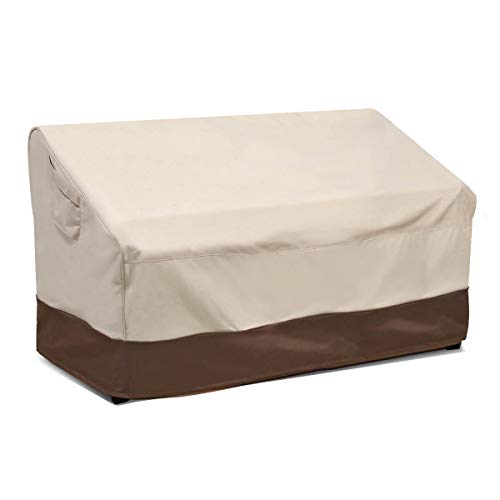
TRIPLE WATERPROOF PROTECTION: Vailge outdoor loveseat cover is built with heavy-duty 600D Oxford fabric with a water-resistant coating and taped interior seams. Prevents water leakage through stitching during heavy rain, protecting your patio loveseat from moisture.

Designed Specifically For Extra-Large Sofas: This cover is tailored to fit oversized outdoor couches measuring 85"W x 38"D x 35"H, providing consistent coverage across extended seating areas without pulling or exposed sections
Account for Special Features and Protrusions
While depth measurements establish your furniture’s primary dimensions, you’ll also need to account for elements that extend beyond the basic frame structure. Your protrusion analysis requires measuring armrests, cushions, decorative trims, and any attached accessories separately. Use a flexible measuring tape to contour around curved backs and rounded corners for accuracy.
Identify umbrella holes on tables and measure their diameter and position. Record distances from furniture edges to accessory points like cup holders or storage compartments to prevent cover snagging.
For cover customization, measure total height from ground to the highest point of finials or raised backrests. Document irregular heights across sectional pieces. Create cardboard templates replicating protruding parts and place them over furniture to verify complete coverage before purchasing covers. Just as proper surface preparation ensures optimal adhesion in protective applications, accurate measurements ensure that covers fit securely without gaps or shifting. Selecting weather-resistant protective covers designed specifically for your furniture’s dimensions ensures optimal protection against UV rays, moisture, and seasonal debris throughout the year.
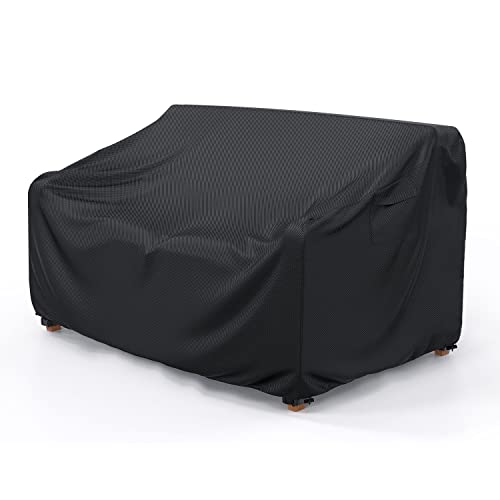
Proper Size: We have multiple sizes for you to choose. This outdoor sofa cover fits up to 60" L×34" D×30" H. Please kindly measure your patio sofa before purchasing and it’s better to choose the cover 1-2 inch larger than your sofa.

【Applicable Size】This waterproof patio sofa cover fits standard 3-seater 75-80 inches outdoor wicker, teak, and metal sofas (up to 80"W x 38"D x 35"H). For the best fit, measure your sofa and choose a cover 1-3 inches larger
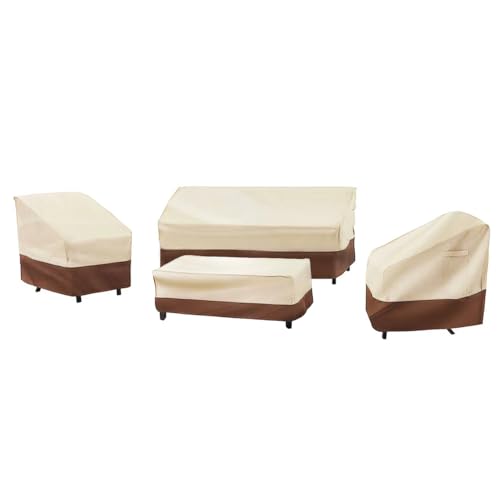
4-PIECE PATIO FURNITURE SET COVER: This Loriano outdoor furniture cover includes 2 chair covers, 1 sofa(3-seater) cover and 1 coffee table cover
Add Allowance for Fit and Flexibility
To guarantee your covers’ll function properly across varying conditions and furniture states, you’ll need to build in strategic allowances beyond your raw measurements.
Round your measurements to the nearest half-inch to accommodate natural wear, fabric stretching, and minor construction variations. This fit allowance prevents covers from becoming too tight or restrictive over time.
For expandable furniture like dining tables with removable leaves, account for both extended and collapsed configurations separately. Modular sectionals require flexibility considerations that address potential rearrangement possibilities.
Subtract seat cushion thickness—typically 4 inches—from back height measurements to prevent oversized covers. This calculation guarantees proportional dimensions across all pieces.
These strategic allowances protect against ordering undersized covers while maintaining proper functionality and aesthetics regardless of how you configure or use your patio furniture.
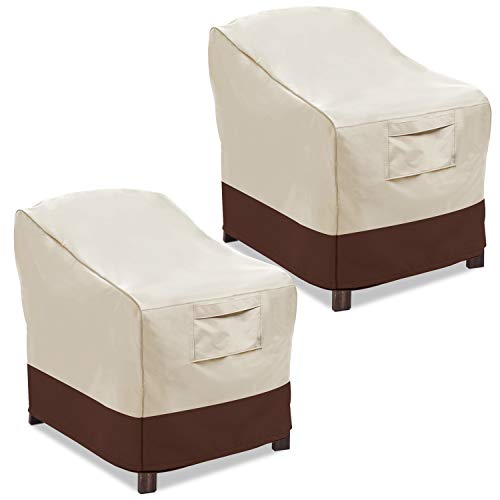
TRIPLE WATERPROOF PROTECTION: Vailge outdoor chair covers waterproof are built with heavy-duty 600D Oxford fabric with a water-resistant coating and taped interior seams. Prevents water leakage through stitching during heavy rain, protecting your patio chair from moisture.

FITS 9FT-12FT PATIO UMBRELLAS WITH ALL-SEASON PROTECTION: Designed to fit 9ft to 12ft market umbrellas, this umbrella cover protects your outdoor umbrella from weather exposure, dust and fading. Please measure your umbrella size before purchasing. It may fit 7ft-8ft umbrellas but may appear loose. Not designed for cantilever or offset umbrellas.

【Enzeno Garden Furniture Cover】 - Is your expensive furniture damaged by rain, sun and dust? The new upgraded garden furniture cover is covered with nano PU coating and high temperature sealed waterproof adhesive tape on the stitching seams. It enables the product to withstand 15,000pa water pressure.
Verify Measurements Against Size Charts
Once you’ve compiled your measurements with strategic allowances, you’ll cross-reference them against the manufacturer’s size charts to confirm your furniture matches available cover options. Compare your dimensions systematically against listed specifications for width, depth, and height. Size chart comparisons require matching your furniture shape—round, rectangular, or square—to corresponding cover categories. Verify that maximum height specifications accommodate your furniture’s tallest point, including any tall backs or umbrella holes. Confirm width and depth measurements fall within the chart’s minimum and maximum ranges. Document any special features your furniture requires, such as high-back compatibility or sectional configurations. For cushioned furniture, consider that UV-resistant outdoor foams underneath your covers will affect the overall thickness and fit of protective coverings. This methodical approach prevents ordering mismatched covers. When uncertainties arise, note applicable cover adjustment tips like elastic hem options or tie-down systems that may optimize fit for your specific pieces, similar to how secure cable fastening ensures proper deck lighting installation.
Record and Document Your Measurements
Accurate patio furniture measurements mean nothing if you can’t recall them later, so you’ll want to establish a systematic documentation process before you even pick up your tape measure. Implement clear documentation methods by creating labeled sections for each furniture piece, assigning each item a number for cross-reference. Record width, depth, and height together using consistent abbreviations (W, D, H) with units included. Your measurement techniques should include placing masking tape at exact starting and ending points, maintaining markers throughout verification. Document cushion thickness separately and note architectural obstacles nearby. Write descriptive details about furniture condition and spatial relationships. Create a master key explaining all abbreviations. Triple-check figures and verify conversions between measurement systems. Remove tape only after confirming all measurements match across verification passes. Just as deck railings require proper plumbing and secure fastening to ensure structural integrity, accurate documentation requires verification at multiple stages to maintain precision. Before storing your documentation, consider how you’ll maintain these records long-term, as proper maintenance also extends to keeping your furniture clean using gentle yet effective cleaning methods.