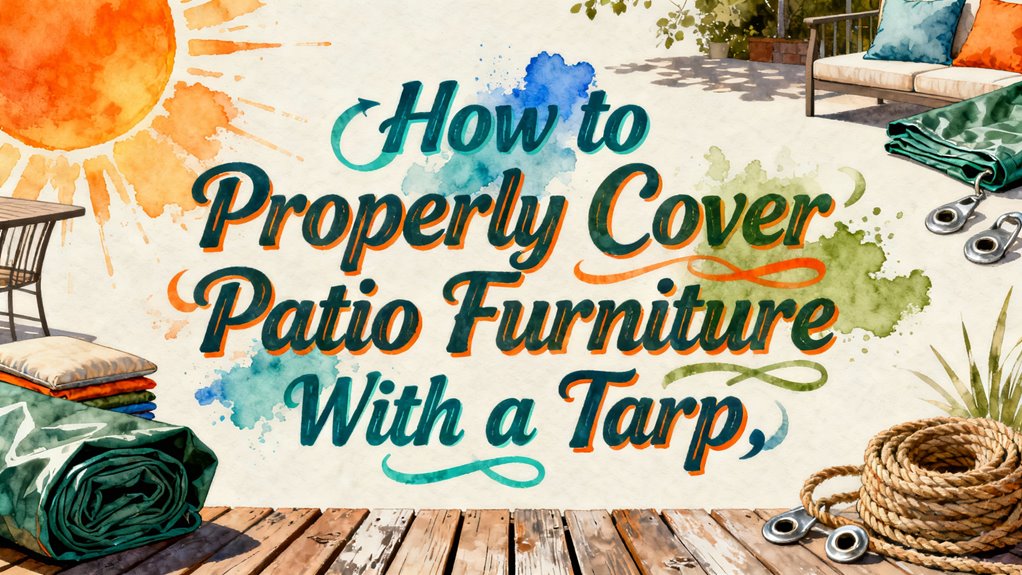
How to Properly Cover Patio Furniture With a Tarp
You’ll start by inspecting your furniture for damage, then clean it thoroughly and guarantee it’s completely dry. Next, choose a heavy-duty tarp with reinforced grommets and UV-resistant coating suited to your climate. Drape it from the highest point downward, securing it with bungee cords or clips while maintaining loose tension for airflow. Leave 5-20 centimeters of ground clearance and slope the tarp for water runoff. These fundamentals set the foundation for protecting your investment through any season.
Preparation Steps
Before you cover your patio furniture, you’ll need to inspect it thoroughly for any existing damage, rust, or deterioration that might worsen under a protective cover. Identify the material type—whether wood, metal, wicker, or plastic—to determine the appropriate preparation method for each piece.
Next, perform surface cleaning using a mild soap and water solution to remove dirt, dust, and pollen. Use soft-bristled brushes for stubborn stains without damaging materials. Rinse thoroughly and allow complete drying before proceeding.
Verify that all crevices, joints, and underside surfaces are completely moisture-free. Check humidity levels and weather conditions when scheduling drying time to prevent mold and mildew growth beneath covers. Use absorbent materials to eliminate trapped moisture in cushions or fabric areas before covering.
Tarp Selection
Selecting the right tarp is essential to protecting your patio furniture from environmental damage, and you’ll want to gauge several key factors that directly affect coverage quality and longevity. Start by evaluating GSM (grams per square meter) and thickness—heavy-duty tarps at 10+ mil thickness offer superior coverage durability for frequent outdoor exposure. Next, consider tarp materials: polyethylene tarps provide affordable waterproofing, vinyl tarps deliver heavy-duty performance in harsh conditions, and polyester options resist UV damage effectively. Assess UV resistance and weather-resistant coatings to prevent brittleness and fading. Measure your furniture dimensions carefully, adding 1-2 feet overhang for secure fastening. Finally, verify reinforced edges and rust-resistant grommets to guarantee proper tensioning without sagging, maximizing your tarp’s protective capabilities. Choosing durable weather-resistant protective covers also prevents moisture trapping that can damage your furniture when covered for extended periods. Many modern patio furniture pieces are constructed with water-resistant materials like aluminum, teak, and synthetic resin that can withstand occasional rain exposure.

【PACKAGE INCLUDES 】: one 8x20ft clear heavy-duty rain tarp (thickened),enhance the tensile strength of the clear vinyl rain tarp; 2 packs 33-foot roll of windbreak cord, and 50 zippers are also included.

PACKAGE INCLUDES—one 8x16ft clear vinyl tarp (thickened), with edges upgraded from cloth edges to heat-melted wrapped edges to enhance the tensile strength of the clear vinyl rain tarp; 2 packs 33-foot roll of windbreak cord, and 50 zippers are also included.

[90%+ Light Tarp] If you had been blocking half the sun from your greenhouse with a murky cover, you would be paying for it in slower growth and weaker yield. Our ultra-clear heavy duty vinyl tarp transmits over 90% of natural sunlight – a number we stand by – so your seedlings stretch strong and tomatoes ripen faster. Whether you are covering a chicken coop window, a greenhouse cover, or a patio enclosure, you get the light your plants have been screaming for. No haze. No excuses.
Covering Technique
Once you’ve selected the ideal tarp for your furniture’s needs, you’re ready to execute a proper covering technique that maximizes protection and longevity. Start by draping the tarp from the highest point downward, allowing it to hang loosely rather than wrapping it tightly. This approach accommodates airflow and prevents moisture accumulation.
Different material types require specific covering methods. For synthetic tarps, secure edges with binder clips, leaving 3–6 inches of excess material at seams. Shape the tarp to create a sloped surface, directing water runoff away from pooling areas. Adjust the tarp’s center or edges slightly upward if needed.
Finally, smooth out wrinkles and confirm complete coverage of all furniture surfaces, including legs and corners. Double-check for gaps before making final adjustments to clips or ties.

Weatherproof Shield: Made from heavy-duty 420D Oxford fabric with a PU waterproof coating, these outdoor furniture covers waterproof help protect your patio furniture from rain, snow, and dust; Designed for reliable year-round outdoor protection with durable, easy-to-maintain fabric

Weather Protection: Layered polyethylene helps protect against rain, wind, snow, and dust, whether covering a stacked woodpile in the yard or patio furniture on an open deck; The heavy duty waterproof tarp helps keep covered items dry during outdoor use

Fits 6 stackable patio chairs 25.5"L x 33.5"D x 45"H
Securing the Tarp
Several reliable methods can keep your tarp firmly in place, protecting your furniture from wind, rain, and weather shifts. You can use bungee cords or elastic tie-downs stretched across the tarp and attached to furniture legs for flexibility and durability. Alternatively, rope straps looped through tarp grommets provide versatile securing options with adjustable tension. Tarp clips and cover clamps grip the tarp’s edges and attach to furniture frames, proving especially effective at corners where uplift occurs. For additional security, weights and anchors—such as sandbags, water-filled containers, or patio blocks—distributed evenly around the perimeter prevent movement in windy conditions. You can also reinforce grommets with metal washers or employ ratchet straps for heavy-duty stability. Combining multiple methods guarantees maximum protection.

[VERSATILE REPLACEMENT] Repair or give a new stylish look for a wide range of lawn furnitures including patio chairs, chaise lounges, lawn swings and other outdoor furniture. Available in a variety of colors with matte finish to match your patio color scheme and decor. Suitable for both single and double wrapping.

[UNIVERSAL SIZE]: The size of this cover is 62" L× 42" W× 28" H. It fits most furnitures like end tables, benches, coffee tables, chairs, the round or oval patio dining table set with 8-12 chairs, or 6-8 seats sofa set. Please measure the dimension of your furniture set before purchasing.
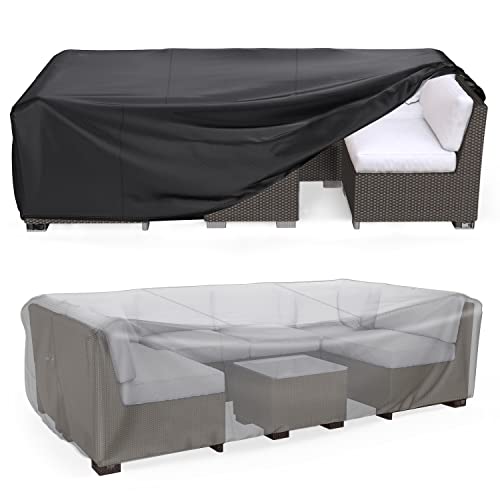
[UNIVERSAL SIZE]: The size of this cover is 90"L x 62"W x 28"H. It fits most furniture like end tables, benches, coffee tables, chairs, the round or oval patio dining table set with 8-12 chairs, or a 6-8 seat sofa set. Warm Tips: The size is only cover size, please measure the dimensions carefully before purchasing, recommend choosing a cover 2 inches larger than your furniture.
Ventilation and Moisture Control
While securing your tarp keeps weather out, you’ll also need to manage the moisture that naturally accumulates beneath protective covers. Recognizing airflow importance is critical—trapped moisture creates ideal conditions for mold, mildew, and rust development, accelerating furniture deterioration.
For moisture prevention, leave 5 to 20 centimeters of space between the ground and cover edge to enable continuous airflow underneath. Avoid sealing covers too tightly; instead, allow them to rest loosely. Position your tarp so water naturally slopes off rather than pooling in low spots.
Select ventilated covers featuring mesh panels or canvas construction that permit moisture escape while maintaining waterproof protection. Consider raising furniture items off the ground during storage to guarantee unrestricted airflow beneath covers. Applying protective oils or sealants to your furniture before covering it provides an additional layer of defense against moisture-related damage. Regular inspections help you identify tears that compromise your moisture control strategy. For long-term protection, combining tarps with weather-resistant materials like marine-grade polymers or powder-coated aluminum can significantly enhance your furniture’s durability through multiple seasons.