How to Weatherproof Furniture for Year-Round Outdoor Use
You’ll extend your outdoor furniture’s lifespan by selecting weather-resistant materials like teak, aluminum, or marine-grade stainless steel. Start with thorough cleaning and sanding, then apply protective coatings such as natural oils or marine varnish in multiple thin layers. Implement seasonal maintenance strategies: remove snow promptly in winter, dust regularly during summer, and inspect quarterly for rust or damage. Tailor your material selection to your climate—humid regions benefit from aluminum and teak, while wet climates favor hardwoods and resin wicker. The specific techniques for your environment await further exploration.
Understanding the Best Materials for Outdoor Furniture
When you’re selecting outdoor furniture, the material you choose directly determines how well it’ll withstand weather exposure, moisture, UV rays, and temperature fluctuations. Material comparisons reveal distinct advantages: hardwoods like teak and IPE develop natural oils and patinas while resisting rot for decades. Synthetic fabrics such as olefin and solution-dyed acrylic offer superior water and UV resistance without PFAS treatments. Glass fiber reinforced concrete combines strength with flexibility, resisting cracking and environmental stressors. Marine-grade polymers and HDPE lumber withstand salt corrosion and extreme weather while requiring minimal maintenance. Stainless steel provides corrosion-resistant durability across all climates. Aluminum furniture delivers lightweight durability with rust and corrosion resistance, though it may require protective measures in direct sunlight to prevent heat buildup and occasional care to address dents or scratches. Southern Yellow Pine is a cost-effective hardwood option that offers natural resistance to decay and insects through its high resin content, making it an accessible choice for budget-conscious consumers. Your maintenance strategies should align with your chosen material—hardwoods need occasional oiling, while polymers require virtually no upkeep. Understanding these material comparisons guarantees you’ll invest in furniture that delivers long-term durability.
Aluminum: Lightweight and Rust-Resistant Options
Because aluminum resists corrosion naturally through its protective oxide layer, it’s an exceptional choice for outdoor furniture that you’ll want to keep for years. You’ll appreciate aluminum’s lightweight construction, which lets you rearrange your outdoor design effortlessly without heavy lifting. Unlike steel or iron, aluminum won’t rust in coastal environments or harsh weather conditions—no sealing or regular maintenance required.
You can maintain aluminum furniture with simple soap and water cleaning. Powder coating further enhances weather resistance, protecting against UV rays and moisture in narrow crevices. Despite its lightness, aluminum maintains structural stability suitable for outdoor use. Cast aluminum furniture often lasts a decade or more with proper care, making it a smart long-term investment for your outdoor spaces. You’ll also benefit from diverse design options, from modern frames to wood-look finishes, allowing you to customize your space while enjoying long-lasting durability. For superior durability and minimal upkeep, consider comparing aluminum with other high-performance materials like resin furniture, which offers comparable longevity with exceptional resistance to environmental stressors.

Oversized Soft Seating: This item is shipped in 3 boxes and may not be delivered at the same time. ComfCove oversized patio furniture is designed for true comfort, with each seat offering a generous 24.5-inch width and 27.5-inch depth—that’s wider and deeper than most standard outdoor patio sofa sets. Plus, the tall 30.8-inch high backrest supports you from shoulders to lower back, so you can truly lean back and unwind

𝗨𝗽𝗴𝗿𝗮𝗱𝗲𝗱 𝗢𝘃𝗲𝗿𝘀𝗶𝘇𝗲𝗱 & 𝗥𝘂𝗴𝗴𝗲𝗱 𝗗𝗲𝘀𝗶𝗴𝗻: Featuring extra-wide 25" seats—far roomier than standard patio outdoor furniture—this patio set lets you stretch out and relax freely. The 3mm-thick aluminum frame provides outstanding strength while staying rust-proof and crack-resistant. Its Continuous Loop Frame improves stability, distributes weight evenly, and reduces wobbling.

【Generous Seating Dimensions】 Built for ultimate comfort, our patio sofa features a 30.8-inch backrest. The 31.5-inch seat width and 27.5-inch seat depth offer more space than typical patio furniture, ensuring ample room for users of all sizes to stretch out fully. Compared to the industry average of 24–26 inches for seat depth, our design provides significantly more space, making your relaxation experience truly luxurious.
Teak Wood: Natural Durability and Weather Resistance
If you’re seeking an outdoor furniture material that’ll thrive without constant upkeep, teak wood stands apart due to its naturally high oil content—primarily tectoquinone and other vegetable oils that create a water-repellent barrier. These teak advantages extend beyond moisture resistance; the dense grain structure minimizes warping, cracking, and splitting while maintaining dimensional stability across temperature fluctuations. Teak’s naturally occurring anti-fungal and anti-bacterial properties eliminate the need for chemical treatments, protecting against rot, mold, and pest damage for up to 20 years in harsh conditions. With a shrinkage coefficient of just 5.3%, you’ll experience minimal expansion or contraction. This exceptional durability means teak can last 30 to 75+ years with minimal maintenance when properly cared for. Unlike rubberwood, which absorbs moisture readily and deteriorates quickly outdoors, teak’s inherent water-repellent properties make it ideal for year-round external use. You can leave teak untreated and it’ll weather gracefully to a silver-gray patina, requiring only occasional cleaning to maintain appearance.

【Premium Acacia Wood Construction】Crafted from high-grade acacia wood, this set combines durability with exotic beauty. Naturally resistant to outdoor elements, acacia maintains its rich, sleek appearance without darkening over time. Its sturdy hardwood frame ensures long-lasting resilience against wear and tear, making it a timeless investment for your patio or garden.

ACACIA WOOD: Made with acacia wood that brings a sleek and exotic look to your space, this durable hardwood naturally withstands outdoor elements and will not darken over time. Acacia wood is perfect as a solid, heavy frame that resists wear and tear.

DURABLE WOOD:This bistro set is made of real Acacia wood with a natural finish. This chat set is solid, strong and durable.This table chair set is Crafted from solid, weather-resistant natural acacia wood for beauty and long-lasting durability.Acacia wood is strong and durable.No splinter, rust, crack, chip or peel.Chat Set Bistro Set Table Chair Set.
Synthetic Wicker and All-Weather Alternatives
Synthetic wicker presents a compelling alternative to traditional materials, engineered from high-grade plastics like polyethylene (PE), high-density polyethylene (HDPE), PVC, and nylon that are fortified with metal frames for structural integrity. This all-weather performance construction delivers non-porous, water-resistant properties suitable for year-round outdoor placement.
You’ll appreciate the durability: synthetic wicker resists UV rays, moisture, and temperature fluctuations without degradation or color fading. Unlike natural wood, it won’t split from freeze-thaw cycles. The integrated synthetic colorant maintains vibrancy from inside out, and UV treatment prevents brittleness during prolonged sun exposure. Synthetic rattan’s lightweight nature allows for easy rearrangement of your outdoor spaces.
Maintenance demands minimal effort—you can rinse dirt away or clean seasonally with soap and water. To further extend your furniture’s lifespan, establish a regular maintenance routine that includes periodic deep cleaning and inspection for any wear. With proper care and protective covers, your synthetic wicker furniture lasts 10-20 years, offering superior outdoor performance at lower cost than natural alternatives.

★[COLOR]: This wicker replacemenet material is not monochromatic but gradiant dark brown with mixed color stripes. ''Gradiant dark brown'' means this wicker's color is not consistant in only one brown color but mixed with cappuccino brown and espresso brown, and these two brown colors gradually transitions along with the wicker strand.

Quality and Durable: Founded atop a strong powder-coated steel frame, wrapped in dense all-weather wicker with woven details closely in a black finish with stereo arcuate stripes for a tastefully textured, cozy look, makes outdoor furniture set 6 PCS exceptionally durable
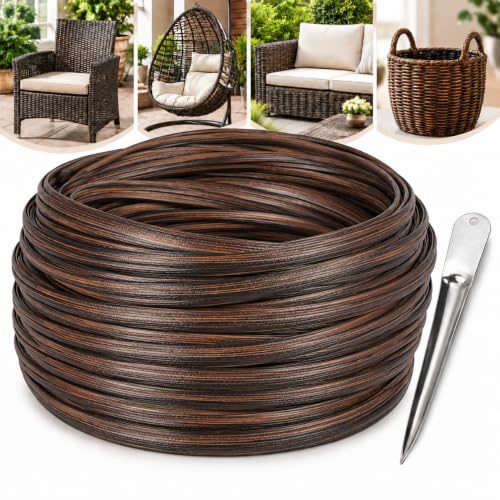
【Complete Kit for Easy Repairs】Restore worn woven furniture with a practical wicker repair kit containing one 20M roll of coffee brown repair strip and a rattan weaving tool. Everything is conveniently combined for replacing broken sections, refreshing damaged areas and completing everyday furniture restoration projects.
Stainless Steel and Metal Furniture Advantages
While synthetic wicker excels at mimicking natural aesthetics, stainless steel and metal furniture offer uncompromising durability that outperforms most outdoor materials. You’ll benefit from chromium’s protective oxide layer, which delivers exceptional rust resistance in coastal or humid environments. Unlike wrought iron, stainless steel remains virtually impervious to corrosion, requiring only occasional water rinses and gentle detergent cleaning.
You can customize your outdoor space through stainless steel’s design flexibility—powder coatings enable color variations while polished or brushed finishes create sleek, contemporary aesthetics. The material’s malleability allows crafting curved or linear forms suited to your style preferences.
Your investment justifies itself through longevity. Stainless steel furniture withstands temperature fluctuations and weather exposure year-round without structural degradation. For those seeking maximum durability with minimal effort, recycled plastic materials like Polywood offer comparable weather resistance and low-maintenance benefits as an eco-friendly alternative. Though upfront costs exceed alternatives, minimal maintenance needs and indefinite frame lifespan reduce long-term expenses, while 100% recyclability supports environmental sustainability.

PREMIUM CONSTRUCTION : The outdoor bench entire body is made of stainless steel and there is no filling material inside. reinforced beam design at the bottom of makes structure more stable to support multiple users comfortably,660bs load-bearing capacity

【4-Piece Patio Set】 This modern patio furniture set includes 1 loveseat, 2 chairs, & 1 coffee table. Perfect for balconies, decks, or gazebos. Upgrade your space with this stylish outdoor patio furniture set, beautifully designed to host families and guests in ultimate relaxation

【 EXCELLENT QUALITY 】: 304 Stainless Steel is the same material stainless kitchen hardware and appliances are made from. It is a high-quality material with excellent anti-corrosion properties. These nylon-based cabinet levellers are a great choice for hardware that will be in harsh or wet environments.
Preparing Wood Surfaces for Weatherproofing
Unlike stainless steel’s self-protective oxide layer, wood furniture demands deliberate surface preparation to establish an effective weatherproofing foundation. You’ll start with thorough cleaning techniques using mild soapy warm water and soft-bristle brushes, working in the direction of the wood grain to remove dirt, oils, and contaminants that prevent adhesion. Avoid power washers, which raise grain and create uneven surfaces.
Next, employ progressive sanding methods starting with coarse grit (40-120) for rough patches, advancing to medium grit (120-220) for balanced preparation, and finishing with fine grit (220-1000) for smooth, ready-to-treat surfaces. Complete drying is critical before proceeding, as moisture trapped under sealant causes mold growth and wood rot. For outdoor furniture, selecting varnish finishes over polyurethane will provide superior weather resistance and compatibility with wood movement throughout seasonal changes. A tack cloth guarantees the surface remains pristine and contaminant-free. Protecting surrounding areas like plants and nearby surfaces during preparation prevents accidental damage from dust and debris.
Applying Natural Oils and Protective Coatings
Once your wood surfaces are properly sanded and dried, you’re ready to apply natural oils that’ll penetrate the wood fibers and create a durable, water-resistant finish. When applying teak oil, start with a thin, even coat using a brush or cloth, working with the grain. Allow 24-48 hours drying time between coats. Apply 2-3 coats for ideal protection and rich color development.
Light sand between applications to enhance adhesion and refresh the appearance. Test your chosen oil on spare wood or an inconspicuous area first. This penetrating oil formula absorbs into the wood rather than forming a surface film, protecting wood from moisture and UV damage. For bare wood surfaces, plan for 4-6 hours drying time between coats to ensure proper penetration and optimal results. Consider using mildew-resistant oils to extend weatherproofing durability and maintain protection against seasonal moisture and mold growth. The natural hardwood oils work alongside your applied finish, extending weatherproofing durability and maintaining your furniture’s structural integrity throughout seasonal changes.

ENHANCES THE BEAUTY OF THE WOOD: Teak Oil restores the beauty of grey, old and weathered teak furniture to give a golden-brown natural finish.

Cleaning and care for - The satin teak oil provides protection and care and makes your oiled wooden surfaces indoors resistant to splinters and dirt. The wood care oil is deeply absorbed, allows the wood to breathe and maintains the natural beauty of the wood.

Provides interior or exterior one-step protection for dense woods such as teak, rosewood and mahogany
Using Marine Varnish for Long-Lasting Protection
Marine varnish takes your weatherproofing strategy to the next level, offering a more robust protective film than penetrating oils alone. This specialized coating shields wood from moisture, UV rays, and extreme weather through UV inhibitors and higher oil content that accommodates wood movement.
For ideal results, you’ll need proper application techniques: thoroughly sand and clean surfaces before applying multiple thin coats rather than one thick layer. This approach guarantees better adhesion and durability. Plan for reapplication every 2-4 years depending on climate severity. For optimal protection, apply a minimum of three coats to ensure a robust barrier against the elements.
Marine varnish benefits include superior water resistance preventing warping and rot, crack resistance from flexible resins, and mold prevention through fungicide inclusion. However, expect longer drying times and potential yellowing over time. The trade-off delivers exceptional long-term protection for hardwood outdoor furniture where showcasing wood grain matters. For teak specifically, applying teak sealant in one or two thin coats can preserve the wood’s natural appearance while reducing maintenance requirements.
Maintaining Your Weatherproof Furniture Through Seasons
Even the most durable weatherproofing treatments require consistent maintenance to preserve your furniture’s integrity and appearance across varying seasonal conditions. You’ll want to adapt your cleaning techniques based on weather patterns in your region. In spring and fall, apply protective coatings and UV protectant sprays to combat seasonal changes. During winter, remove snow and ice promptly from surfaces, then elevate furniture on pallets to prevent moisture damage. Summer demands regular dust removal with soft-bristle brushes and mild soap solutions to combat UV exposure. For areas prone to humidity and moisture, address mildew growth promptly using appropriate cleaning solutions tailored to your furniture material. Ensure adequate water drainage around your outdoor seating areas to prevent pooling that can accelerate deterioration of furniture bases and cushioning materials. Store cushions indoors during off-seasons in cool, dry spaces. Conduct quarterly inspections for rust, cracks, or loose fasteners. Tighten bolts regularly and sand rough areas on wood. This systematic seasonal maintenance approach maximizes your furniture’s lifespan and weather resistance year-round.
Choosing Materials Based on Your Climate and Environment
While seasonal maintenance keeps your furniture protected, selecting the right materials from the start determines how well your pieces will withstand your specific climate. Material compatibility with your environment is vital for longevity.
In hot, dry climates, you’ll want cast aluminum with powder-coated finishes and synthetic wicker—they resist UV damage and heat retention. For humid or coastal areas, aluminum, teak, and marine-grade stainless steel combat salt corrosion effectively. Cold regions demand cast aluminum, wrought iron, or polywood to endure freezing cycles. Wet climates require hardwoods like teak or ipe, plus aluminum and synthetic resin wicker that resist mold and moisture. For tropical and humid environments, cedar and cypress offer natural decay resistance and moisture absorption properties that make them excellent choices for outdoor furniture. Siberian larch is another exceptional option for cold climates due to its natural antiseptic properties and frost hardiness.
Your climate considerations directly influence durability and maintenance demands. Choose materials engineered specifically for your region’s temperature, humidity, and precipitation patterns.