The 5 Best Ways to Cut Deck Boards for a Perfect Fit
You’ll achieve perfect deck board fits by matching your tool to each cut type. Use circular saws with carbide-tipped blades for clean, straight cuts with minimal waste. Miter saws deliver precise crosscuts and angles without splinters. Jigsaws handle curves and irregular shapes effortlessly. Table saws excel at rip cutting for width reduction. For tight corners, oscillating multi-tools provide unmatched precision. Each tool requires specific techniques—maintaining proper speeds, blade heights, and board positioning—that’ll transform your deck installation results.
Circular Saws With Carbide-Tipped Blades for Clean, Accurate Cuts
When you’re cutting deck boards, especially composite materials, you’ll want a circular saw equipped with a carbide-tipped blade designed specifically for the job. Carbide teeth formulations like Razor Tipped™ and Brute Carbide deliver superior durability and impact resistance, maintaining sharpness through extended use.
Select a 44-tooth or higher tooth-count blade with triple chip grind geometry to achieve approximately 50% smoother finishes than standard wood blades. The thin kerf design reduces material waste while preventing composite melting during cuts. Most residential decking projects use standard board sizes like 5/4 × 6 boards, which these blade specifications are optimized to cut efficiently.
For ideal cutting techniques, maintain lower cutting speeds to minimize friction and heat generation. Regular blade maintenance—including pitch removal and dry storage—extends your blade’s lifespan considerably. Precise board cuts are essential for achieving flush board alignment when working with hidden fastener systems during installation. This investment guarantees professional-quality results across all your composite decking projects while maximizing tool compatibility across cordless and corded saw models.

SPECIFICATION: Diameter: 5-1/2 inch circular saw blade(140 mm); Arbor size: 10 mm; Max Rpm:8000; Carbide Teeth: 24T&48T

Up to 3X life* designed for improved finish quality**

SPECIFICATION: Diameter: 6-1/2 inch circular saw blade(165 mm); Arbor size:5/8 inch(15.8 mm) ; Max Rpm: 8000; Carbide Teeth: 24 T & 60T
Miter Saws for Precise Crosscuts and Angled Cuts
Because you’re working with pre-cut deck boards that demand exact dimensions and clean angles, a miter saw delivers the accuracy you can’t achieve with handheld tools. The stationary design guarantees repeatable cuts when properly calibrated, making it ideal for 90-degree crosscuts and precise miters.
Key miter saw benefits include handling multiple board thicknesses and producing splinter-free finishes with fine-tooth, carbide-tipped blades. Use a zero-clearance plate to minimize tear-out and support boards during cutting.
For accurate angle adjustments, mark angle lines with a speed square before cutting. Double-check alignment with a square after setting your desired angle. Always test cuts on scrap material first. Secure boards firmly against the fence, start the blade at full speed, and lower it slowly into the material. Like pergola construction, proper alignment and secure fastening of your deck components ensures structural integrity and longevity. Maintain your saw regularly to preserve precision and performance.
When cutting materials for deck construction, ensure your finished boards comply with South Carolina building code requirements for proper installation and safety.

Up to 3X life* designed for improved finish quality**

Featuring a 10-inch diameter (254 mm), a 5/8-inch arbor (15.88 mm) and a rating of up to 6000 RPM

Featuring a 10-inch diameter (254 mm), a 5/8-inch arbor (15.88 mm) and a rating of up to 6000 RPM
Jigsaws for Curved and Irregular Cuts
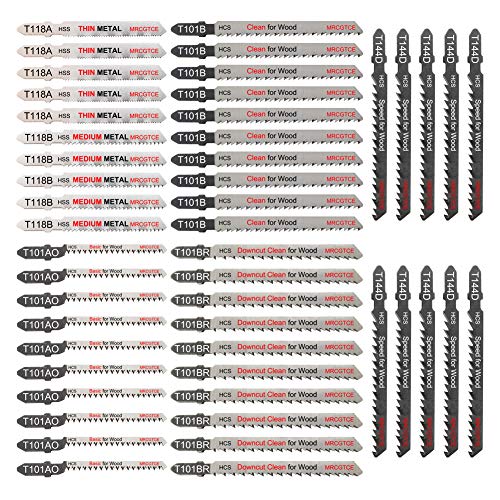
While miter saws excel at straight cuts, you’ll need a jigsaw when deck boards demand curves, notches, and irregular shapes. Select jigsaw blade types designed for your material—use thick wood blades like the Bosch T101 D for 30mm decking, and narrow blades for tight curves.
Master curved cut techniques by gradually rotating the jigsaw without sharp directional changes. Make relief cuts along curves to reduce blade binding and tension. Tilt and reposition the saw to navigate complex angles smoothly.
For interior cutouts, employ plunge cutting by tilting forward to start mid-board. Let the blade do the work without forcing it—this prevents breakage and deflection. Keep the shoe pressed firmly against the board surface for stability throughout your cuts.
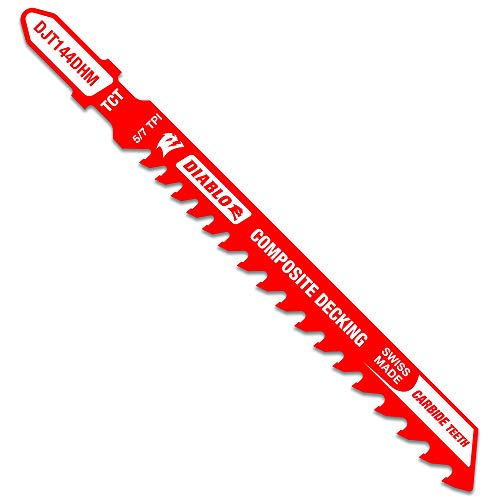
Extreme Durability - Provide up to 50X longer cutting life compared to standard blades, making them ideal for composite decking materials, wood, PVC, and other demanding applications.
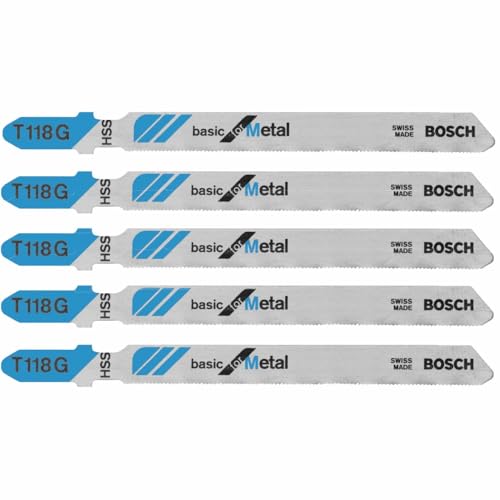
FOR SHEET METAL 17-26 GAUGE, VERY THIN METALS 1/64 IN. TO 3/64 IN. THICK (FERROUS AND NON-FERROUS)
Table Saws for Rip Cutting and Width Reduction
Ripping—lengthwise cuts that reduce board width—represents the table saw’s primary strength for deck construction. You’ll appreciate the table saw advantages it offers: superior precision and smoother edges compared to circular saws, reducing finishing work.
Set your fence to your desired width, then align the board against it. Position the board’s top surface facing up for ideal edge quality. For stability during long cuts, recruit a helper to maintain consistent pressure against the fence. Proper board spacing is essential during layout, so understanding joist spacing requirements will help you plan your cuts accordingly.
Adjust blade height so it protrudes just above your board’s thickness—this minimizes tear-out and guarantees clean cuts. Use push sticks for narrow widths, and always confirm the blade reaches full RPM before starting. These practices deliver repeatably accurate results while keeping your hands safely away from the blade. For deck projects, pressure-treated lumber is often recommended for the substructure to ensure longevity and durability.

Specs: Arbor 5/8", Diameter 10", Grind TCG, Hook Angle 12°, Kerf .091", Plate .071", Teeth 30

Heavy-Duty Construction - Thick kerf and reinforced plate deliver maximum stability and flatness, ensuring long-lasting performance and durability in demanding cutting applications.

Material: soft and hardwood, plywood.
Oscillating Multi-Tools for Tight Space Cuts
Oscillating multi-tools excel where table saws can’t reach—in tight corners, narrow gaps, and confined spaces around existing deck structures. You’ll find them invaluable for tight space cutting where traditional saws prove impractical.
Master the angled blade technique by starting at a slight angle, then straightening as the blade penetrates deeper into the board. Mark your cut line clearly with painter’s tape for accuracy, and clamp a guide board alongside it for straight results.
Maintain a relaxed, two-handed grip to minimize vibration and maximize control. Work at the highest blade speed for wood to prevent binding. Let the oscillation do the work—avoid forcing the tool. Pause periodically to clear debris, and never linger in one spot to prevent blade overheating. Always secure your deck board and wear safety goggles and a dust mask. For composite decking materials, consider using a carbide-tipped blade to achieve the cleanest cuts and prevent melting or rough edges.
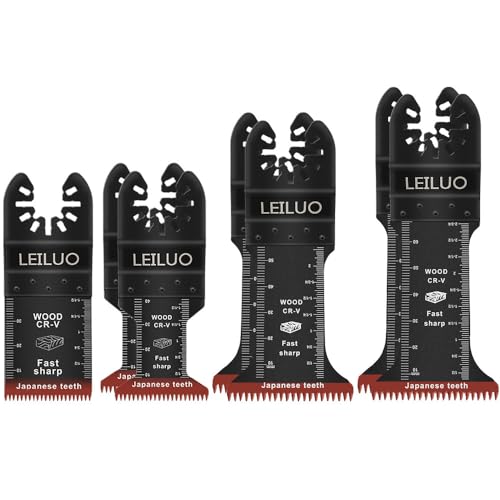
📦 7-PIECE DEEP-REACH RENEW SET Stop letting thick timber or bulky pipes halt your projects. This specialized set covers both routine trimming and extreme depths, featuring 40mm to 70mm depth gradients so you always have the exact length for deep plunge cuts.

【5 TYPES OF MULTITOOL BLADES】We carefully match these Multi Tool Blades Kits based on the daily use scenarios of workers.. This oscillating saw blades include 5 different types of multitool blades. Including 16 packs curved edge blades for precise cutting,3 packs japanese tooth oscillating multitool blades clean cut for Wood/Plastic,4 packs bi-Metal Blades for nails cutting,2 packs titanium bi-Metal blades for soft metal cutting and 3 packs standard Wood oscillating multitool.

【Curved-Tec Design】This oscillating saw blade's innovative curved edge design delivers optimal cutting angles throughout the oscillation process, leading to greater efficiency and accuracy. Moreover, the arc edge design effectively reduces vibration and enhances stability during use