What Size Board Do You Need for Deck Stair Stringers?
You’ll need 2×12 boards for most deck stair stringers, as they’re the industry standard offering superior load capacity and spanning up to 13 feet 3 inches without intermediate support. While 2×10 boards work for lighter applications with a maximum 6-foot span, 2×12 lumber provides the throat depth and structural integrity that building codes require. You’ll space stringers at 16 inches on center maximum, following ICC guidelines. Pressure-treated lumber resists rot and decay in outdoor conditions. Understanding how rise, run, and stringer quantity work together guarantees your stairs meet code and function safely.
Standard Lumber Sizes for Deck Stair Stringers
When you’re building deck stairs, you’ll want to use 2×12 boards as your primary stringer choice—they’re the industry standard because they provide adequate material for proper notching while maintaining structural integrity. You can use 2×10 lumber for lighter applications on smaller decks, but anything smaller won’t leave sufficient wood for correct construction.
Your stringer materials must be pressure-treated lumber since they’ll face constant weather exposure. Select the straightest boards with the fewest knots available—this directly impacts your stairs’ structural performance and longevity. Pressure treatment prevents rot and extends the lifespan of your outdoor staircase considerably.
The extra width of 2×12 stringers prevents sagging over time and supports heavier foot traffic better than smaller dimensions. This investment in proper stringer materials guarantees your deck stairs remain safe and stable for years. For optimal performance, ensure your stringers can handle the load conditions your stairs will experience. Your stringers should be designed with maximum rises of 8¼ inches per step to comply with safety codes and ensure comfortable, code-compliant stairs.

Pressure treated wood products

Adjustable Hidden Stair Stringer Hanger for Clean Aesthetics — This stair stringer connector provides a flexible concealed link between stair support and load-bearing rim board or header, eliminating expensive traditional framing while delivering a professional finished look for deck stairs and outdoor staircases.
Comparing 2×10 and 2×12 Stringers
Now that you understand why 2×12 boards are the standard choice, it’s worth examining how they actually stack up against 2×10 alternatives. You’ll find that 2×12 stringers deliver superior structural integrity with approximately 5 inches of throat depth beneath notches, compared to 2×10’s insufficient 3.5 inches. This material advantage translates directly to load capacity—2×12 boards safely span up to 13 feet 3 inches for closed stringers, while 2×10 boards max out at 6 feet for cut stringers.
Your defect vulnerabilities decrease markedly with 2×12 lumber. Knots or cracks in 2×10 boards compromise strength dramatically due to reduced remaining material. Industry preferences lean heavily toward 2×12 for residential applications because they meet safety standards consistently, offer superior material durability, and align with building codes without requiring intermediate supports.
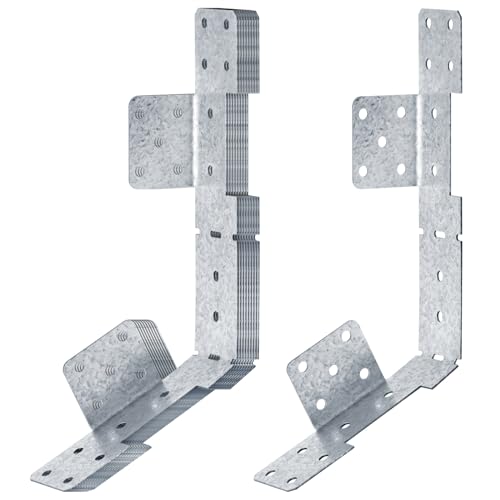
Suitable for installation on 2x10 or 2x12 header/rim joist
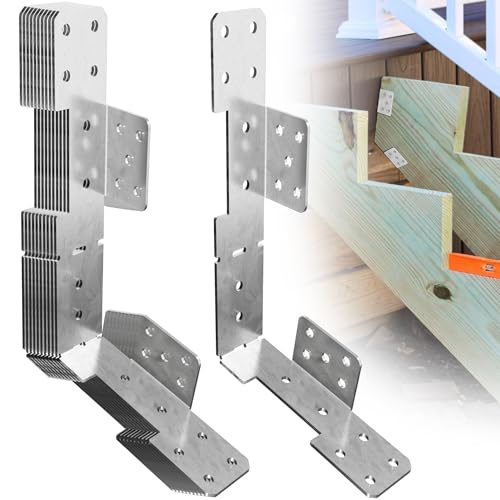
EFFECTIVE APPLICATIONS: HERBERT-FTY adjustable stair stringer mounting brackets provides provides a flexible and hidden link between the stair support and the load-bearing top or rim board, while replacing expensive framing. Aesthetically pleasing and economical.

EFFECTIVE APPLICATIONS: HERBERT-FTY adjustable stair-stringer connector provides provides a flexible and hidden link between the stair support and the load-bearing top or rim board, while replacing expensive framing. Aesthetically pleasing and economical.
Calculating Stringer Length and Requirements
Determining the correct stringer length requires you to measure from the deck’s attachment point to where the stringer bears on the landing or ground below. A single 2×12 stringer handles maximum spans of 7 feet without intermediate support. For longer runs, you’ll need an intermediate post to reduce unsupported length and meet building codes.
Solid stringers can theoretically span up to 16 feet 6 inches, but residential applications rarely utilize this capacity. You must calculate load bearing requirements based on your stair width and material choice. When the total vertical height exceeds 12 feet, building codes mandate an intermediate landing. Proper site preparation and leveling ensures your stringer foundation is stable and secure.
Intermediate posts require proper notching and bolting to the stringer, positioned over the middle third of the footing. Proper post installation techniques should be followed to ensure structural integrity and safety compliance. Always verify local building codes before finalizing your stringer length calculations.
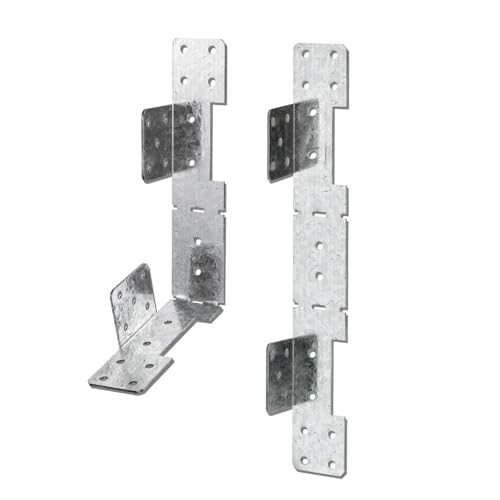
Built to Last: Crafted from durable galvanized steel, MOZCORN stair stringer connectors can resist rust and corrosion, ensuring long-lasting performance in any environment

Durable Material: The Stair-Stringer Hanger Connector is made of high-quality steel and features a premium black powder-coated finish that resists rust and corrosion, ensuring the long-term durability of your stairs or other structural components.

Universal Application: This adjustable stair-stringer connector can be used with all common stair stringers, but also for solid and notched stringers, and is suitable for most installations on 2x10 or 2x12 headers/edge joists or lower surfaces (typically for 2x12 headers/edge plates). It eliminates the need for additional frames and toe pegs. Replaceable for left or right applications, the reversible design allows the connector to be used for left, right, or internal stringers
Understanding Rise and Run Measurements
Your stair’s safety and usability depend entirely on precise rise and run calculations that comply with building code standards. You’ll measure total rise by dropping a plumb line from your stair header to ground level, then add your decking thickness for accuracy. Use a vertical 2×4 as a reference point and stretch a chalkline between the header and post with a line level for verification.
For tread depth, you’ll subtract the nosing overhang (typically ¾ inch) from your board width. Your unit rise can’t exceed 7¾ inches, while tread depth requires a 10-inch minimum. Combined, rise and run should total 17–18 inches for comfortable stride. These measurements guarantee consistent step heights, eliminating tripping hazards and meeting code requirements. After completing your stair installation, maintain your painting tools and equipment by cleaning them immediately with the appropriate solvent or soapy water depending on the stain type used. For optimal results, ensure you spray in the direction of wood grain to achieve even stain coverage across all stair surfaces.
Determining the Number of Steps Needed
Once you’ve confirmed your rise and run measurements, calculating the exact number of steps becomes straightforward: divide your total rise by your intended riser height, then round to the nearest whole number.
If your calculation doesn’t yield whole numbers, you’ll need to adjust your step height slightly to achieve an even step count. This adjustment guarantees all risers remain identical—a critical safety standards requirement. Most building codes mandate maximum riser heights of 7.75 inches, so you can’t exceed this limit.
After determining your step count, divide your total rise by this number to establish your exact step height. This final measurement must remain consistent across every step. Document this calculation carefully, as you’ll reference it when marking and cutting your stringers. In Florida, handrails on stairs must be positioned at heights between 30 to 36 inches to ensure proper accessibility and safety. Remember that stair railings require graspable handrails to provide safe passage for users navigating your deck stairs. Double-check all calculations before proceeding with construction.
Spacing and Quantity of Stringers
Proper stringer spacing isn’t arbitrary—it’s governed by building codes that account for the intense forces stairs endure during use. You’ll typically space wood stringers at 16 inches on center maximum, though standard sawn stringers from 2×12 members follow ICC codes at 18 inches on center. Composite decking demands tighter spacing—as little as 9 inches on center for products like Trex Enhance. You’ll need a minimum of four stringers for staircases wider than 36 inches, while narrower stairs may require just two solid 2×12 stringers. Always consult your decking manufacturer’s specifications, as stringer spacing requirements vary greatly from standard deck joist spacing. Just as deck surfaces require thorough cleaning before finishing to ensure proper adhesion and appearance, stringers must also be properly prepared and inspected for structural integrity before installation. When selecting composite decking products, consider choosing weather-resistant materials that will withstand your local climate conditions and extend the life of your staircase. Building inspectors enforce these requirements strictly, so verify compliance before construction begins.

Steel Stair Step Riser: Our package includes two robust metal step frames and a set of bolts. Whether you're enhancing your outdoor area or creating an indoor masterpiece. We offer 1-8 steps riser for you. You can choose the right size according to your need

👉[Build your 5 steps staircase]: The 5 step metal riser could create steps for your hot tub, add steps to a door or to the deck, drop down into the backyard or get into the proch. The metal 5 stairs stringers could be widely used and bring more convenience to our daily life.

Steel Stair Step Riser: Our package includes two robust metal step frames and a set of bolts. Whether you're enhancing your outdoor area or creating an indoor masterpiece. We offer 1-8 steps riser for you. You can choose the right size according to your need