How to Properly Anchor Pergola Posts for Maximum Stability
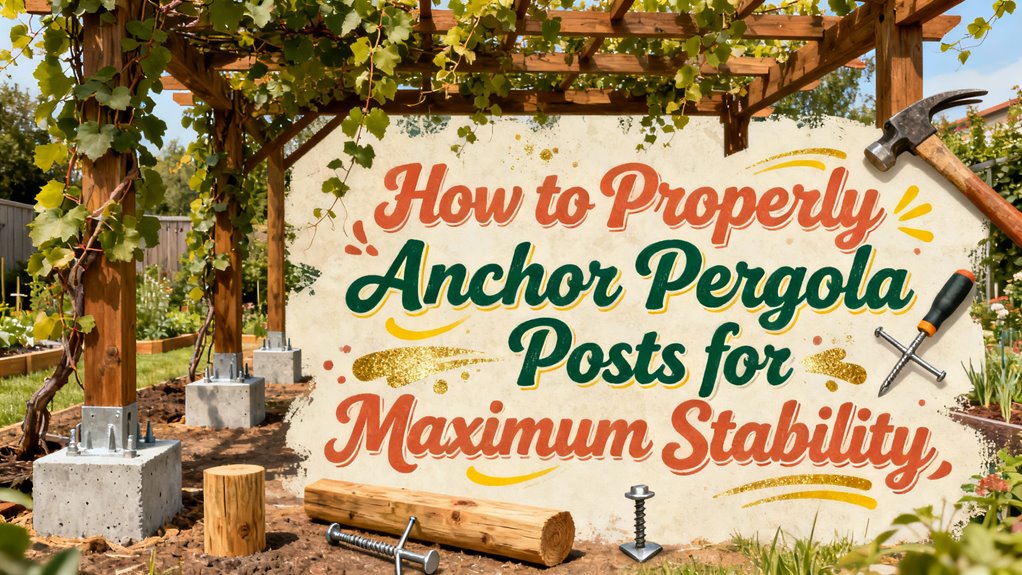
You’ll anchor pergola posts through concrete footings dug below the frost line—typically 18-20 inches deep with 12-24 inch diameters. Ground screws work well in compacted soil, while weighted bases suit temporary setups. For decks, use concrete anchor brackets with galvanized bolts or epoxy screw anchors. Cross-bracing prevents twisting during high winds. Apply silicone sealant around fasteners to block water infiltration and reduce corrosion. Retighten hardware annually and inspect after severe weather. The specific method you’ll choose depends on your soil conditions and installation permanence.
Concrete Footings: The Foundation for Permanent Stability
Because frost heave can compromise your pergola’s structural integrity, you’ll need to dig your concrete footings below your local frost line—typically at least 24 inches deep for wooden pergolas, though colder climates may require depths reaching 36 inches or more. Pressure-treated lumber allows for slightly shallower footings at 18–20 inches.
Your footing depth ultimately depends on local building codes and soil type. Minimum footing diameter should be 12 inches, expanding to 18–24 inches for larger structures. Securely anchor your posts to the footing using approved hardware such as post anchors or saddles to ensure proper load transfer and prevent wobbling or structural failure.
Your concrete mix requires a compressive strength of 3,500–4,000 PSI for peak performance. Reinforce footings with 1/2-inch rebar featuring at least three rings, ensuring minimum 2-inch concrete coverage on all sides. Pour concrete in two layers with steel mats between them for enhanced stability and crack prevention. For maximum outdoor structure longevity, consider removable designs that allow you to store your pergola components when not in use, similar to how flexible outdoor entertaining spaces can be optimized for different seasonal needs.
Ground Anchors and Screws: Quick and Adjustable Solutions
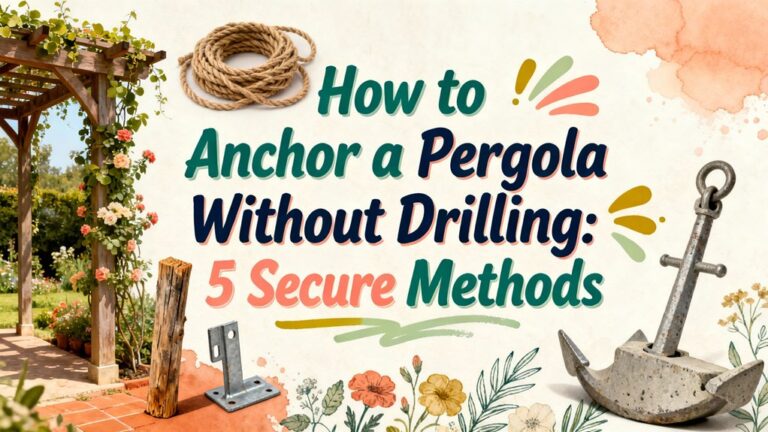
While concrete footings provide permanent stability for pergolas, you might prefer faster installation methods that don’t require extensive excavation or curing time. Ground spikes offer an efficient alternative for securing your posts directly into soil. You’ll find these anchors readily available at box stores, making accessibility convenient.
Installation tips emphasize driving spikes straight into the ground at equal distances around your pergola’s perimeter. This method costs noticeably less than traditional concrete footings and helical piles. However, you should assess your soil type first—dense, compacted earth provides better stability than loose or sandy conditions. Like deck staining projects that require thorough preparation steps, proper soil assessment ensures your anchoring system will perform optimally. For maximum stability, ensure your ground spikes are driven to sufficient depth and that post base brackets are properly secured to both the anchor and your lumber.
For uneven terrain, adjustable post bases accommodate slope variations while maintaining structural perpendicularity. These bases support various post dimensions, including 4×4 and 6×6 lumber. You’ll appreciate the flexibility this system provides when dealing with challenging ground conditions.
Weighted Base Solutions for Temporary Installations
Weighted bases offer a practical anchoring solution when you can’t or won’t commit to permanent ground modifications. You’ll position heavy planters, concrete blocks, or purpose-built base plates directly beneath each pergola post, distributing weight evenly to prevent tipping.
This approach suits temporary setups on grass or hard surfaces without excavation. You can secure posts using straps or brackets for added stability. However, weighted bases perform poorly under high winds or extreme weather—they’re best for lightweight pergolas in controlled conditions.
Consider aesthetic considerations carefully; sandbags and water weights often appear bulky and may degrade over time. Decorative planters offer better visual integration while serving functional purposes. You’ll need periodic adjustments and reinforcement as weather changes. This solution prioritizes flexibility and easy relocation over maximum structural security.
Anchoring Pergolas on Decks and Pavers
When you’re installing a pergola on an existing deck or paved surface, you’ll need anchoring methods that don’t require excavation into the substrate below. You have several effective options. Concrete anchor brackets attach directly to your pergola materials’ post bases using galvanized bolts and concrete anchors, providing strong stability for years. Concrete screw anchors with epoxy adhesive require drilling 2-inch pilot holes, cleaning debris thoroughly, then driving screws flush. Through-bolting involves drilling completely through pavers, positioning anchor plates, and tightening bolts with washers and nuts. Deck foot anchors use handheld electric impact wrenches to drive anchors into ground, supporting various post types without digging. All methods accommodate weather considerations and existing paved surfaces effectively, ensuring your pergola remains secure against environmental stresses. In regions prone to extreme weather, consulting with an engineer ensures your anchoring system design meets all regulatory and safety requirements.
Bracing and Reinforcement for Enhanced Structural Support
Once you’ve secured your pergola’s foundation, you’ll want to reinforce the overall frame structure through strategic bracing and hardware selection. Cross bracing benefits include preventing twisting and racking during strong winds while distributing lateral forces evenly across your framework. You can install diagonal supports between posts and beams without requiring structural modifications to your existing installation.
Reinforcement materials prove essential for long-term durability. Use structural wood screws measuring 5.5 inches to embed deeply into 6×6 posts, providing maximum holding power. Simpson Strong-Tie hardware delivers weather-resistant fastening solutions specifically engineered for outdoor applications. Post sleeves installed within concrete prevent direct wood-to-concrete contact, eliminating rot development.
Additionally, apply end grain treatment with emulsified wax before installation to seal lumber and block moisture penetration. These reinforcement strategies also contribute to increasing property value by ensuring your pergola maintains structural integrity for years to come. For outdoor furniture that experiences similar exposure challenges, weather-resistant paint can refresh faded surfaces and extend the lifespan of your projects. These reinforcement strategies substantially enhance your pergola’s structural integrity and longevity.
Hardware Selection and Maintenance Best Practices
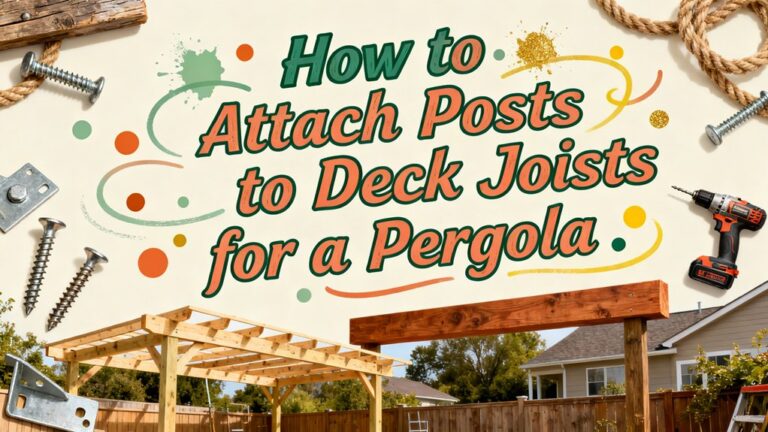
Your pergola’s longevity depends heavily on selecting the right anchoring hardware and maintaining it properly. Choose hardware types made from 304 or 316 stainless steel, hot-dipped galvanized carbon steel, or powder-coated materials for superior corrosion prevention. Match fasteners to your installation surface—wedge anchors for concrete, lag screws for wood, and masonry anchors for pavers. For deck joist installations, lag bolts at least 2.5 inches long provide the durability and rust resistance needed to withstand environmental stress and load bearing demands. Maintaining proper plumb and alignment during installation ensures your posts remain vertical and structurally sound throughout the pergola’s lifespan.
Inspect hardware regularly for corrosion or loosening, particularly in humid or coastal environments. Apply silicone sealant around fastener heads to block water infiltration. Retighten lag screws and bolts annually or after severe weather to maintain connection integrity. Replace deteriorated hardware immediately. By prioritizing quality materials and consistent maintenance, you’ll guarantee your pergola remains structurally sound and weather-resistant for years.