How to Tell If Your Deck Is Ready for Staining
Your deck’s ready for staining when you’ve validated three critical factors. First, check your moisture content using a digital meter—you’ll need 12–15% moisture levels to avoid adhesion problems. Next, inspect the surface; it should be clean, properly sanded, and free of debris. Finally, confirm all structural damage is repaired and fasteners are secure. Once you’ve checked these essentials, you’re prepared to explore the detailed preparation steps that’ll guarantee professional results.
Surface Cleanliness and Condition
Before you apply stain, your deck’s surface must be thoroughly clean and properly prepared—this foundation determines whether your stain adheres evenly and lasts for years. Start by removing all surface debris through vigorous sweeping to eliminate leaves, dust, and loose particles that prevent cleaning agents from working effectively.
Next, choose appropriate cleaning agents based on your deck’s condition. Sodium percarbonate or oxygenated bleach cleaners remove dirt, nail stains, algae, and mildew without damaging wood or skin. For weathered decks, wood brighteners restore faded surfaces and improve stain absorption. Apply your chosen cleaner in sections, maintaining wetness for at least fifteen minutes to allow agents to penetrate. After treatment, rinse thoroughly with a garden hose using low pressure to avoid wood damage. Always scrub with the grain when manually cleaning to avoid damaging the wood fibers and ensure an even surface for stain application. For stubborn spots with significant mildew or discoloration, consider light sanding of damaged areas to prepare the surface for even staining.

Oxygenated bleach formula deep cleans wood, composite, vinyl, and aluminum surfaces.
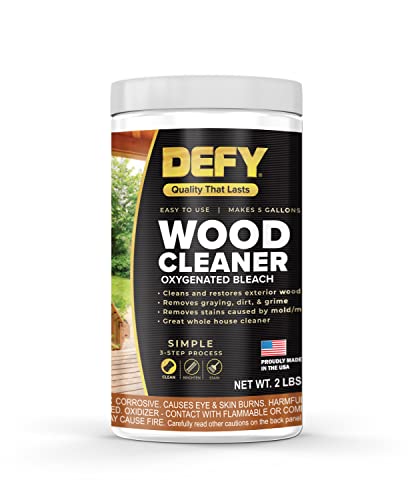
DEEP CLEANS WOOD SURFACES: Oxygenated bleach formula penetrates and opens wood pores for maximum stain absorption. Ideal for prepping decks and fences before staining or sealing.

Cleans Cleans decks, Fences and other outdoor structures such as pergolas, gazebos and carports
Structural Integrity and Repairs
While surface cleaning prepares your deck’s appearance, you can’t stain over structural damage and expect lasting results. A thorough deck inspection reveals critical issues requiring attention before finishing work begins.
Start by examining all deck boards for cracks, splits, and warping. Check fasteners for looseness or corrosion, then probe joists and support beams with a screwdriver to detect soft, rotted wood. Look for sagging areas and unstable railings that compromise safety.
Your repair strategies should prioritize replacing damaged boards and reinforcing compromised structural components. Tighten or replace any loose fasteners. Address water damage, mineral buildup, and failed previous repairs. Before applying stain, use a quality deck cleaner to remove any remaining dirt and residues that could interfere with adhesion. Inspect underneath for hidden pest activity. Keep a wet rag handy during staining to catch any spills instantly and prevent stains from setting into surrounding areas.
Only after completing these essential repairs should you proceed with staining. This approach guarantees your investment in protective finishes actually protects a sound structure.

TWO-PART FORMULA chemically bonds with surface to adhere permanently
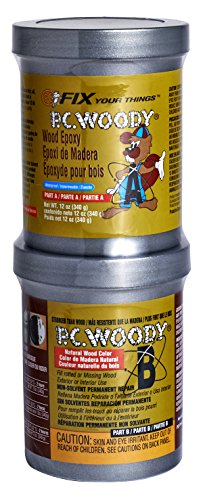
Two-part epoxy paste to replace missing or rotted wood is resistant to dry rot, UV light, fresh and salt water
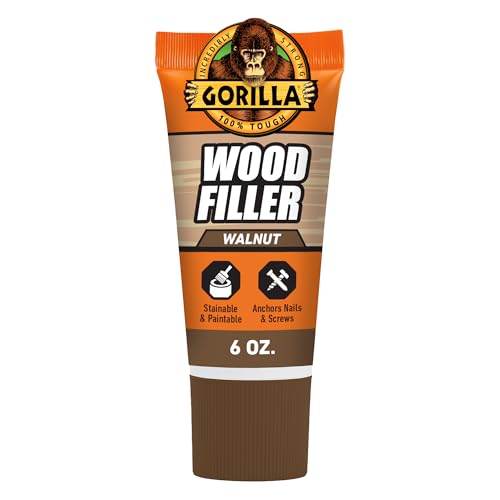
Gorilla tough: Gorilla Wood Filler is the go-to product for strong water resistant repairs on cracks, gouges and holes
Moisture and Drying Requirements
After you’ve addressed structural repairs and your deck’s foundation is sound, moisture levels become your next critical checkpoint. You’ll need to achieve 12–15% moisture content before staining; anything above 18% risks trapping moisture and causing mold, mildew, and rot.
For accurate moisture measurement, use a digital moisture meter across multiple deck spots and average the readings. Complement this with water droplet tests—if water beads, your deck needs more drying time.
Allow 2–3 full sunny days after rain or power washing before staining. These drying techniques require patience; 24 hours is insufficient for porous wood. Temperature and humidity matter too: aim for 50–90°F and 30–50% humidity to optimize drying speed. New decks demand 3–12 months of seasoning before staining to manage initial moisture from pressure treatment. Environmental factors such as airflow and sunlight also significantly influence how quickly your deck dries and how well the stain performs once applied. Before beginning your staining project, verify that your deck’s moisture level is within the acceptable range to ensure proper stain adhesion and a long-lasting finish.

WATER LEAK DETECTOR detects relative moisture content from leaks and flooding

HUMIDITY SENSOR: Our handy meter tool can quickly determine what level of remediation is needed to keep your family safe from black mold. High levels of dampness that go untreated are the leading cause of harmful fungus growth in the home.

WOOD MOISTURE METER: Prevent water and moisture build-up with our humidity reader. It can quickly determine what level of remediation is needed to keep your family safe. High levels of dampness that go untreated can cause hazardous living conditions.
Weather and Environmental Factors
Weather and environmental conditions directly determine whether your stain’ll adhere properly and cure uniformly, making this phase as critical as moisture management. You must maintain temperature control between 15 to 25 degrees Celsius; temperatures above this range cause rapid drying and lap marks, while cooler conditions slow curing and create tackiness.
Monitor humidity levels carefully—low humidity facilitates even drying, but high moisture delays curing and invites dirt adherence. Avoid staining before rain; you need at least 24 to 48 hours of stable, dry weather post-application for proper curing.
Consider sunlight intensity too. Early morning or late afternoon applications prevent rapid drying that causes uneven color. Wind carries debris onto wet surfaces, so check forecasts thoroughly before scheduling your project. Working board by board with thin, multiple coats allows the stain to cure properly under consistent environmental conditions rather than rushing the entire project. Testing your stain color on a small area first allows you to verify that weather conditions will produce the desired final appearance before committing to the entire deck.
Surface Preparation and Sanding
Because proper stain adhesion depends entirely on thorough surface preparation, you’ll need to invest significant effort in cleaning, inspecting, and sanding your deck before applying any finish. Start your deck cleaning with coarse-grit sandpaper (40 grit) to remove loose fibers, mildew stains, and peeling paint. Follow with fine-grit sandpaper (120 grit) to create a smooth, even texture that promotes ideal stain absorption. These sanding techniques work best after pressure washing, which raises wood grain and leaves rough surfaces. Your original wood color should be clearly visible after sanding, confirming adequate preparation. Wide belt drum sanders with grits as low as 24, finished at 80 grit, provide extensive surface preparation for larger projects. Testing stain color on a small patch of your prepared deck surface will help ensure you’re satisfied with your finish choice before committing to the entire project. For the most efficient application after preparation is complete, consider using spray equipment designed for stains to achieve even coverage across your entire deck surface.

Variable speed dial powers the belt anywhere from 1080 to 1800 feet per minute

Belt Sander Paper PRO:Sanding belts are crafted with selected premium open coat aluminum oxide grain, feature excellent abrasion resistance, anti-static and anti-clogging. No such "A lot of fall out of the grits and fiber" occurred in normal use

Multiple Grit Options: Includes 8 pcs 3x21 sanding belts, providing 4 different grits: 80, 120, 150 and 240 grit, 2 belts each, suitable for various sanding needs from coarse shaping to fine polishing
Protection and Application Setup
Once you’ve confirmed your deck’s readiness through proper sanding and surface preparation, you’ll need to focus on protecting both your deck and yourself while setting up for stain application. Select stains with robust protection features, including UV inhibitors and mildew resistance. Pigmented formulas provide superior UV blocking compared to clear options.
Gather essential application tools: lambswool pads for even coverage, stiff-bristled brushes for between-board work, and HVLP sprayers for large surfaces. High-quality rollers and pump sprayers also deliver consistent results.
Check weather conditions before starting—aim for temperatures between 50°F and 90°F with low humidity. Verify your deck has dried completely for 24–48 hours after cleaning. Avoid direct sunlight during application to prevent uneven drying and maintain stain adhesion. For best results, consider whether a solid color stain might better suit your deck’s condition and aesthetic preferences. To achieve a uniform finish, maintain a wet edge while applying stain to prevent lap marks and ensure seamless coverage across your deck surface.

WATERPROOFING STAIN – Bring out the beauty of your outdoor wood with Thompson’s WaterSeal Transparent Waterproofing Wood Stain. Along with adding smooth color, it’s a deck sealer that prevents water damage to help you maintain your outdoor living spaces.

ONE‑COAT PROTECTION: Oil‑base formula seals and protects exterior wood surfaces in a single coat, delivering strong defense against water and UV exposure

SOLID WOOD PAINT COLOR: Delivers a flat, opaque finish that hides imperfections and refreshes wood surfaces. Ideal for outdoor wood paint projects like decks, fences, and furniture.