

How Many Screws Per Deck Board? A Complete Guide
You’ll need two screws per joist for proper deck board fastening, whether you’re installing wood or composite decking. Position screws directly over joists, ensuring they penetrate at least one inch into the material to prevent warping and board failure. Your joist spacing—typically 12 or 16 inches on center—determines fastener frequency, with closer spacing requiring more fasteners. Multiply your total joist count by two to calculate base screw needs, then account for board width and a 10% waste factor. The specifics of your installation method will reveal even more critical details.
Understanding the Basic Screw Count Rule
When you’re fastening deck boards, you’ll follow a fundamental principle: use two screws per joist. This standard rule applies universally to both wood and composite decking materials and guarantees balanced pressure distribution across your board’s entire width.
You’ll position these screws directly over the joists—this alignment proves critical for maintaining structural integrity. Skipping this placement method compromises your deck’s foundation and accelerates deterioration.
The two-screw approach distributes fastening loads evenly, preventing uneven stress points that could cause warping or board failure. This consistency directly impacts screw longevity since balanced pressure minimizes corrosion from uneven board movement and moisture exposure. For optimal results, ensure your screws penetrate at least 1 inch into the joist below to provide a secure hold. Using stainless steel screws driven slightly below the surface will enhance the durability and longevity of your deck installation.
How Joist Spacing Affects Fastener Requirements
While the two-screw-per-joist rule provides your foundational fastening strategy, joist spacing directly determines how frequently you’ll apply that rule across your deck’s length. At standard 16-inch spacing, you’ll space your fasteners farther apart, reducing overall screw quantity per board. However, closer spacing—12 inches on center—demands more fastening points, increasing your total screw count markedly.
Tighter joist spacing enhances structural stability, particularly for composite or PVC decking materials that lack the rigidity of traditional lumber. When you install boards at 45-degree angles or on longer spans exceeding 12 feet, you’ll need 12-inch on-center joist spacing, necessitating additional fasteners. Heavier load requirements similarly demand closer spacing and increased fastening frequency. Understanding this relationship guarantees you distribute weight effectively while maintaining deck integrity throughout its lifespan.
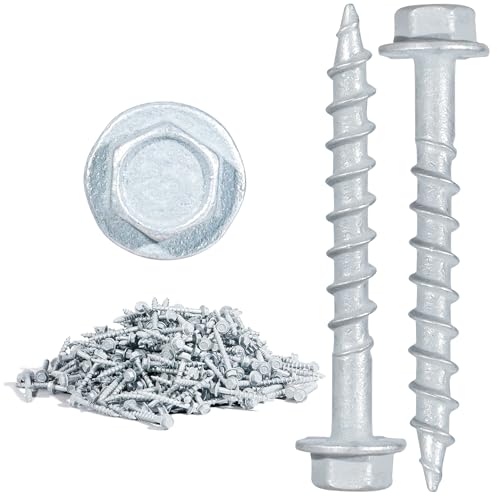
Built for Connector Applications: Designed for joist hangers, framing connectors, and other structural wood connections, these #9 x 1-1/2" SD connector screws feature a 1/4" hex head and 0.380" diameter for secure fastening and reliable 10D nail replacement
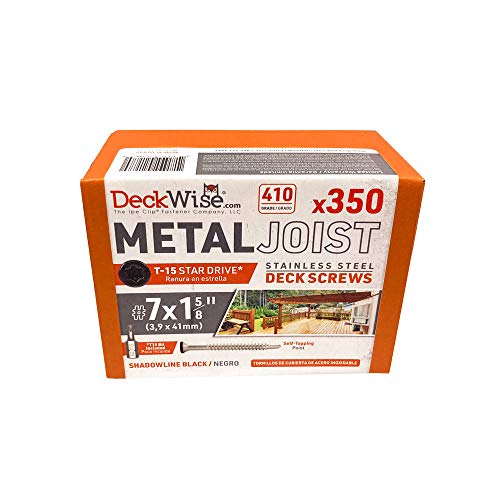
Deep T-15 star tip recess specially engineered head allows for less slipping and stripped heads
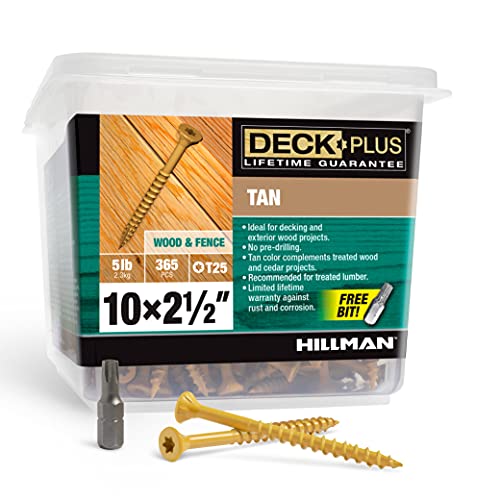
Self-Drilling Point: Together, coarse screw threads and a self-drilling point design eliminate the need for a pilot hole
Board Width and Length Considerations
Wider boards demand more fastening points along their length to prevent warping and maintain board durability. You’ll typically use two screws per joist, but wider boards benefit from additional placement to reduce movement and gaps. Longer deck boards require fastening at each joist intersection, typically spaced 12″ to 16″ on center, which increases your total screw quantity proportionally.
When calculating fastener needs, multiply your joist count by two, then adjust based on board width and your fastening techniques. Remember: screw length remains constant regardless of board length—it must still penetrate at least 1″ beyond the board’s thickness. This approach guarantees consistent structural integrity across your entire deck surface. Pressure-treated boards installed wet will naturally shrink as they dry, so initial tight installation prevents excessive gaps from forming and allows for proper moisture drainage beneath your deck. Proper baluster spacing and railing support similarly require careful attention to building codes and structural safety standards.
Proper Screw Placement and Positioning Techniques
Proper screw placement transforms your fastening strategy from adequate to exceptional, guaranteeing your deck boards stay flat and secure for years. You’ll position two screws per joist, aligned directly over each support and spaced evenly along the board’s length. Maintain 20mm edge distance to prevent splitting while preserving board integrity.
Your screw alignment techniques should include using mason’s lines or templates to mark consistent placement across joists. This symmetrical approach eliminates uneven pressure that causes warping.
For countersinking depth, you’ll drill holes slightly deeper than screw head height, allowing fasteners to sit flush or just below the surface. This accommodation for wood shrinkage maintains a smooth, safe finish. Hold your countersink bit perpendicular to the deck surface to prevent breakage and guarantee professional results throughout your project.
While screws excel at preventing boards from warping and popping, combination of nails and screws often provides the most durable deck construction when applied strategically to different deck components.
Installation Angle and Drilling Methods
Once you’ve marked your screw positions with precision, you’ll need to determine the ideal angle for driving each fastener into your deck boards. For standard face fastening, you’ll use 90° perpendicular installation, which provides maximum holding strength and simplicity. However, when securing edge boards with clips, employ 30° to 45° angled screws to reduce splitting while guaranteeing firm attachment.
Your drilling techniques matter considerably. Pre-drill pilot holes at least 3/4 inch from board edges using appropriately sized bits—typically 1/8 inch for most screws. This prevents splitting and guarantees proper screw seating, particularly essential for composite materials. Apply downward pressure while driving screws to pull boards tightly against joists. Stand directly above the joist for best control and board compression. Countersink screw heads for aesthetic and safety purposes. The specific board dimensions and joist spacing you select will influence your fastening requirements, as thicker boards with wider joist spacing demand more robust screw placement strategies.
Choosing the Right Fastener Type
How you secure your deck boards directly impacts both the structure’s longevity and its visual appeal. You’ll need to match your fastener choice to your board type. For grooved composite boards, hidden clip systems offer superior aesthetics and faster installation with concealed fasteners. Solid or square-edge boards require face-fastening with composite screws or plug systems. When selecting fastener materials, you have three primary options: stainless steel for maximum corrosion resistance, coated steel for moderate durability, or durable plastic clips. Consider your climate—harsh environments demand stainless steel exclusively. Color-matched screws and plugs blend seamlessly with capped composite decking. The hidden fastener approach also maintains consistent spacing between boards to ensure proper airflow and drainage throughout your deck structure. Proper board spacing works in conjunction with appropriate joist spacing to optimize your deck’s structural performance and longevity. Always consult your manufacturer’s recommendations, as some systems like TimberTech FUSIONLoc are brand-specific and incompatible with other boards.

Defeat Rust for Good with 304 Stainless Steel - Tired of rusty screws ruining your project's look and strength? Get screws that stand the test of time. Crafted from premium 304 stainless steel, these construction screws resist corrosion in wet, coastal, and high-moisture environments, delivering lasting performance where ordinary screws fail.
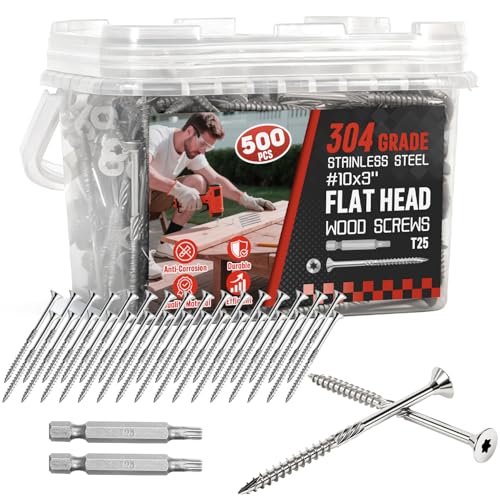
Defeat Rust for Good with 304 Stainless Steel - Tired of rusty screws ruining your project's look and strength? Get screws that stand the test of time. Crafted from premium 304 stainless steel, these construction screws resist corrosion in wet, coastal, and high-moisture environments, delivering lasting performance where ordinary screws fail.
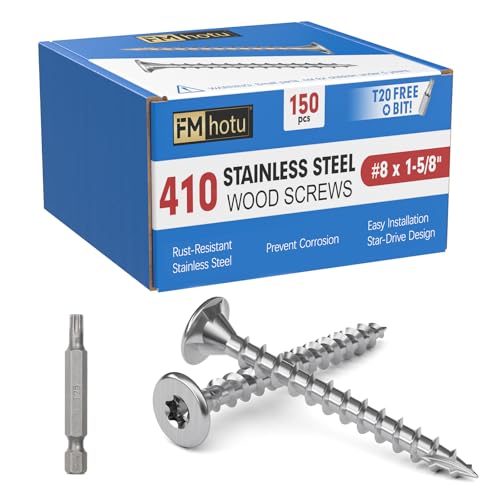
Premium Stainless Steel Construction: Crafted from 410 stainless steel, a top-grade alloy renowned for its exceptional strength and durability. Outperforming 304 stainless steel, these screws boast superior load-bearing capabilities, ensuring longevity even in challenging outdoor environments.
Composite Decking vs. Timber Decking Fasteners
While both composite and timber decking require fasteners, the material differences between them demand fundamentally different fastening strategies. Composite screws feature smaller heads and serrated threads designed specifically for dense engineered materials, preventing mushrooming and reducing installation torque. Timber screws, conversely, employ larger heads and coarse threads to grip wood fibers effectively.
Your fastener materials choice directly impacts performance. Composite boards expand and contract considerably more than timber, requiring fasteners engineered for movement accommodation. Wood screws lack this flexibility and can cause surface distortion on composite boards. For composite decking, hidden fastener systems like side-groove fasteners and under-mount systems eliminate visible screws while maintaining structural integrity.
Screw design matters critically too. Composite fasteners include reverse threads that pull boards flush without distortion, while timber screws feature wedge-lock heads reducing splitting risk. Using incompatible fasteners—wood screws on composite or composite screws on wood—compromises structural integrity and voids warranties. For timber decking specifically, pressure-treated wood offers superior durability when properly fastened with appropriate timber screws, ensuring your deck investment lasts for decades.

【What You Will Get】50 x Hidden Fasteners Nylon Clips. Each fastener is equipped with a metal countersunk square slotted screw, sufficient quantity can meet your use and replacement needs, provide you a clean and neat deck appearance.
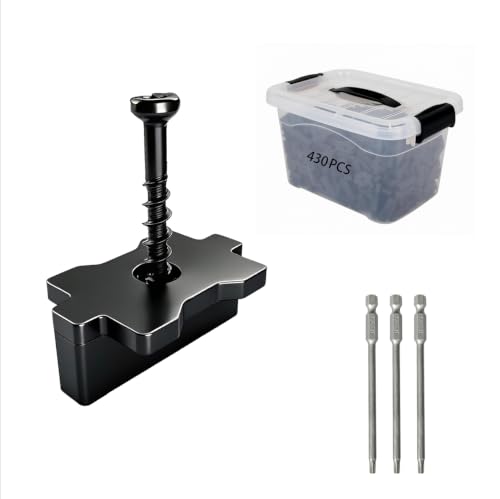
【Anti rust coating】: Our star hole screws are coated with three layers of anti rust coating, which has high corrosion resistance and is suitable for external and internal projects. It provides reliable anti rust and anti-corrosion protection while reducing friction during use, ensuring smooth installation and long-lasting performance.

💯Features: Hidden fasteners are specifically designed to effortlessly install composite decks with grooves, making the installation process a breeze. These universal hidden deck fastener clips offer you a top-notch solution, ensuring a deck that looks flawless and free of any visible fasteners.
Hidden Fastener Clips as an Alternative Solution
Beyond selecting the right fastener type for your decking material, you’ll want to contemplate whether hidden fastener clips offer the aesthetic and functional benefits that suit your project. Hidden clips eliminate visible screw heads, delivering a seamless deck surface while reducing tripping hazards and preventing wood splitting. You’ll install one clip per joist for each board, securing them at 45-degree angles through the grooved edge into the joist. Installation efficiency improves greatly with connected clip strips like TurboClip, which combines 16 clips into a single unit, accelerating your work pace. Hidden clips benefits extend to consistent board spacing when using spacer tabs. When using face screws as an alternative, ensure screws are placed 1 inch from board ends and edges to maintain structural integrity and appearance. For optimal results, fasteners should be spaced consistently across all joists, typically with joist spacing not exceeding 16 inches on center to ensure secure connections and proper deck board alignment. Choose from stainless steel or polymer options compatible with composite, PVC, or hardwood decking, depending on your material selection and climate conditions.
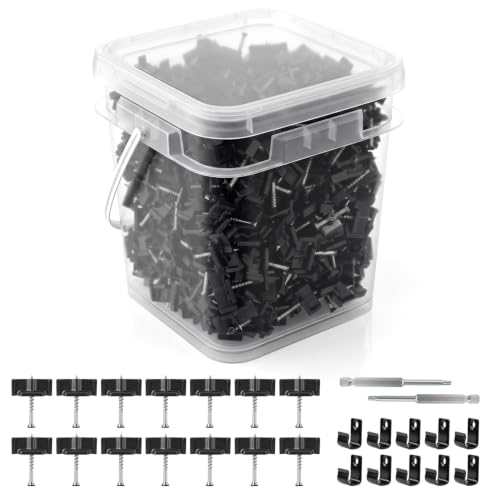
🏆【𝐅𝐑𝐄𝐄𝐊𝐈𝐓 𝐇𝐈𝐃𝐃𝐄𝐍 𝐃𝐄𝐂𝐊 𝐈𝐍𝐒𝐓𝐀𝐋𝐋𝐀𝐓𝐈𝐎𝐍 𝐊𝐈𝐓】Designed for grooved composite decking boards, this hidden deck installation kit simplifies the composite decking installation process. It helps maintain consistent spacing between deck boards, supporting proper airflow and drainage while creating a clean, attractive deck surface. Includes 500 hidden fasteners, 30 starter clips, and 2 drill bits.

Trex Universal Clip 500 SQFT
Calculating Your Total Screw Needs
Once you’ve selected your fastener type and determined your decking material, you’ll need to calculate the precise number of screws required for your entire project. Start by multiplying your deck’s total square footage by the screw density determined by your joist spacing—typically 2-3 screws per board at each joist intersection. For example, 16″ joist spacing demands more fasteners than 24″ spacing.
Next, account for your board width and length to determine how many boards you’re installing. Multiply boards by fasteners per board to establish baseline requirements. Adding a 10% waste factor guarantees you’ve covered cutting losses and installation inefficiencies. Remember that using stainless steel screws rather than nails prevents corrosion and ensures your deck remains structurally sound over time.
Use online fastener calculators to streamline this process. Input your deck dimensions, joist spacing, and board specifications to generate precise screw counts. This approach maximizes installation efficiency while preventing material shortages. Similar to roof installation projects, secure fastening of all components ensures your deck structure maintains its integrity and longevity throughout seasons of use.
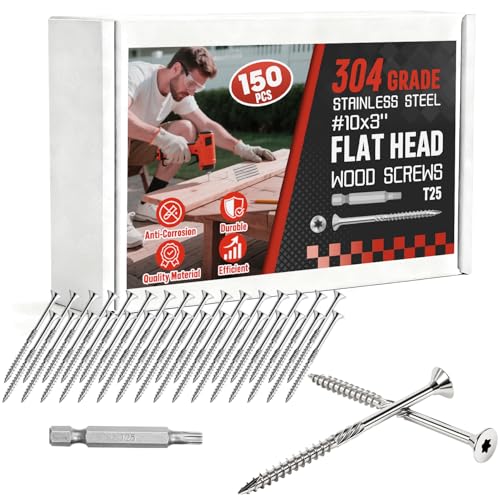
Defeat Rust for Good with 304 Stainless Steel - Tired of rusty screws ruining your project's look and strength? Get screws that stand the test of time. Crafted from premium 304 stainless steel, these construction screws resist corrosion in wet, coastal, and high-moisture environments, delivering lasting performance where ordinary screws fail.
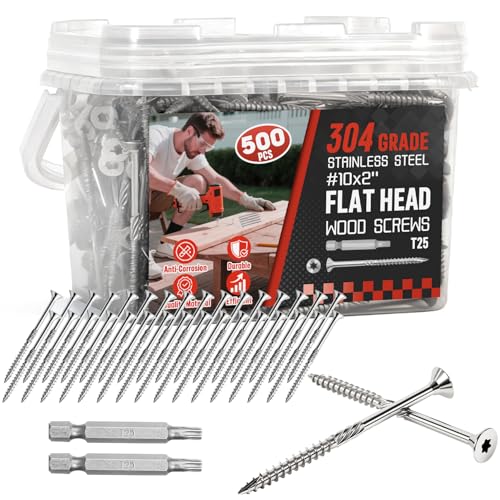
Defeat Rust for Good with 304 Stainless Steel - Tired of rusty screws ruining your project's look and strength? Get screws that stand the test of time. Crafted from premium 304 stainless steel, these construction screws resist corrosion in wet, coastal, and high-moisture environments, delivering lasting performance where ordinary screws fail.

【Package Contents】:Each package contains 100 #10 x 3-inch 316 stainless steel flat-head wood screws and one T25 Torx screwdriver bit.


