

The Ideal Moisture Level for Staining Your Deck
You’ll want to keep your deck’s moisture content at 12-15% or lower before staining. Anything higher traps moisture beneath the coating, causing peeling, flaking, and wood rot. Use a moisture meter to verify your deck’s readiness—readings of 15% or below indicate you’re good to go. Testing guarantees you won’t compromise your stain’s adhesion and durability. Understanding the specific drying timelines and environmental factors that influence moisture levels will help you avoid costly mistakes.
Understanding the Recommended Moisture Content Range
Why does moisture content matter so much when you’re preparing to stain your deck? Understanding moisture dynamics is essential because excess water prevents stain penetration and causes surface damage. Most manufacturers recommend keeping moisture content between 12-15% or less before you apply stain. Some applications allow up to 17%, but readings above 18% considerably increase your risk of moisture trapping and coating failure.
Defy brand stain specifically requires 12-15% or less. Pressure-treated wood should reach 15% or below. These thresholds aren’t arbitrary—they’re based on how wood absorbs staining techniques and protects your investment. Testing moisture levels with a meter guarantees you’re working within safe parameters. Taking multiple readings across different deck areas gives you an accurate average, helping you decide whether additional drying time is necessary. Ensuring your deck is completely dry before staining, typically requiring 24 to 48 hours after cleaning, significantly impacts the success of your project. You can verify that wood is adequately dry by observing if water beads up on the surface, which indicates the wood has sufficiently dried out.
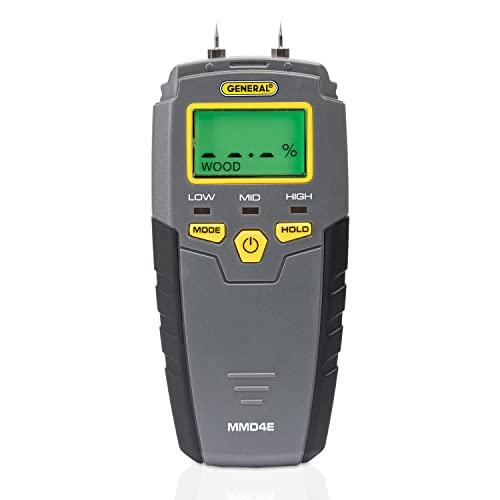
HUMIDITY SENSOR: Our handy meter tool can quickly determine what level of remediation is needed to keep your family safe from black mold. High levels of dampness that go untreated are the leading cause of harmful fungus growth in the home.

FIND HIDDEN WALL MOISTURE EARLY — Check suspicious drywall and building surfaces after a leak, water stain, or other moisture concern. Detect abnormal moisture before a small issue develops into more extensive damage and costly repairs

🌲【Accurate and fast measurements reveal hidden water leaks】: It has 2 high-precision pins that can penetrate the surface to be tested and quickly measure moisture content to estimate potential moisture increase throughout the home. COCZOW moisture meter is the ideal tool for measuring moisture.
Why High Moisture Content Causes Problems
Understanding the recommended moisture thresholds sets the foundation for recognizing what happens when you ignore them. When you stain wood with high moisture content, you’re basically trapping water beneath the finish. This creates several cascading problems that compromise your deck’s integrity.
First, moisture interferes with stain adhesion, preventing proper bonding to wood fibers. You’ll experience premature peeling, flaking, and uneven appearance. Second, trapped moisture accelerates wood rot and decay, weakening structural capacity and creating hidden damage that’s difficult to detect.
Third, moisture management directly impacts fungal prevention. High humidity combined with sealed moisture creates ideal conditions for mold and mildew growth beneath the stain surface. Finally, excess moisture causes wood expansion and swelling, leading to buckling, nail pops, and warping that locks in permanent damage.
How Long Your Deck Needs to Dry
Patience between cleaning and staining isn’t optional—it’s the critical step that determines whether your stain adheres properly or fails within months. You’ll need 24–48 hours after washing before applying stain, but timing depends on conditions and wood type. New pressure-treated lumber demands 30–60 days due to high moisture content, while untreated wood requires at least 30 days. Rain exposure extends your wait to 2–3 days of dry weather. Temperature and humidity dramatically affect decks maintenance—ideal conditions are 70–85°F with low humidity. Cooler temperatures and high humidity can double drying times. You’ll recognize readiness when wood feels dry, shows no dark patches, and appears lighter. Before application, removing all dust from the deck surface ensures optimal stain adhesion and finish quality. Water-based deck stains dry faster than oil-based alternatives, typically within 1 to 4 hours to the touch. These staining techniques prevent costly failures and guarantee lasting results.

OMNI-SHIELD — BLOOD N GUTS: Go ahead. Try and get dirty. Advanced water and stain guard—repels fluids and resists tough stains. Unlike most absorbent materials, this water repellent footwear is made with advanced stain-releasing tech that stays cleaner.

[Premium & Long-Lasting] This outdoor rug crafted from 100% virgin polypropylene, features a tightly woven fabric that provides a soft and comfortable feel. The refined and sturdy finish is achieved through an edge heat treatment process, withstanding wear and tear over time.
Using a Moisture Meter for Accurate Testing
A moisture meter transforms guesswork into precision, giving you exact readings that confirm your deck’s readiness for staining. You’ll choose between pin-type meters for thicker wood or pinless models for faster testing across multiple boards.
Before testing, you’ll clean the deck surface thoroughly and remove any dirt or debris. Power on your meter and set the wood species if your model allows meter calibration. Press the sensor pad or pins firmly against the deck until the reading stabilizes.
Take measurements across multiple locations to obtain an average reading, avoiding embedded metal objects like screws that skew results. Readings of 15% or below indicate your deck’s sufficiently dry for staining. Quality meters maintain accuracy within 3 percent, preventing costly moisture-related damage. Proper moisture levels work in conjunction with appropriate weather conditions to ensure the stain penetrates evenly and cures correctly without lap marks or uneven coloring.

WATER LEAK DETECTOR detects relative moisture content from leaks and flooding

Moisture Meter for Home Inspection: Quickly identifies moisture from leaks, flooding, or humidity in basements, bathrooms, kitchens, and wood—perfect for home inspectors and DIY repairs

𝐀𝐜𝐜𝐮𝐫𝐚𝐭𝐞 & 𝐅𝐚𝐬𝐭: Povlen moisture meter uses advanced sensor technology and a smart chip for accurate moisture detection. It quickly measures moisture content with high-frequency waves and features a HOLD function for one-button recording
Alternative Methods to Test if Your Deck Is Ready
What if you don’t have a moisture meter on hand? Several alternative moisture testing techniques can help you assess your deck’s readiness for staining.
The weight comparison test offers a practical approach—compare your deck wood to a known dry sample of the same species. Wetter wood feels noticeably heavier, though accuracy depends on your familiarity with the wood type.
Visual and tactile assessment provides quick wood drying indicators. Wet wood appears darker and feels damp and dense, while dry wood looks lighter and feels less heavy.
The knuckle test reveals additional information. Tap your deck with your knuckles; wet wood produces dull, muffled sounds, whereas dry wood emits sharper, crisper noises. These alternative methods work best when combined with thorough cleaning to ensure any moisture from dirt or mildew doesn’t interfere with your assessment. For best results, allow the wood to fully dry for 24-72 hours after cleaning before performing these moisture tests.
These methods aren’t precise but work well for rough estimates when professional equipment isn’t available.
Weather and Environmental Factors That Affect Drying
While you’ve prepared your deck’s surface and verified its moisture content, environmental conditions will ultimately determine whether your staining project succeeds or fails. Temperature effects directly influence stain application success—you’ll achieve ideal results between 50°F and 90°F. Below 50°F, poor adhesion and extended drying times compromise your work. Above 90°F, stain dries too quickly, creating uneven finishes.
Humidity considerably impacts drying performance. High moisture in the air prevents proper evaporation, extending drying times and reducing stain penetration. Conversely, very low humidity causes rapid drying and uneven absorption.
Air circulation accelerates the curing process. You’ll want adequate ventilation to prevent moisture trapping and mold development. Avoid staining beneath heavy foliage, which restricts airflow around your deck. Direct sunlight speeds drying but can create uneven results. Applying thin, even coats following the wood grain helps maintain uniformity across your deck surface despite varying environmental pressures.
Time your stain application on warm, dry days with stable temperatures and low humidity.
Drying Timeline for Different Wood Types
Different wood types require vastly different drying periods before you can successfully stain your deck. Pressure-treated lumber needs 3 to 6 months, though kiln-dried variants may be ready in 4 to 6 weeks if moisture stays below 15%. Green lumber demands the longest commitment—6 months to 1 year—due to high initial moisture content slowing absorption. Hardwoods like ipe and mahogany require 4 to 6 weeks when kiln-dried, needing moisture below 12% for peak results. Softwoods such as pine and cedar typically need 3 to 6 months for pressure-treated varieties. These drying factors depend heavily on lumber types and environmental conditions. Oil-based stains offer longer-lasting protection and better moisture resistance compared to water-based alternatives, which may influence your timeline decisions. Always perform the water test to verify readiness before proceeding. For cedar specifically, proper preparation including cleaning and sanding to remove mill glazing is essential before applying your chosen stain finish.
Oil-Based Versus Water-Based Stain Requirements
The type of stain you choose fundamentally determines your deck’s moisture requirements before application. Oil-based stains demand stricter wood preparation steps, requiring moisture content below 12–15% and completely dry wood throughout the fibers. Water-based stains offer more flexibility, tolerating up to 18% moisture content, though manufacturer guidelines vary. Your stain application techniques must align with these requirements—oil-based products won’t penetrate damp wood, resulting in poor adhesion and premature failure. Water-based options forgive surface moisture better but still risk uneven absorption if wood’s too wet. Always consult your product label for specific moisture thresholds and follow those recommendations precisely. Using a moisture meter during wood preparation steps guarantees you meet your chosen stain’s exact specifications before beginning application. Proper pressure washing and sanding will help remove surface moisture and prepare the wood fibers to accept stain at the optimal moisture level. A high-quality sprayer with adjustable nozzles helps ensure even stain distribution across your deck’s surface, especially when moisture levels meet manufacturer specifications.

NO LAPS, RUNS OR STREAKS: Goof Proof formula with no back brushing required; ideal for exterior wood projects
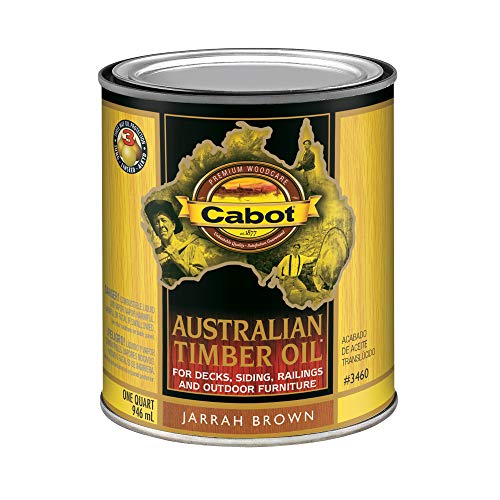
WOOD PROTECTOR – Cabot Australian Timber Oil Wood Stain provides 3-way oil protection for superior penetration. The unique blend of oils is an advanced-technology treatment designed to protect wood surfaces from extreme weather exposure like never before.

NO LAPS, RUNS OR STREAKS: Goof Proof formula with no back brushing required; ideal for exterior wood projects
Best Practices Before You Begin Staining
Once you’ve confirmed your wood’s moisture content meets your stain’s requirements, you’re ready to prepare your deck properly. Begin your deck preparation by removing all furniture, plants, and debris, then sweep thoroughly to eliminate dust and dirt. Apply deck cleaner per manufacturer instructions and scrub with a stiff bristle brush along the grain direction. Rinse completely with a hose or pressure washer. For optimal results, use a quality deck cleaner specifically formulated for wood to remove mill glaze and old stain residues that prevent new stain from adhering properly.
Next, sand the entire deck to remove splinters, rough patches, and old finishes. Vacuum away all sanding dust carefully. Inspect for cracks, warping, or rot, repairing damaged boards before staining.
Finally, protect adjacent surfaces by covering plants with tarps and taping off windows and siding. Lay down drop cloths to catch runoff. Verify your stain is well-mixed and all tools are ready before beginning your staining techniques. If your deck includes railings, ensure all posts are securely fastened to the framing to maintain structural integrity during the staining process.
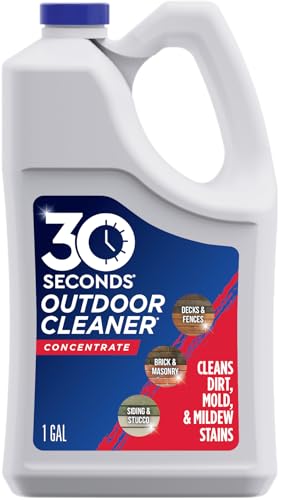
REMOVES STAINS FROM ORGANIC GROWTH ON YOUR OUTDOOR SURFACES: 30 SECONDS Outdoor cleaner cleans stains from mold, mildew, dirt and grime

Professional concentrate cleans decks, siding, driveways, and patios - perfect for homeowners preparing for BBQs, real estate agents staging homes, or contractors finishing jobs.

REMOVE TOUGH STAINS: Home Armor Outdoor Cleaner+ powers away dirt, grime, algae, mold and mildew stains. No scrubbing required.


