How to Power Wash Your Deck Before Staining
You’ll want to remove furniture and debris, then sweep thoroughly before applying a wood-specific cleaner and letting it sit for 10-20 minutes. Use an electric power washer set between 1,500-2,500 PSI with a 25-degree nozzle, spraying along the wood grain in steady strokes. Rinse completely to remove chemical residue and allow 24-48 hours for drying. Inspect for raised fibers and stubborn stains that’ll need attention before you’re ready for the next phase.
Preparing Your Deck for Power Washing
Before you power wash your deck, you’ll need to remove all furniture, plants, and debris from the surface to guarantee unobstructed cleaning. Sweep thoroughly to eliminate loose dirt, leaves, and dust that could interfere with your deck maintenance efforts.
Next, inspect the deck for loose boards or protruding nails and repair any damage before proceeding. Apply a wood-specific deck cleaner to loosen dirt and mildew, allowing it to sit for 10-20 minutes without drying completely. Use a deck brush to scrub heavily soiled areas for enhanced effectiveness.
Implement safety precautions by covering nearby plants and electrical outlets to protect them from overspray. Test your cleaning method on a small inconspicuous area first. When using a pressure washer, employ low pressure settings with specialized attachments to protect the decking surface while ensuring deep cleaning. For weathered wood with peeling stain, you may need to use higher pressure settings to effectively remove old stain before the actual staining process. Schedule your work during shaded or cooler conditions to prevent rapid drying and streaking that compromises results.
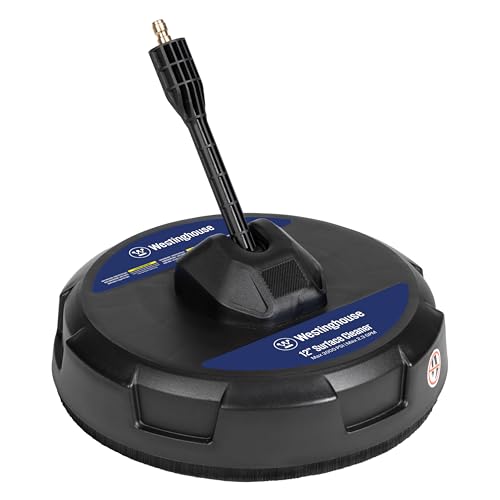
STREAK FREE CLEANING: Max 3000 PSI and max 2.3 GPM; This 12 inch surface cleaner delivers powerful, professional results on flat surfaces like decks, patios, driveways, sidewalks, walls and garage floors. Dual rotating jets spray evenly for a uniform blast in every pass of the wide cleaning deck

IDEAL FOR FLAT AREAS: This 15” surface cleaner can concentrate up to 3400 PSI for quick cleaning of large areas like decks, patios, driveways, walls and more

ACCESSORY: 1 x 14" Surface Cleaner, 2 x Extension Wands, 1 x Nozzle Cleaner,1 x thread seal tape, 4 x O-rings, 2 x replacement nozzles.14‑inch overall width (wheel‑to‑wheel): measured from the outer edge of one wheel to the opposite wheel.
Selecting the Right Equipment and Pressure Settings
Now that you’ve prepared your deck, selecting the proper equipment and pressure settings becomes crucial to achieving effective cleaning without damaging the wood. Choose an electric power washer for residential decks—they’re lighter and easier to handle than gas models. For wooden decks, set your pressure between 1,500 and 2,500 PSI; composite deck types require lower pressures between 1,300 and 1,800 PSI to prevent surface scratching. Use a 25-degree nozzle to sweep away dirt and mildew effectively. Always test your power washer on an inconspicuous area first. Proper pressure settings are essential because inadequate cleaning can leave contaminants that interfere with stain adhesion and result in poor finishes. After power washing, allow adequate drying time before moving forward with sanding and staining to ensure optimal results. Maintain consistent nozzle distance and spray parallel to wood grain. Start with lower pressure, gradually increasing if needed, then make slow, overlapping passes for uniform coverage before staining.

Powerful cleaning: Electric power washer with1700 max psi* and 1. 2 gpm**

[1700 PSI @ 1.2 GPM] - Great for light-duty, residential cleaning. Clean cars, trucks, motorcycles, boats, RVs, outdoor patio furniture, windows, decks, etc

Delivers 2500 max PSI and 1.76 max GPM (at lowest pressure), and 2000 rated PSI and 1.2 rated GPM of water flow; Pro-style steel extendable 17.5” wand with quick-connect nozzles (0°, 15°, 25°, turbo and soap applicator)
Applying Deck Cleaner and Agitation
Once you’ve selected your equipment and pressure settings, the next critical step involves choosing a deck cleaner formulated specifically for your deck’s material—whether wood or composite—to effectively remove grime, mildew, and stubborn stains.
Apply the cleaner evenly using a pump sprayer, then allow it to sit for 5–15 minutes per manufacturer instructions. This dwell time enables the solution to penetrate and loosen embedded dirt. During surface preparation, lightly scrub with a stiff-bristle brush, focusing on corners, gaps, and between balusters where debris accumulates. Avoid aggressive scrubbing that damages wood fibers.
Keep surfaces wet throughout the process to prevent premature drying. Light agitation combined with quality deck cleaner achieves superior results without compromising your deck’s integrity. For decks with fastened boards, ensure you do not scrub aggressively around ring shank nails or other fasteners that could be compromised by excessive force. Proper leveling techniques should also be applied when preparing uneven deck surfaces to ensure cleaner makes full contact with all areas.

DECK AND PATIO WASH: Home Armor Deck & Patio Wash lifts stains from dirt and grime to keep decks and patios looking great over their lifespan.

CLEANS STAINS CAUSED BY ORGANIC GROWTH: 30 SECONDS Outdoor Cleaner rapid cleans stains caused by algae, mold, mildew and moss

POWERFUL DECK CLEANER & MILDEW REMOVER – This deck cleaner and mildew remover is a professional-grade deck cleaning solution, effectively eliminating black and green stains, mold, and built-up grime on wood and composite surfaces.
Executing Proper Power Washing Technique
Armed with your pressure washer properly configured and your deck treated with cleaner, you’re ready to begin the actual washing process. Spray in the direction of the wood grain to prevent splintering and damage. Use steady, smooth strokes, working systematically one board at a time from end to end.
Our technique tips emphasize maintaining consistent speed and pressure throughout each pass. Avoid jerky movements that create gouging or uneven marks. Lift your nozzle slightly at stroke’s end to prevent concentrated etching. For stubborn spots that resist pressure washing, consider using oxygen bleach as a pre-treatment to help lift deep-set dirt without damaging the wood, or apply mild soap solution with a soft brush before rinsing thoroughly to remove all residue.
Maintain a proper spray angle of 40-60 degrees to guarantee even cleaning coverage. Keep your nozzle at the appropriate distance—12-18 inches for soft woods, six inches for harder decks. These execution fundamentals assure uniform results across your entire deck surface.
Rinsing, Drying, and Post-Cleaning Inspection
After you’ve completed your power washing passes, thoroughly rinsing your deck is essential to remove chemical residue and guarantee a clean surface for finishing. Keep your nozzle moving continuously to prevent water pooling, directing runoff away from your foundation and landscaping. Use lower pressure settings during final rinses to protect wood fibers.
Allow 24-48 hours for complete drying, considering humidity and sunlight conditions. Once dry, inspect the entire surface for raised fibers, rough patches, and remaining stains. Check railings and hard-to-reach areas carefully. Document problem areas requiring spot-cleaning or sanding. Proper joist spacing ensures your deck’s structural foundation can support the weight of equipment and foot traffic during maintenance activities.
For stubborn stains, apply additional cleaner and allow adequate soaking time before re-washing. Proper surface preparation now will ensure optimal absorption when you apply deck stain coats, preventing finish complications and extending your deck’s lifespan. These deck maintenance tips and surface protection techniques provide prime preparation before staining, preventing finish complications and extending your deck’s lifespan.