Building a Safe and Stylish Deck Railing: DIY Guide
You’ll need to master three critical elements—railing height, baluster spacing, and load specifications—to build a deck railing that’s both safe and compliant with building codes. Start by verifying your local requirements, as some states like California and Washington mandate 42-inch heights versus the standard 36 inches. Maintain maximum 4-inch gaps between balusters and ascertain your design withstands 200-pound concentrated loads. Choose materials suited to your climate and maintenance preferences. The details that separate code-compliant installations from unsafe ones await your exploration.
Understanding Railing Height Requirements
When you’re planning your deck project, you’ll need to meet specific railing height standards that vary based on your deck’s elevation and location. For residential decks over 30 inches above grade, the International Residential Code mandates a minimum 36-inch railing height measured vertically from the adjacent walking surface. However, California and Washington require 42 inches, so you’ll want to verify local codes before construction begins.
Railing height adjustments may be necessary for child safety guidelines, as the 36-inch standard helps prevent accidental falls and deters climbing. Commercial properties typically require 42-inch minimums regardless of elevation due to higher liability concerns. Deck stairs require separate handrail height specifications between 34 and 38 inches measured from the stair nosing. These requirements are based on preventing accidental falls and minimizing risk across different property types.
You can increase railing heights beyond code minimums for enhanced safety or aesthetic purposes, but never build below required standards. Always consult your local building department to confirm applicable regulations for your specific project.

【Sturdy & Durable Bracket】SANKINS deck railing bracket is constructed from high-quality PP material, ensuring durability and long-lasting performance. The 2x4 railing bracket has qualified weight-bearing capacity with thick plastic and solid interior. Compared with other materials that are easily deformed and brittle to break, our Deck Railing Brackets is the most valuable choice in terms of corrosion resistance, safety and durability of use.

HIGH QUALITY MATERIAL: The deck railing handrail connectors are made of thickened stainless steel, High temperature black powder coating baking paint process, Waterproof, Rustproof, Sstrong and Durable.
Mastering Baluster and Infill Spacing Standards
Because building codes prioritize child safety, you’ll need to master baluster spacing requirements to guarantee your deck railing meets all applicable standards. The International Residential Code mandates no more than a 4-inch gap between balusters, ensuring a 4-inch sphere can’t pass through. You’ll want to implement the three-balusters-per-foot guideline, which achieves code compliance while maintaining visual appeal.
For precise baluster spacing calculations, measure center-to-center distances accounting for baluster width. A 1.5-inch-wide baluster with a 4-inch gap equals 5.5 inches center-to-center spacing. Use spacing calculators to eliminate manual errors, or stretch fabric elastic marked at 4-inch intervals across your railing length as a practical installation method.
Beyond baluster spacing, your deck posts must also comply with building codes, as manufactured railing posts should not exceed 8 feet apart and must withstand 200 pounds of lateral force from any direction. Most building codes also require a minimum railing height of 36 inches for residential decks, though some jurisdictions mandate 42 inches. Proper spacing prevents structural degradation and costly repairs while ensuring long-term safety and uniform appearance throughout your deck.
Load and Strength Specifications You Need to Know
Your properly spaced balusters will only perform as intended if you’ve engineered your railing system to handle the loads it’ll actually encounter. You must design your deck railing to withstand 200-pound concentrated loads applied horizontally or vertically at any point. Load testing protocols apply a 2.5 safety factor, meaning your system needs actual strength beyond baseline requirements.
Your top rail must sustain 125 pounds per linear foot applied in any direction. Mid-rails and intermediate vertical members require 150-pound force resistance. These specifications guarantee structural integrity under real-world conditions.
You’ll maintain proper post spacing—no more than 8 feet apart—to distribute concentrated loads effectively. Posts spaced farther apart can’t adequately resist directional pressure. Most residential decks use 4×4 and 6×6 lumber for posts to ensure adequate strength and stability. Through-bolts with ½-inch minimum diameter and proper anchorage to solid joists transfer loads safely through your support structure, and your ledger board must be sized appropriately—at least 2 inches by 8 inches—to distribute deck weight evenly to the supporting structure, creating a cohesive system capable of protecting occupants reliably.

Wide applications: This 26" round aluminum baluster can be used to build a 36" wood and composite deck railings, creating a stable, stylish look. It can be easily cut to different heights to suit various needs. In addition, its 3/4" diameter allows it to be compatible with most baluster connectors or shoes on the market

【EVERYTHING YOU NEED IN ONE BOX】 Get started right away with our complete kit: 105 elegant round balusters (26" x 3/4"), 210 straight connectors, 30 angled connectors(30 degree), all necessary screws, and a professional-grade screw bit. Perfect for creating stunning 36" rail heights on both level and stair applications.

DURABLE RAILING CONNECTIONS: Designed for 3/4-inch O.D. round balusters, these baluster connectors provide a secure connection for deck railing systems and stair railings. Each connector mounts flush to the rail surface for a clean, finished appearance.
Navigating Local Code Variations
While the International Residential Code establishes baseline standards for deck railings, you’ll find that jurisdictions across the country—and even municipalities within individual states—enforce their own variations that can greatly impact your project. California and Washington, for example, mandate 42-inch railings instead of the standard 36 inches. Pennsylvania follows IRC guidelines with a 36-inch minimum, but Philadelphia implements code amendments specifying 30 to 42 inches for handrails. These local adaptations reflect regional safety priorities and climate considerations. Proper baluster spacing requirements also vary by location, so verify these measurements with your local building department in addition to railing height specifications. Ensuring your posts are securely installed at corners will also depend on your local inspector’s requirements. Before breaking ground, you’ll need to contact your local building department to verify exact requirements for your area. They’ll review your plans and guarantee compliance with both state codes and municipal amendments specific to your jurisdiction.
Selecting the Right Railing Materials
Once you’ve confirmed your local code requirements, the material you choose becomes the foundation of your deck’s safety, longevity, and appearance. You’ll want to evaluate options based on durability testing standards and current design trends.
Aluminum suits DIY installation due to its lighter weight and pre-threaded components for cable systems. Steel and stainless steel offer superior strength but present installation challenges for average DIYers. Composite and vinyl materials resist rotting and warping while requiring minimal maintenance—only occasional cleaning. Proper post spacing and fastening ensures that whichever material you select will provide the structural integrity your railing needs.
Cost factors greatly: vinyl offers the lowest upfront expense, while stainless steel costs roughly twice as much. Consider your climate too. Stainless steel excels in coastal environments, whereas aluminum needs extra protection from salt air. Composite railings provide aesthetic flexibility with 20+ color options, accommodating modern and traditional architectural styles alike.
For those seeking pre-made alternatives to traditional lumber construction, mesh panel systems like Wild Hog wire railings offer convenient options that conform to building codes and work with any deck material.

Perfect for 90° Angle Applications: This corner connector is designed specifically for aluminum handrail 90° angle connections. It seamlessly hides within the handrail, creating a clean and polished look while providing strong support. Ideal for securing handrails in tight corners, making it perfect for both indoor and outdoor applications.

Diy Free Combination: The undrilled aluminum post is suitable for different space in your project. For horizontal and corner section posts, we recommend drilling 10.5 mm holes; For post used in stair sections, we recommend drilling 12 mm holes. This cable railing post could be easily cut and drilled with any hole type
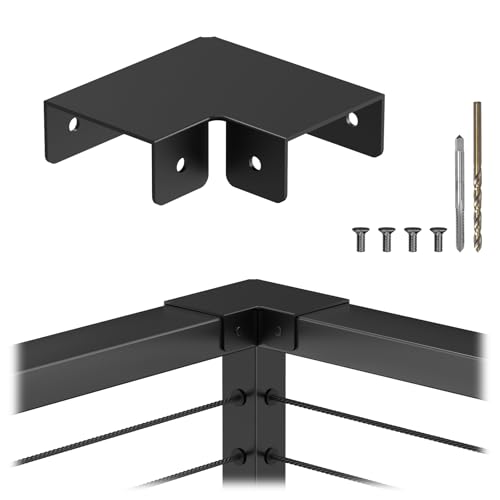
【Seamless & Weldless Flat Handrail Connector】This black handrail corner connector is specifically design for CKE cable railing flat handrails, allowing for easy installation without welding during installation. This aluminum 90° sleeve joins together two cable railing segments at 90°. It provides a clean, continuous look for your stainless steel handrail, ideal for cable railing of decks, balconies, porches, and staircases where a 90 degree corner run is needed.
Comparing Popular Railing Styles
With your material selection narrowed down, the next step involves choosing a style that aligns with both your aesthetic preferences and functional needs. Your style comparison should consider how each option performs in your climate and complements your home’s architecture.
Composite railings offer classic or contemporary designs with minimal maintenance. Aluminum systems provide versatility through multiple infill options—balusters, cable, mesh, or glass. Cable railings deliver a modern, minimalist aesthetic but demand regular cleaning. Glass railings maximize visibility, ideal for contemporary properties, though they require frequent maintenance.
Transitional styles blend traditional and modern elements, bridging design gaps. Consider your deck’s purpose: horizontal cables suit high-end installations, while vertical balusters provide cost-effective appeal. When planning your deck as an entertaining space, you might also explore complementary outdoor features like a fire pit gathering area to enhance your backyard’s functionality. Evaluate each option’s durability, maintenance requirements, and how it enhances your outdoor space‘s overall functionality and visual impact. Proper deck maintenance, including application of UV filters and fungicides, will help protect your railing installation and preserve your deck’s long-term beauty.

Certified Safety – IBC/IRC/ASTM Compliant: Don't settle for "looks safe"—choose railing that's proven safe. Built to meet key U.S. codes and ASTM standards, this system delivers reliable safety for decks, stairs, and balconies. A 36" height, <4" baluster spacing, and rigid, wobble-free structure help prevent falls and you loved one entrapment. For commercial use or CA/WA projects, choose the 42" option to meet local requirements.

ENHANCED DECK & PORCH SAFETY: This aluminum porch railing kit features an ergonomic “breadloaf” top rail that provides a secure, comfortable grip. Ideal for families, seniors, and children, this is a premium choice for balconies, patios, and outdoor railings.
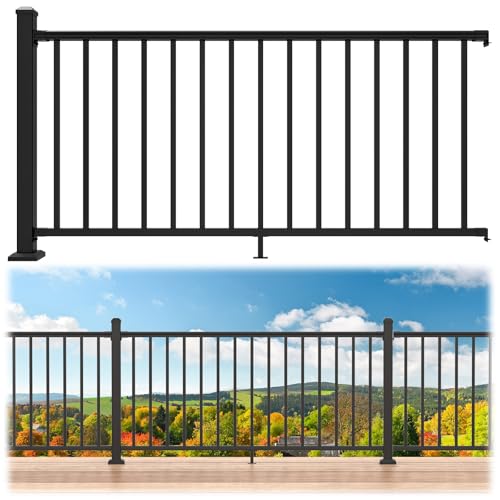
Certified Safety – IBC/IRC/ASTM Compliant: Don't settle for "looks safe"—choose railing that's proven safe. Built to meet key U.S. codes and ASTM standards, this system delivers reliable safety for decks, stairs, and balconies. A 36" height, <4" baluster spacing, and rigid, wobble-free structure help prevent falls and you loved one entrapment. For commercial use or CA/WA projects, choose the 42" option to meet local requirements.
Step-by-Step Installation Process
Proper installation is critical to your deck railing’s safety, durability, and appearance. You’ll start by marking post locations according to specifications and local codes, then drill pilot holes to prevent wood splitting. Secure posts with appropriate fasteners, ensuring they’re plumb and level before fully tightening.
Next, measure and cut your rails to fit between posts, installing the bottom rail first and checking for level. Attach the top rail directly above, aligning with post tops. Your alignment techniques should verify both rails are perfectly horizontal.
For balusters or cables, maintain uniform spacing and secure them sequentially. Use your installation tools—including Allen wrenches for cable tensioners—to tighten connections alternately, preventing warping. Many metal railing kits come pre-measured with pre-drilled holes to simplify the installation process. If your deck is made of teak, sand the rails using a coarse to fine grit progression before installation to ensure a smooth, finished appearance. Finally, inspect all fasteners for tightness and verify compliance with building codes before completing your project.
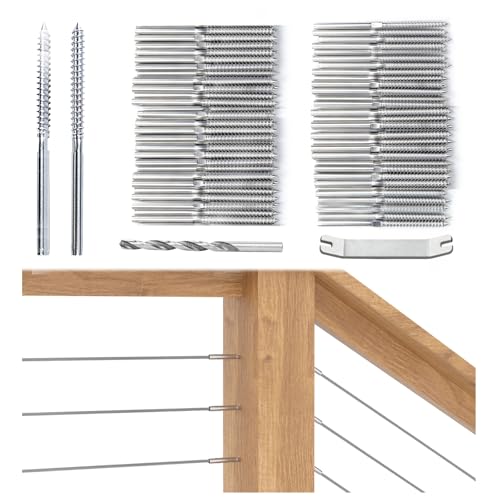
Left and Right Feature: Package comes with 50 left and 50 right cable railing lag screws for 50 cable runs, 1 drill bit, and 1 reinforced bent wrench. This cable railing hardware is designed to rotate wire rope in the same direction to avoid twisting or damaging the wire rope. Professional hydraulic crimper Muzata CR09 is recommended
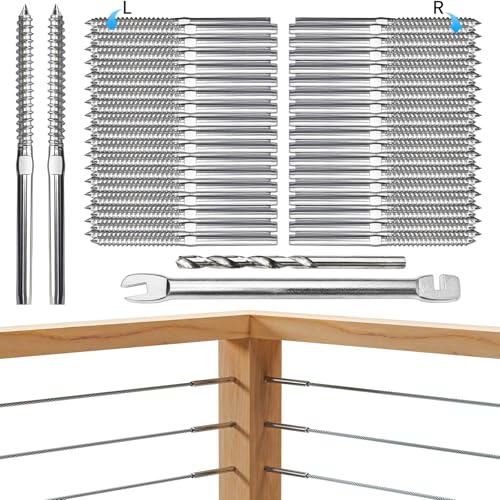
Versatile Cable Tensioning: This deck railing hardware kit is specifically designed for 1/8 inch diameter cable railing systems, these Swage Lag Screws are the ultimate solution for effortlessly adjusting cable tension. The left and right thread ensure that cables rotate in the same direction, preventing any twisting or damage, providing a smooth and secure cable railing installation.

Real 6063 Aluminum — Install Once, Skip Rust Headaches: A quick magnet test shows the difference—iron or steel attracts the magnet; Guwezoy 6063 aluminum does not. Iron or steel may develop red rust within 6 months–2 years, staining your deck as corrosion spreads and weakens the railing, leading to sagging, cracking, or early failure. With 6063 aluminum and an AAMA 2604 textured finish, Guwezoy is built for 30+ years outdoors with less sanding and repainting, so you can enjoy your deck more.
Safety Considerations and Best Practices
Because safety regulations exist to protect you and your family, you’ll need to familiarize yourself with the specific code requirements that apply to your deck. Child safety demands adherence to baluster spacing standards—maintain maximum 4-inch gaps between vertical members to prevent small children from passing through. Verify that no opening allows a 4-inch sphere passage from base to guard height.
Your railing design must withstand 200 pounds of concentrated force applied in any direction. Install handrails securely using appropriate brackets rated for this load capacity. Ascertain handrail diameter falls between 1¼ and 2 inches for proper graspability, with continuous, smooth surfaces along stairs’ full length. For decks elevated 30 inches or higher, guardrails at least 36 inches tall provide essential fall protection.
Check local building authority requirements, as some jurisdictions mandate stricter standards than IRC guidelines. State and municipal codes may supersede general requirements. After installing your railing, ensure the deck surface is properly maintained by applying a wood brightener to restore the deck’s appearance and protect the structural integrity of your railings and support posts.
Maintenance Tips for Long-Lasting Railings
Your deck railing’s longevity depends on consistent upkeep and timely repairs. Establish a thorough inspection checklist you’ll follow twice yearly, examining joints, fasteners, and material-specific concerns like rust or rot.
Implement appropriate cleaning methods based on your railing material. For wood, aluminum, composite, and vinyl railings, use mild detergent with warm water every 3-6 months. Glass railings require weekly cleaning with microfiber cloths and glass cleaner for maximum clarity.
Address wear immediately by tightening loose fasteners, sanding splinters, and replacing deteriorated sections. Apply water-repellent sealant to wood railings every 2-3 years, and use rust-resistant coatings on metal surfaces. Choose outdoor products with UV protection and weather resistance. For wood railings specifically, consider applying a deep-penetrating waterproof sealant to prevent swelling, warping, and rot caused by moisture infiltration. When planning your deck project, ensure your railing dimensions and spacing align with your overall deck size and furniture layout for optimal safety and aesthetics.
Trim nearby vegetation to prevent damage and entanglement, ensuring your railings remain structurally sound and visually appealing for years.