When Is the Best Time to Stain Your New Deck?
You’ll achieve the best deck staining results by scheduling your project for late spring through early fall, when you can maintain ideal temperatures between 50°F and 90°F alongside 40% to 70% humidity levels. May, June, September, and early October offer the most consistent conditions for proper stain penetration and adhesion. New pressure-treated decks require 3-12 months of seasoning before staining. Avoid spring’s moisture-laden timber and unpredictable weather patterns. Uncover how to navigate specific seasonal challenges and master preparation techniques for professional-grade results.
Understanding the Ideal Temperature Range for Staining
When you’re planning to stain your deck, temperature control is critical to achieving a professional finish. You’ll want to maintain temperatures between 50°F and 90°F, with 70°F being ideal. However, your specific stain type matters greatly—some products require minimum temperatures of 60°F, while certain oil-based stains perform adequately at 35°F. Always consult your manufacturer’s instructions for precise requirements.
The temperature impact extends beyond application. You must keep conditions within your target range for 8 to 12 hours post-application to guarantee proper adhesion and curing. Below 45°F, stains won’t cure properly, resulting in poor adhesion and uneven coverage. Above 90°F, your stain flash dries, preventing deep wood penetration and causing blotchy results. Respecting these parameters guarantees durability and appearance. Before applying any stain, ensure your deck has been thoroughly cleaned with pressure washing and deck cleaners to remove dirt, mildew, and old finishes for optimal stain performance. Additionally, plan your staining project during a period with at least 24 hours of dry weather to allow proper absorption and drying.
The Prime Months for Deck Staining Success
Because weather stability directly influences stain performance, you’ll find that late spring through early fall offers the best window for deck staining. May, June, September, and early October provide consistent temperatures between 60°F–80°F with lower humidity levels that prevent moisture interference during stain penetration and adhesion.
During these months, you’ll benefit from fewer thunderstorms and predictable working conditions. Spring staining prepares your deck for summer foot traffic and UV exposure, while fall applications create protective barriers against winter elements like snow and ice.
Before selecting your stain, complete thorough deck preparation—cleaning, sanding, and inspecting for damage. A wood brightener can optionally be used for older decks to restore their appearance before staining. Choose a stain formulation matched to your wood type and regional climate. Extended daylight hours allow adequate drying time before temperature drops interrupt curing, ensuring successful project completion within your best window. For newly installed decks, allow at least 3 months for the timber to weather naturally and reduce moisture content before staining.
Seasonal Timing: Which Times of Year Work Best
Successfully timing your deck staining project hinges on understanding how seasonal conditions affect wood moisture, temperature stability, and stain performance.
When comparing spring vs fall, you’ll find fall offers superior advantages. Fall’s drier wood—conditioned by summer heat—absorbs stain more effectively than spring’s moisture-laden timber. Temperature impacts are critical: you need conditions between 50°F and 85°F for ideal curing. Fall typically maintains these stable temperatures longer than spring’s unpredictable fluctuations.
Spring staining carries risks. Winter’s residual moisture prevents proper stain absorption, potentially causing peeling or cracking. Summer’s extreme heat accelerates drying too rapidly, creating uneven application and poor penetration. Before applying new stain to your deck, test a small area first to confirm the stain adheres well and achieves your desired appearance.
Early fall emerges as your prime window. You’ll benefit from manageable daylight, stable temperatures, drier wood conditions, and lower humidity levels—all essential for professional-quality results and durable stain performance. Additionally, maintaining humidity below 70% during your staining project will help ensure proper adhesion and protect your investment long-term.
How Weather Conditions Impact Your Staining Timeline
Weather patterns act as the invisible determinant of your deck staining success, with temperature, humidity, and moisture conditions directly controlling how your stain adheres, cures, and performs over time. You’ll achieve ideal results within the 50°F to 90°F temperature range, though specific stain formulations may require 60°F minimums. Monitor humidity levels—maintain 40-70% for perfect conditions, as readings above 70% extend drying to 12-24 hours or longer. Before applying stain, consult weather predictions for rain within 24-48 hours; oil-based stains need 12-24 hours protection while water-based varieties require just 1-6 hours. Avoid direct sunlight exposure during application, as intense heat causes premature drying and uneven finishes. Time your application for late morning or early afternoon when conditions stabilize. Ensure your deck is thoroughly cleaned with a pressure washer or deck cleaner and allowed to dry completely before beginning the staining process. Testing your stain color choice on a small inconspicuous area first helps you verify the final appearance before committing to the entire deck surface.
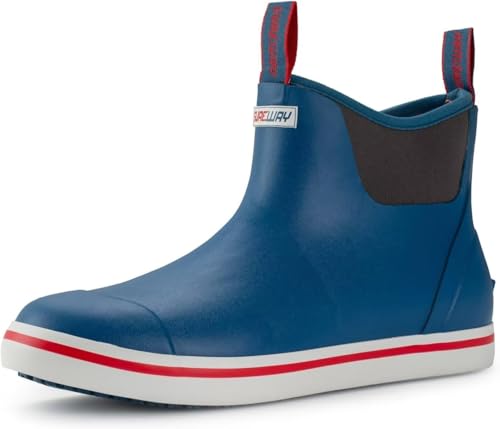
Waterproof neoprene rubber construction helps keep feet dry in wet conditions.

WATERPROOFING STAIN – Bring out the beauty of your outdoor wood with Thompson’s WaterSeal Transparent Waterproofing Wood Stain. Along with adding smooth color, it’s a deck sealer that prevents water damage to help you maintain your outdoor living spaces.
Preparing Your Deck: The Dryness Requirements
Before you apply stain to your deck, you’ll need to verify its moisture content sits at 12-15% or below—a critical step that determines whether your stain bonds properly or fails prematurely. Use a moisture meter across multiple deck areas and average the readings for accuracy. The water drop test provides quick confirmation: if water beads rather than absorbs, your deck’s too wet.
Don’t underestimate wood preparation timelines. New pressure-treated decks require 3-12 months of seasoning before staining. After power washing, allow minimum 2-3 full sunny days for drying, or extend this period if rain occurs. Porous wood fibers retain moisture deeper than surfaces suggest. Proper joist spacing and blocking installation during deck framing also impacts how moisture distributes throughout the structure, affecting overall drying times. Once your deck is completely dry, thoroughly clean it using a deck cleaner solution to remove dirt, mildew, and any previous coatings before proceeding. Your moisture monitoring efforts prevent mold, mildew, and adhesion failures, ensuring your stain investment lasts.

HUMIDITY SENSOR: Our handy meter tool can quickly determine what level of remediation is needed to keep your family safe from black mold. High levels of dampness that go untreated are the leading cause of harmful fungus growth in the home.

FIND HIDDEN WALL MOISTURE EARLY — Check suspicious drywall and building surfaces after a leak, water stain, or other moisture concern. Detect abnormal moisture before a small issue develops into more extensive damage and costly repairs

4 Wood & Material Modes: Pre-calibrated for 4 wood types (6–65% range) and 4 other materials (0–15.9% range), offering wide compatibility for wood, bamboo, paper, and traditional Chinese medicine.
Regional Considerations for Optimal Staining Windows
Once you’ve confirmed your deck’s moisture content and drying timeline, your next consideration is geographic location—because ideal staining conditions vary dramatically across North America’s diverse climates. Your regional climate fundamentally determines when you can achieve superior results within the 50–90°F temperature range.
In the Midwest and Northeast, target May, June, and September for stable conditions. The South benefits from March, April, and October when summer humidity recedes. Southwest regions expand opportunities to March–May and September–November, avoiding rapid stain evaporation. The Pacific Northwest demands late spring through early fall with mildew-resistant formulations.
Understanding your local temperatures and seasonal patterns prevents costly mistakes. Summer heat and humidity in southern regions accelerate drying unevenly, causing lap marks and poor adhesion. Spring rain in northern areas compromises curing. Professional staining jobs typically range from 1.75 to 4.50 per square foot, so timing your project during optimal climate windows maximizes your investment’s value. Selecting the proper stain type based on your climate exposure ensures optimal penetration and durability for your region. Match your staining project to your region’s most favorable window for superior, long-lasting results.
The Critical Role of Humidity in Stain Application
While temperature establishes the foundation for successful deck staining, humidity ultimately determines whether you’ll achieve a flawless finish or face costly failures. You’ll need to maintain humidity between 40% and 70% for ideal results. High humidity slows drying and traps moisture in wood, causing peeling and poor adhesion. Low humidity accelerates surface drying, preventing deep stain penetration.
Humidity control and moisture management are critical. Before staining, verify your wood’s moisture content stays at 12%–15% or below using a moisture meter. High ambient humidity increases wood moisture, so wait several days after rain or cleaning. Monitor weather forecasts carefully—avoid staining if rain’s predicted within 48 hours or humidity exceeds 70%. Dew formation at night further compromises curing, so plan applications during stable, moderate-humidity windows. Selecting the appropriate stain type ensures compatibility with your environmental conditions. Proper wood grain preparation through sanding ensures that controlled humidity conditions can be fully leveraged for optimal stain penetration and adhesion.
Avoiding Common Weather-Related Staining Mistakes
Beyond managing humidity and moisture content, you’ll encounter additional weather variables that can derail your staining project if you’re unprepared. Extreme temperature fluctuations prevent even stain absorption, so you must monitor weather patterns closely before beginning work. Direct sunlight causes flash drying, creating blotchy, uneven finishes that compromise durability. You’ll achieve superior results on cloudy days when stain penetrates properly. Windy conditions deposit airborne debris onto wet surfaces, so you’ll want calm weather for application. Wind also interferes with even distribution across your deck. Additionally, rain within 24-48 hours after staining weakens or washes away the coating entirely. Before you begin staining, ensure your deck has been properly prepared by thoroughly rinsing the cleaner off and allowing the wood to dry completely for about 24 hours. Ideal temperatures between 50-90°F will significantly improve your stain adhesion and overall finish quality. By checking forecasts and selecting stable weather windows, you’ll protect your staining equipment investment and guarantee your deck receives a professional, long-lasting finish.

Works on weathered, worn or previously coated exterior wood including wood decks, fences, docks and furniture, use under a solid exterior stain, paint or other solid topcoat
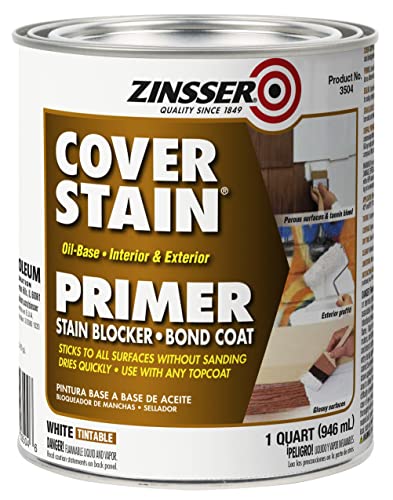
Cover stain, QT, Oil based stain killer primer/sealer

NO LAPS, RUNS OR STREAKS: Goof Proof formula with no back brushing required; ideal for exterior wood projects
Post-Application Care and Drying Time
After you’ve applied stain to your deck, the work isn’t finished—proper drying and curing determine whether your investment yields a durable, professional finish or fails prematurely. Following post application guidelines is critical to success.
Water-based stains dry to the touch in 1-6 hours; oil-based require at least 24 hours before light foot traffic. Avoid placing furniture for 24-48 hours, or up to one week for heavy items. Never drag furniture across the surface during curing. Proper deck preparation and cleaning before staining also affects how quickly your stain dries and adheres to the surface.
Monitor drying indicators carefully: the stain shouldn’t feel sticky or tacky, pooling or streaking shouldn’t appear, and the solvent smell should dissipate. Maintain dry, warm conditions between 50°F and 85°F for 24-72 hours post-application. Plan projects with at least three dry days forecasted to guarantee ideal curing conditions. Testing your sprayer on scrap wood before full application helps ensure you achieve an even finish without defects during the critical drying period.

NO LAPS, RUNS OR STREAKS: Goof Proof, oil-based formula now equipped with the powerful Turbo Spray System; ideal for exterior wood projects
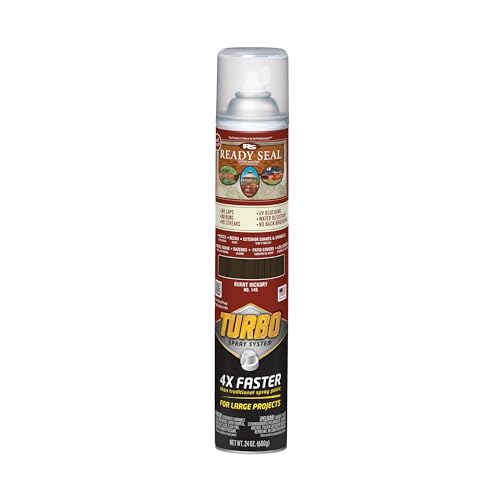
NO LAPS, RUNS OR STREAKS: Goof Proof, oil-based formula now equipped with the powerful Turbo Spray System; ideal for exterior wood projects

NO LAPS, RUNS OR STREAKS: Goof Proof, oil-based formula now equipped with the powerful Turbo Spray System; ideal for exterior wood projects
Professional Expert Tips for Perfect Stain Results
Achieving a flawless deck stain finish requires attention to preparation, product selection, and application technique—three interconnected elements that separate professional results from disappointing outcomes. You’ll maximize stain adhesion through thorough surface preparation tips: pressure wash at low settings, allow 24-48 hours drying time, sand rough spots, and remove all dust. Your stain application techniques matter equally—use synthetic brushes for water-based products and paint pads for even coverage. Apply long, smooth strokes across two or three boards simultaneously, maintaining consistency. Back brush excess stain to prevent puddles and flaking. For optimal results when using rollers, maintain consistent pressure as the stain dries and keep the roller well-loaded to minimize trips back to the stain can. Respect environmental conditions between 50-90 degrees Fahrenheit, check weather forecasts, and allow 24 hours between coats. For optimal results, consider applying two coats of stain to ensure better protection, more uniform color, and improved longevity, particularly on weathered decks or when a darker finish is desired. Consult manufacturer instructions for specific drying and cure times to guarantee professional-quality results.

READY-TO-USE DECK STAIN & SEALER: Olympic WaterGuard woodland cedar semi-transparent wood stain and sealant combines color and waterproofing in one water-based, ready-mix coat.

Water-based wood stain creates rich, even color in 1 coat on most surfaces

SEMI TRANSPARENT EXTERIOR WOOD STAIN: Our outdoor wood stain and sealer allows the natural wood grain to show through, highlighting the beauty of your decks, fences and sidings and preserving its natural look.