The Ultimate Guide to Applying Cabot Deck Stain Perfectly
You’ll transform your deck by preparing surfaces meticulously—sweeping, removing old stain, and sanding with 60–80 grit sandpaper. Check weather forecasts for rain-free conditions and verify temperatures between 50°F and 90°F with humidity below 70%. Apply stain liberally to open end grain first, working in 1–3 board sections while maintaining wet edges. Use quality natural bristle brushes or pad applicators for maximum coverage. Most applications require two coats with proper drying intervals. Establish maintenance routines every 2–3 years to guarantee longevity. The complete methodology reveals the specific techniques that separate professional results from amateur finishes.
Preparing Your Deck for Stain Application
Before you apply Cabot deck stain, you’ll need to thoroughly prepare your deck’s surface to guarantee ideal stain adhesion and a professional finish. Start by sweeping away all leaves, dirt, and debris with a stiff-bristle broom, ensuring deck safety by removing tripping hazards. Remove old stain and sealer using a dedicated remover, allowing it to sit for 15 minutes before scrubbing with a synthetic-bristle brush. Rinse completely to eliminate chemical traces. Next, apply a commercial wood cleaner, letting it dwell for 15–20 minutes before scrubbing with the grain. After thorough rinsing and drying, sand with 60–80 grit sandpaper to open the wood grain. Use a fan-style spray tip when power washing at low to medium pressure to avoid damaging the wood surface. Finally, apply wood brightener following manufacturer guidelines, then perform a water drop test to confirm proper surface preparation before staining. Protecting surrounding areas like plants and furniture from stain overspray and drips will prevent costly damage and cleanup efforts.

Professional concentrate cleans decks, siding, driveways, and patios - perfect for homeowners preparing for BBQs, real estate agents staging homes, or contractors finishing jobs.

POWERFUL DECK CLEANER & MILDEW REMOVER – This deck cleaner and mildew remover is a professional-grade deck cleaning solution, effectively eliminating black and green stains, mold, and built-up grime on wood and composite surfaces.

CLEANS AND BRIGHTENS IN MINUTES: Microban Outdoor Surface Care removes mold, mildew and algae stains with visible results in minutes. Your exterior surfaces will look bright and new - no ladder or scrubbing required.
Assessing Weather and Environmental Conditions
When should you apply Cabot deck stain? You’ll want to assess weather variability before beginning. Check forecasts for rain-free windows of 24 hours minimum before and after application. Verify air temperature stays between 50°F and 90°F, and use an infrared thermometer to confirm actual wood surface temperature—it often differs considerably from ambient readings.
Monitor humidity levels; ideally maintain 40% to 70%. Avoid staining when humidity exceeds 70%, as this slows drying excessively. Environmental impact also matters: windy conditions accelerate uneven drying, while direct sunlight causes lap marks and flash drying. Plan applications for early morning or late afternoon under cloudy conditions when possible. Assess pollen levels and overnight dew forecasts, as moisture accumulation compromises finish quality and durability. For weathered wood, ensure old peeling stain has been removed before application. Ensure your moisture content is below 15% before application to guarantee optimal stain adhesion.
Selecting the Right Tools for the Job
You’ll find pad applicator benefits particularly valuable for large, flat surfaces. Pad applicators work stain into wood fibers more effectively than traditional brushes, gliding smoothly to minimize streaks while holding generous amounts of stain. This reduces reloading frequency and assures thorough coverage in grooves and between boards.
For brush comparison, Cabot’s 4-inch blended bristle block brushes excel at detailed work and edges requiring precision. While brushes cover larger areas quickly, pad applicators deliver superior speed and even coverage on expansive decks. Proper application technique along the wood grain helps prevent peeling and streaking on your finished deck.
Consider attaching extension handles to pad applicators for hard-to-reach spots. Both tools are reusable and durable when properly maintained, making them cost-effective investments for your staining project.
For maximum efficiency on larger deck surfaces, a paint sprayer like the Wagner Control Pro 130 can apply stain significantly faster than hand tools while maintaining consistent coverage when moved in steady, deliberate motions.

Stains flat surfaces and between boards at the same time
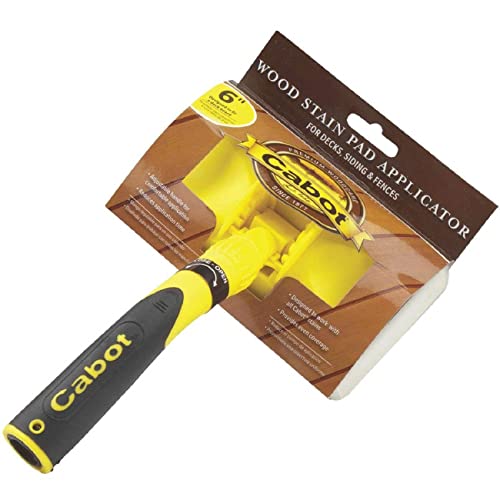
Package length: 9.3"

Understanding Different Stain Types
Selecting the right stain for your deck requires understanding how opacity levels and base formulations affect both protection and aesthetics. Stain opacity ranges from transparent options that showcase natural wood grain to solid stains that completely conceal imperfections and deliver maximum weathering protection.
Your stain base choice greatly impacts performance and application. Oil-based formulations penetrate deeply, enhancing wood appearance and resisting mold, while requiring less frequent reapplication. Water-based stains comply with environmental regulations, dry faster, and resist fading effectively, though they may need additional coats. Oil-based stains also emit stronger odors and VOCs compared to their water-based counterparts, which is an important consideration for indoor application comfort.
Semi-solid stains balance aesthetic appeal with durability, offering moderate color while allowing wood character to remain visible. Applying stains in thin, even coats following the wood grain helps achieve uniform color and prevents lap marks that can compromise the finished appearance. Semi-transparent varieties highlight grain beauty but demand more frequent maintenance. Match your selection to your deck’s condition, desired appearance, and climate exposure for best results.

NO LAPS, RUNS OR STREAKS: Goof Proof formula with no back brushing required; ideal for exterior wood projects
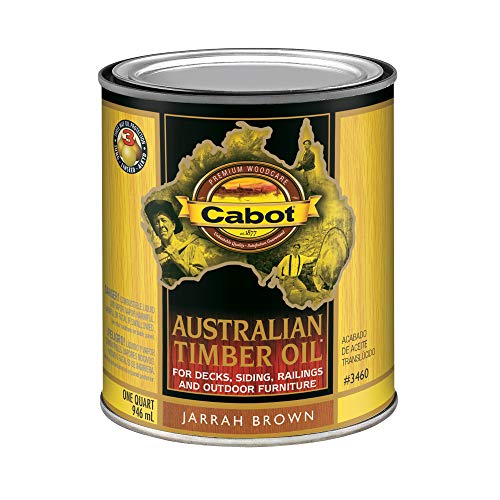
WOOD PROTECTOR – Cabot Australian Timber Oil Wood Stain provides 3-way oil protection for superior penetration. The unique blend of oils is an advanced-technology treatment designed to protect wood surfaces from extreme weather exposure like never before.

NO LAPS, RUNS OR STREAKS: Goof Proof formula with no back brushing required; ideal for exterior wood projects
Mastering the Staining Technique
Transforming your deck’s appearance hinges on executing proper staining techniques that balance surface preparation, application method, and drying protocols. You’ll maximize stain penetration techniques by applying stain liberally to open end grain first, where wood absorbs most readily. Your brush application methods depend on stain type: use natural bristles for oil-based products and synthetic brushes for water-based formulas. Work in small sections of 1-3 boards, maintaining a wet edge to prevent lap marks. Back-brush thoroughly to drive stain into wood fibers and guarantee uniform coverage. Stir your product frequently during application to maintain consistent color distribution. Before beginning your application, ensure the deck surface is completely dry and that you’ve completed sanding with medium-grit sandpaper to open the wood pores for optimal stain absorption. Keep the surface dry and protected from direct sunlight, as heat compromises absorption and finish quality. Before beginning your application, test stain color on a small inconspicuous area of your deck to ensure you’re satisfied with the final appearance.

Bates deck stain brush set includes 2 high-quality brushes designed specifically for staining decks and other large wood surfaces.

Bates deck stain brush features a 7.5-inch width for expansive and even application, ideal for efficiently staining decks, fences, and other large wooden areas.

This kit comes with a 7" deck stain brush and a 3" small wood paint brush. The 7" large brush is designed for quick, large-area painting, while the small paint brush is ideal for precisely painting narrow corners, edges, and railing crevices.
Achieving Even Coverage Across Large Areas
Because large deck surfaces demand systematic application to prevent inconsistencies, you’ll achieve superior results by breaking your project into manageable sections and maintaining meticulous control over stain delivery. Stain 1-2 boards at a time while working the entire length of each board in consistent, smooth strokes. Apply heavy coats to open end grain at both start and finish points to guarantee achieving uniform color throughout your deck. Maintain a wet edge during application to minimize lap marks that compromise visual continuity. Stir stain frequently throughout your stain application techniques to sustain color consistency across the project. Keep the work area moist during application, preventing premature drying mid-project. Before staining, ensure your deck has been thoroughly cleaned and allowed to dry completely. Use high-quality natural bristle brushes or Cabot pad applicators, which deliver superior control and faster coverage than alternative tools. For added durability, consider applying a protective sealant after staining to shield your deck from UV damage and weathering.
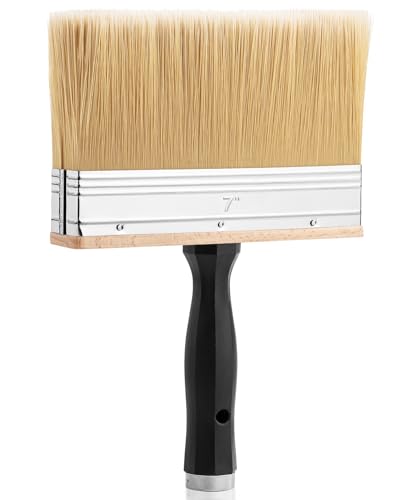
Bates deck stain brush features a wide 7-inch brush head, perfect for covering large surfaces quickly and efficiently.

Item Weight: 0.83 lb
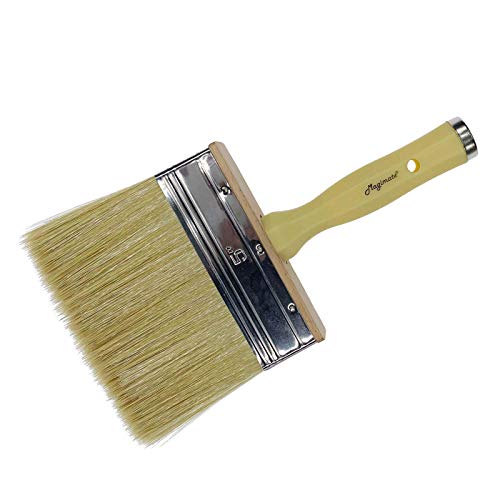
Brush Specs: 5” wide x 1” thick, soft synthetic filament blended with natural bristle. Hold more stain/sealer and paint smoothly, making your home improvement job a breeze.
Timing Your Application for Optimal Results
Proper timing guarantees that Cabot deck stain cures evenly and develops consistent color throughout your project. Your application schedule should prioritize early morning or late afternoon when temperatures remain stable and direct sunlight won’t accelerate drying. Avoid midday staining, which causes rapid moisture evaporation and lap marks.
The ideal time falls within the 50°F to 80°F temperature range, with surface temperature matching air temperature. Check that your wood’s surface temperature is rising, not cooling from overnight dew. Plan your application when relative humidity stays between 40% and 70%—high humidity extends drying times, while low humidity risks uneven penetration. Before staining, ensure your deck has been thoroughly cleaned and allowed to completely dry for optimal stain adhesion.
Ensure rain won’t occur for at least 24 hours before and after staining. Most experts recommend waiting at least 48 hours before placing furniture back on the deck to allow proper curing. Position yourself to follow shade coverage throughout application, maintaining a wet edge for seamless results.
Handling Multiple Coats and Drying Times
Once you’ve mastered the timing of your initial application, you’ll need to understand how multiple coats and drying intervals work together to achieve superior deck protection. Most Cabot deck stains require a two-coat application for ideal results, though oil-based finishes on new decks should remain limited to one coat to prevent peeling.
Maintain drying consistency between applications: solid acrylic stains need 4–6 hours, water-based stains require a minimum of two hours, and oil-based stains demand 24–48 hours. Before applying your second coat, verify the first coat is completely dry to the touch with no tackiness. For outdoor furniture repurposing projects using deck stain, applying weather-resistant finishes through multiple coats significantly extends durability and protection against the elements.
After your final coat, allow 24–48 hours before resuming normal deck use, depending on your stain type. Always consult your product label for specific coat application requirements. Proper drying time between coats ensures the stain adheres evenly and prevents peeling or uneven coloration on your deck surface.
Protecting Surrounding Areas During Application
While you’re focused on achieving an even stain application across your deck surface, you’ll need to simultaneously protect everything adjacent to your work area from unwanted stain exposure. Your landscape protection strategies should include placing plastic drop cloths over surrounding vegetation, extending coverage well beyond the deck perimeter to catch all drips and overspray. For surface contamination prevention, cover concrete patios and walkways with drop cloths, as oil-based stains leave permanent marks on porous surfaces. Apply painters tape to siding, windows, and door frames before beginning application. Secure all materials to prevent movement during spraying. Wear rubber gloves, eye protection, and disposable clothing to safeguard yourself from stain contact. After your deck is cleaned and prepared with pressure washing techniques, ensure the surface is completely dry before applying your chosen stain product. This thorough approach minimizes cleanup time and protects your entire outdoor living area from costly damage. Understanding stain types and costs will help you select the right product for your deck’s protection and longevity.
Long-Term Maintenance and Recoating Schedule
Because your deck’s durability depends on consistent upkeep, you’ll want to establish a structured maintenance routine that monitors stain condition and wood integrity every 2-3 years. Your maintenance checklist should include inspecting high-traffic areas, top rails, and fasteners for wear, cracks, and soft spots. Test your deck’s moisture content before recoating—wood should measure below 15% moisture. Recoat approximately every 2-3 years, though sun exposure and foot traffic may necessitate more frequent touch-ups. Always sand rough areas and remove peeling stain completely prior to application. For stain longevity, sweep regularly, hose wash annually, and address mildew immediately. When preparing boards for recoating around posts and other structural elements, ensure precise cuts and fitting are maintained to prevent water infiltration and protect wood integrity. Apply stain between 50-90°F with proper drying intervals. These practices promote ideal protection and extended deck life. Allowing sufficient drying and curing time between coats, typically 24 to 48 hours depending on weather conditions, ensures proper adhesion and optimal durability of your deck finish.