Oil vs. Water Based Stains for Outdoor Furniture
Oil-based stains penetrate deep into wood fibers, delivering superior UV protection and durability—you’ll enjoy color retention for 2-5 years with minimal maintenance. Water-based stains form flexible surface films that let wood breathe, reducing rot risk and drying faster, but you’ll need reapplication every 1-3 years. Oil costs more upfront ($35-$120/gallon) yet proves more economical long-term, while water-based options ($20-$90/gallon) offer easier cleanup with soap and water. Your choice depends on balancing durability against environmental concerns and maintenance commitment.
How Oil-Based Stains Penetrate and Protect Wood
Oil-based stains work through a two-part process: they’re carried into wood fibers by solvents, and they’re held there through molecular adhesion. Understanding these penetration mechanisms helps you achieve excellent finishes on your outdoor furniture.
The solvents dissolve colorants, enabling them to saturate wood’s microscopic structure rather than merely coating the surface. This deep fiber impregnation means color persists even when you scratch or rub the wood. Your adhesion properties improve dramatically when you prepare surfaces properly—sanding creates additional pathways for stain absorption while removing dust prevents interference. Proper surface preparation through progressive grit sanding ensures optimal stain penetration by opening up the wood grain and removing contaminants that compromise adhesion.
You’ll achieve exceptional results on dry, clean wood. The pigment distribution throughout exposed cells provides genuine color retention. Unlike clear sealers that protect wood without adding color, oil-based stains offer both UV damage protection and aesthetic enhancement to your furniture. Once applied, you’ll handle furniture safely within 24 hours, though initial drying occurs within 10 minutes.

ENHANCES THE BEAUTY OF THE WOOD: Teak Oil restores the beauty of grey, old and weathered teak furniture to give a golden-brown natural finish.

ADVANCED OIL STAIN REMOVAL — Specially crafted to eliminate stubborn oil and grease stains including butter, bacon grease, salad dressing, sunscreen, and more.

Ideal for use on all interior wood projects: furniture, cabinets, doors, trim and paneling
Water-Based Stains: Surface Protection and Breathability
While oil-based stains penetrate wood fibers deeply, water-based stains work differently—they form a protective film on the surface through water evaporation. This surface barrier creates an inorganic coating that shields your furniture from environmental damage without trapping moisture beneath.
You’ll appreciate how water-based stains allow wood to breathe while maintaining protection. Unlike oil-based alternatives, they prevent water accumulation that causes rot and mildew. The breathable composition enables natural wood movement, reducing cracking and splitting from temperature fluctuations.
Your moisture control improves greatly with water-based formulations. The flexible coating adapts to seasonal changes without compromising integrity. Pigments and UV absorbers bond directly to the surface, delivering excellent color retention and durability while minimizing maintenance demands on your outdoor pieces. Water-based stains typically dry to the touch in 1-6 hours, allowing you to move forward with your outdoor furniture projects more quickly than oil-based alternatives. Water-based stains offer superior resistance to wear compared to oils, resulting in a longer-lasting finish that requires less frequent maintenance.
Durability Comparison for Outdoor Environments
When you’re evaluating stains for outdoor furniture, durability in harsh environmental conditions becomes your primary concern. Oil-based stains deliver superior weather resilience due to their deep penetration into wood fibers, allowing them to move flexibly with seasonal wood expansion and contraction. This stain compatibility with natural wood movement prevents cracking and peeling that commonly affects water-based alternatives.
You’ll find oil-based finishes maintain their color and protective integrity considerably longer under direct sunlight and UV exposure. While water-based stains require additional UV inhibitors for comparable protection, oil-based formulations offer inherent resistance to weathering and degradation. Proper application techniques such as back-brushing help work the stain into the wood for enhanced durability and performance. Oil-based stains also penetrate wood fibers more effectively than water-based options, creating a more organic finish that showcases the wood’s natural grain.
In high-traffic areas, oil-based stains outperform water-based options markedly. They resist wear patterns, chipping, and surface damage more effectively, requiring less frequent recoating to maintain both appearance and protection.
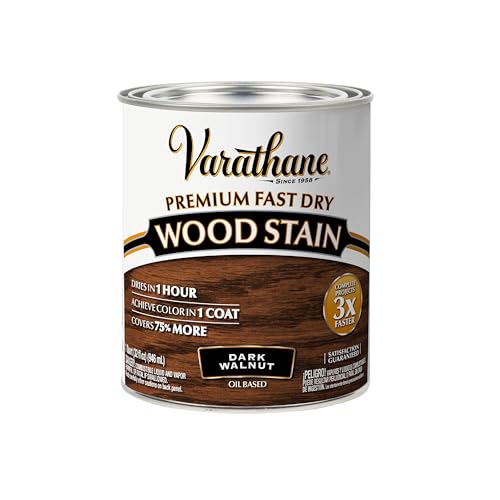
Ideal for use on all interior wood projects: furniture, cabinets, doors, trim and paneling

EFFECTIVE ON ALL WOOD SURFACES and QUICK DRYING: Furniture Clinic Wood Stain is a fast drying and highly concentrated wood stain making it effective on all indoor and outdoor wood surfaces. Our wood stain provides excellent coverage and ensures even color penetration. It's water based, environmentally friendly, and dries to a natural matte finish in only 10 minutes.

NO LAPS, RUNS OR STREAKS: Goof Proof formula with no back brushing required; ideal for exterior wood projects
Longevity and Maintenance Cycles
Because maintenance cycles directly impact your long-term investment in outdoor furniture, understanding the reapplication timelines for each stain type becomes essential. Oil-based stains extend intervals between applications to 2-5 years, reducing your overall maintenance burden. Water-based stains require reapplication every 1-3 years, demanding more frequent interventions. Your reapplication strategies should account for environmental exposure—harsh outdoor conditions accelerate water-based degradation substantially.
Longevity factors favor oil-based finishes for durability; they penetrate deeper and resist moisture damage more effectively. However, water-based stains simplify reapplication procedures with easier sanding requirements. Modern water-based formulations have narrowed performance gaps significantly. Proper surface preparation techniques, including cleaning and sanding between coats, ensure optimal adhesion regardless of stain type. For teak furniture specifically, applying protective treatments like teak oil after cleaning helps safeguard against UV damage and moisture while extending the life of your finish. Consider your climate conditions and maintenance tolerance when selecting between options. Oil-based stains minimize total maintenance cycles over decades, while water-based alternatives offset frequent recoating through streamlined application processes.

PROTECTIVE CLEAR FINISH – Minwax Helmsman Spar Urethane is specially formulated as a protective varnish for wood for interior and exterior projects. It contains special UV blockers that reduce the sun’s graying and fading effects.

DEEP LEATHER NOURISHMENT: This leather boot conditioner penetrates below the surface to replenish essential oils, helping stiff, tired leather feel naturally flexible again while maintaining its original character, so your favorite boots, bags, and everyday gear look authentically broken-in—not artificially coated—each time you reach for them.

EFFECTIVE ON ALL WOOD SURFACES and QUICK DRYING: Furniture Clinic Wood Stain is a fast drying and highly concentrated wood stain making it effective on all indoor and outdoor wood surfaces. Our wood stain provides excellent coverage and ensures even color penetration. It's water based, environmentally friendly, and dries to a natural matte finish in only 10 minutes.
Drying Time: Speed vs. Application Quality
The drying speed of your chosen stain type fundamentally shapes how you’ll execute the application and what results you’ll achieve. Oil-based stains offer significant drying advantages: their 12–24 hour pre-rain window provides extended open time for even color distribution and mistake correction. You’ll apply larger sections without visible seams or lap marks, achieving consistent sheen.
Water-based stains present distinct application challenges despite faster drying. Their 1–6 hour window demands quick, continuous application to prevent lap marks and uneven patches. You’ll need multiple thin coats and possess minimal time for corrections before the stain sets. However, water-based options enable faster project completion and indoor application. Temperature and humidity conditions affect both types, with oil-based stains particularly vulnerable in cool, damp environments. Choose based on your skill level and project timeline.

Ideal for use on all interior wood projects: furniture, cabinets, doors, trim and paneling One-coat coverage, fast-drying oil based formula Dries to the touch in just 1 hour...
Working With Oil-Based Stains for Even Coverage
Now that you’ve selected oil-based stain for its forgiving drying window, mastering the application technique will determine whether you achieve that smooth, even coverage you’re after. Choose natural-bristle brushes in 2-3 inch widths for furniture projects, or foam applicators for larger surfaces like decks. Work systematically from top to bottom, always following the wood grain direction to prevent streaking. Start with end-grain surfaces first, then progress along the grain for uniform absorption. Apply even, smooth strokes while maintaining a wet edge—work one to two boards at a time to avoid lap marks. Allow five minutes for oil penetration, then wipe excess with a clean rag, paying special attention to joints and grooves. Oil-based stains have longer drying times compared to water-based alternatives, which can actually work in your favor during application. Additional coats guarantee complete saturation. For maximum protection of your stained furniture against outdoor elements, follow up your oil-based stain with a spar urethane topcoat to provide UV resistance and weather durability.
Environmental Impact and VOC Emissions
While oil-based stains deliver superior durability and aesthetic appeal, they come with significant environmental costs that deserve careful consideration. You’ll find that oil-based stains emit VOCs exceeding 250 grams per liter, persisting for weeks after application and degrading indoor and outdoor air quality. Water-based alternatives release less than 50 grams per liter, meeting strict environmental regulations across regions like California.
When you choose water-based stains, you’re adopting sustainable practices that reduce fossil fuel dependency and minimize ecosystem contamination. These eco-friendly options feature lower toxicity, preventing soil and water source pollution from runoff. You’ll also simplify waste disposal—water-based formulations require less hazardous handling than petroleum-derived products. Consider hybrid formulas emerging in the market, which balance performance with environmental responsibility while supporting long-term sustainability goals.
Health and Safety Considerations
Because you’re working with chemical products that’ll come into contact with your skin and lungs, understanding the health implications of your stain choice becomes essential. Oil-based stains expose you to higher VOC levels, triggering headaches, dizziness, and respiratory irritation. Water-based alternatives minimize these risks with lower emissions and virtually no odor, protecting your respiratory health considerably.
Consider chemical sensitivities when selecting your stain. Oil-based products contain petroleum-derived solvents that can cause skin irritation or dermatitis through prolonged contact. Water-based stains, while gentler, may contain preservatives and binders triggering allergic reactions in susceptible individuals. Always wear protective clothing and goggles when applying either type of stain to shield yourself from splashes and fumes.
Both require protective gloves and clothing. However, water-based stains eliminate the need for respiratory equipment, making them safer for enclosed spaces. Oil-based applications demand proper ventilation, masks, and careful handling due to flammability risks and spontaneous combustion concerns with disposal materials. Just as proper fastening techniques are critical for deck railing safety, securing your health through appropriate stain selection and application methods protects you from both immediate and long-term exposure risks.
Cleanup Requirements and Reapplication Processes
Once you’ve finished applying your stain, the cleanup phase reveals a significant practical difference between oil-based and water-based products. Oil-based stains present notable cleanup challenges, requiring mineral spirits or turpentine for brushes and rollers. You’ll need proper solvent disposal for rags due to spontaneous combustion risks, making the process labor-intensive and time-consuming. Water-based stains simplify cleanup dramatically—soap and water suffice, with no special disposal requirements.
Regarding reapplication ease, oil-based stains excel. You can apply new coats over old finishes without extensive sanding, and touch-ups blend seamlessly due to deep penetration. Water-based stains demand full sanding before reapplication, often resulting in uneven appearance and higher maintenance frequency. If you’re planning long-term furniture care, oil-based stains require fewer reapplications, whereas water-based options necessitate more frequent touch-ups due to shorter lifespans. Following the stain manufacturer’s instructions on drying times and number of coats is crucial for ensuring a durable finish that allows the wood to breathe properly between applications.
Cost Efficiency and Coverage Performance
Beyond the practical maintenance considerations, your budget and material efficiency play equally important roles in selecting the right stain for your outdoor furniture.
When conducting a cost analysis, you’ll find oil-based stains range from $35 to $120 per gallon, while water-based options cost $20 to $90. However, price fluctuations vary by brand and region. Oil-based stains deliver superior coverage efficiency through deep penetration, requiring fewer coats and reducing material consumption. Water-based stains sit surface-level, necessitating additional applications for uniform color.
Over time, oil-based stains’ longevity minimizes reapplication frequency, lowering lifetime expenses despite higher upfront costs. Water-based stains demand more frequent maintenance, increasing long-term material and labor expenses. For comparison, solid color stains offer a middle-ground option that provides better wood penetration than paint while maintaining enhanced aesthetic appeal. Solid stains provide superior protection against UV rays, moisture, and mold with a lifespan of up to five years or more. Your cost-effectiveness ultimately depends on balancing initial investment against durability and application requirements.