How to Flip Deck Boards That Are Nailed Down
You’ll flip nailed deck boards by carefully loosening fasteners, extracting them without splitting, and reinstalling with screws. Start by clearing your deck and inspecting board condition with a moisture meter—levels above 20% indicate decay requiring replacement. Use pry bars with scrap wood blocks for protection, apply gradual pressure, and pre-loosen nails with lubricants. Once removed, flip boards and secure them with pilot-drilled screws positioned 1 inch from edges. The complete process requires specific techniques at each stage to guarantee success.
Understanding the Challenges of Nailed Deck Boards
When you’re considering flipping deck boards to extend their lifespan, you’ll quickly realize that nails create substantial obstacles that screws don’t present. Nail removal techniques vary in effectiveness—prying, cutting, or grinding—but each risks splitting boards or bending fasteners beyond reuse. Rusted or buried nail heads complicate extraction further, while toenails resist straight removal entirely. Working from the inside out and loosening approximately 4-5 joists with a cat’s paw or nail puller can help gradually free the board before attempting to lift it.
Your deck board orientation challenges multiply once nails come out. Boards with angled cuts or patterned layouts won’t realign properly after flipping. Factory-finished edges lose their aesthetic appeal when reversed. Additionally, angles face the opposite direction, preventing secure joist attachment without additional cutting. If you do manage to flip the boards, ensure you allow adequate drying time before placing them back on the deck to maintain proper adhesion and protection.
Nails also bend or break during removal, unlike screws that simply unscrew. This inflexibility makes reinstalling flipped boards labor-intensive and sometimes impossible without damage, making nail-driven decks fundamentally harder to refresh than screw-fastened alternatives.
Essential Tools and Safety Equipment
Successful deck board flipping demands specialized equipment that goes far beyond standard hammers and crowbars. Your tool selection should prioritize efficiency and safety. Consider investing in specialty removal tools like the Duckbill Deck Wrecker, which uses lever action to pop boards without straddling joists, or the GreenTek Demo-Dek, which grabs boards directly for easier extraction. Flat pry bars and Cat’s Paw tools work effectively when positioned sequentially along joists. When flipping boards, understanding your deck’s joist spacing requirements will help you position removal tools most effectively to avoid damage to the underlying support structure. Properly spaced fasteners and hidden fastener systems designed for secure connections may require additional care during removal to prevent damage to the board material.
Safety gear is equally critical. Wear work gloves to protect against splinters and sharp fasteners, safety glasses to shield your eyes from debris, and steel-toed boots for foot protection. Use a dust mask when cutting composite materials. For large projects, consider reciprocating saws with appropriate blades, though proper technique and protective equipment remain essential regardless of tool choice.
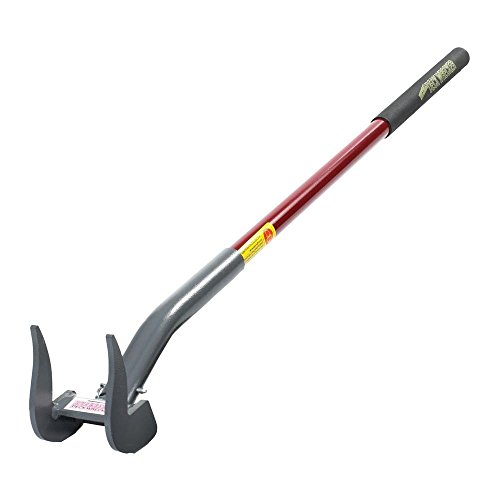
WORK SMARTER, NOT HARDER: Introducing the Duckbill Deck Wrecker – the ultimate tool designed for effortless and efficient deck board removal. Say goodbye to a sore back and...
Preparing Your Deck for Board Removal
Before you remove a single board, you’ll need to clear your deck completely and assess its current condition. Start by removing all furniture, plants, and personal items to establish a safe work zone. Document existing damage through photos or notes for your board condition assessment.
Next, inspect for protruding nails and loose screws, driving them flush with your hammer. Check for electrical lines, rotted lumber, and wildlife nests that require professional removal. Understanding your joist spacing configuration will help you identify which boards are load-bearing and may require additional support during removal.
These deck preparation tips guarantee you’re ready for safe demolition. Verify permit requirements with local authorities and consult neighbors if needed. If you accidentally spill deck stain during preparation work, wipe it off immediately with a damp rag to prevent permanent marks on nearby surfaces. Finally, organize your tools and designate separate areas for reusable wood and waste materials. Proper preparation prevents injuries and streamlines your board removal process.
Techniques for Loosening Nailed Boards Without Damage
Once you’ve cleared your deck and identified potential hazards, you’re ready to remove the boards themselves. Master effective pry bar techniques by placing a scrap wood block under the tool’s edge to protect adjacent boards. Apply slow, steady pressure from multiple points along the board rather than forcing one spot, which reduces damage risk and prevents cracking.
For decks with hidden fasteners, loosen screws in clip fasteners along both sides of the nailed board. This allows adjacent boards to shift slightly, easing removal. Use narrow pry bars or putty knives to lift boards while keeping them separated and supported.
Consider pre-loosening nails with gentle hammer taps and apply lubricant to rusted fasteners before extraction. Remove nails by leveraging under heads gently and pulling straight up to avoid splitting surrounding wood fibers. When reinstalling boards, be cautious with nail placement near board edges, as improper fastening near edges can create water traps that lead to rot and wood damage. Understanding proper fastening techniques will help you recognize how boards were originally installed and inform your removal strategy.

Quick Teardown: This lever-style pallet buster uses a curved pointed tip to slip into board gaps for fast removal. You save time and effort while helping reduce board...
Removing Nails and Extracting Boards Safely
With your boards loosened, you’ll now focus on extracting nails and removing boards without compromising wood integrity. Use nail extraction techniques by positioning your claw hammer or cat’s paw directly under nail heads, applying gradual upward pressure. For rusted nails, apply penetrating oil beforehand to loosen corrosion, then tap tools gently underneath to avoid breaking brittle fasteners. Work methodically, distributing lifting force evenly along boards to prevent splitting. Remove nails as close to the wood surface as possible, minimizing damage. Employ paired crowbars on opposite sides for balanced board lifting, a technique that mirrors the controlled approach recommended when replacing individual deck boards. Keep extracted nails for potential reuse, similar to how rivet-based fastening methods preserve hardware for reinstallation in patio furniture projects. After removal, inspect boards carefully for cracks or weakened areas requiring attention before reinstallation. This systematic approach preserves both fasteners and deck boards.

2-in-1 Cuticle Care: Conditions and exfoliates cuticles in one easy step for salon-smooth results.

ADVANCED THERAPY FOR DRY HANDS; Give your cuticles some much-needed love and care; Our Vitamin-infused oil conditioner deeply penetrates your skin with moisture, working to prevent peeling, while healing damaged, cracked nails and hands

【Innovative 3-In-1 & Refillable Cuticle Rmover Pen】Say goodbye to overstuffed nail prep kits! Upgrade your nail care routine with our ceramic cuticle pusher pen with built-in 6ml cuticle remover liquid. Featuring a unique micro-hole design, simply press to release the pre-filled softening gel directly onto cuticles. Smoothly push back dead skin and prep your nails with easy one-handed application. The pen is refillable and reusable—simply top it up when the liquid runs out for an eco-friendly, cost-effective nail care solution.
Assessing Board Condition and Repairability
Three key assessment areas—visual inspection, moisture detection, and structural integrity—will determine whether you can flip your deck boards or need to replace them entirely. Start your board inspection by walking the surface, testing for sponginess or soft spots with downward pressure. Look for warping, cupping, or large cracks that compromise structural integrity. Conduct a rot evaluation using a screwdriver to probe suspect areas; easy penetration signals decay. Use a moisture meter to check levels above 20%, indicating decay risk. Examine the underside for water stains or softness. Surface rot you can sand and seal may be flippable, but deep or widespread decay mandates replacement. Consider the wood’s age and type when making your final decision. After determining your boards are salvageable, allow the deck to dry fully before refinishing to prevent moisture-related damage from recurring. applying protective treatments can help safeguard against UV damage and moisture that may have caused initial deterioration.
Measuring and Cutting Boards for Proper Alignment
After you’ve determined your boards are salvageable, accurate measurement and cutting become your foundation for a properly aligned deck. Start by synchronizing your measuring tools—even identical brands vary, so double-check all measurements before marking. Use a utility knife to score cut lines, creating crisp marks that minimize splintering and improve cutting accuracy. Square the factory end of each board first, establishing a clean starting point. Measure from this squared end to your required length, marking clearly with your speed square. For actual cuts, employ a miter saw for perpendicular cuts or a circular saw with a straight edge for longer sections. Keep the textured side up throughout cutting. Align your mark precisely with the saw blade, nibbling up gradually for exact length. This meticulous approach guarantees boards sit parallel and properly aligned throughout your deck. If your deck is constructed from eucalyptus wood, ensure you account for moisture expansion when establishing spacing requirements. Remember to maintain proper spacing between boards, typically between 3/32″ to 1/8″ gaps, to allow for expansion and air circulation as moisture conditions change.

SPECIFICATION: Diameter: 5-1/2 inch circular saw blade(140 mm); Arbor size: 10 mm; Max Rpm:8000; Carbide Teeth: 24T&48T

HEAVY DUTY: High quality C-4 construction grade tungsten carbide teeth for extreme durability, razor-sharp cuts, and longer life.

POWERFUL 15 AMP MOTOR - Delivers 4,800 RPM for quick, detailed cuts
Flipping and Repositioning Boards on Joists
Once you’ve prepared your boards for reinstallation, you’ll need to carefully remove them from the deck, flip them to expose the fresher underside, and reposition them on the joists. Use a methodical approach by starting at the deck’s outer edge and working inward, one board at a time. Place each flipped board over the joists, ensuring proper alignment with adjacent boards and consistent spacing for expansion. Verify that board ends sit squarely on joist centers to prevent sagging. For standard residential decks, most boards are 5/4 × 6 profile, which work well with joists spaced 16″ on center. To extend your deck’s lifespan, consider protecting furniture with covers and performing seasonal maintenance on any deck components that may be exposed to the elements. This deck maintenance process requires attention to detail—check for any gaps, unevenness, or misalignment before securing fasteners. Walk the surface to detect squeaks or movement, adjusting positions as needed for a level, seamless installation that maximizes your deck’s longevity.
Securing Flipped Boards With Deck Screws
Because proper fastening is critical to your deck’s structural integrity, you’ll need to secure each flipped board with deck screws that penetrate both the board and the underlying joists. Position screws about 25mm (1 inch) inside the board’s edge to prevent splitting. Install two screws per joist per board for peak stability. Before screwing, mark joist locations beneath to guarantee penetration into the structural frame. Use color-coordinated, coated screws with high-torque drive fittings like Torx or square heads to reduce cam-out risk. Pre-drill 1/8″ pilot holes, especially near edges, to minimize splitting. For hardwood decking materials, pilot holes are particularly important to prevent splitting during installation. Apply low torque settings on your screw gun to avoid over-driving. Screws provide superior tensile strength and holding power that helps prevent decking boards from warping or popping up over time. These fastening techniques guarantee secure, damage-free installation of your flipped boards.

137PCS 3-INCH DECK SCREWS: The 2-pound package includes approximately 137 pieces of #10 x 3-inch deck screws and one matching T25 star drive bit. A practical exterior wood screw set for decks, fences, framing and general outdoor construction projects.

SUPERIOR ANTI-RUST COATING: Tan coated exterior wood screws 3 inch through 1500 hours salt spray test against erosion and rust. These outdoor deck screws can be exposed to the sun, humidity, rain and snow condition for a long time

340Pcs Multi-Purpose Screws Kit: Contains 3.2Ibs #8 #9 deck screws,with T15/T25 star drive bit,80pcs#8x1-1/4, 100pcs#8x1-5/8, 70pcs#9x2, 50pcs#9x2-1/2, 40pcs#9x3-1/8.Thicker and heavier thread diamete than typical screws,for superior holding power.
Finishing and Protecting Your Refreshed Deck Surface
With your flipped boards securely fastened, you’re ready to prepare and protect your refreshed deck surface. Start by sweeping away loose debris, then use a stiff brush to remove dust between boards. Rinse thoroughly with a garden hose and allow 24–48 hours for complete drying. Inspect for stubborn stains or mildew requiring additional treatment. Sand rough edges with a rasp or sandpaper, focusing on corners and cut ends for safety. Select protective coatings compatible with your decking material—oil-based, water-based, or composite-specific options work well. Apply two coats using a 3/8″ roller or brush, following manufacturer’s drying instructions. Seal exposed end grain with color-matched sealant. Avoid application in direct sunlight, rain, or extreme temperatures. For optimal results, choose between topical sealers that add shine or penetrating sealers based on your desired protection level and appearance. Allow sufficient drying and curing time before placing furniture or foot traffic on your newly finished deck. Regular deck maintenance guarantees lasting protection and appearance.