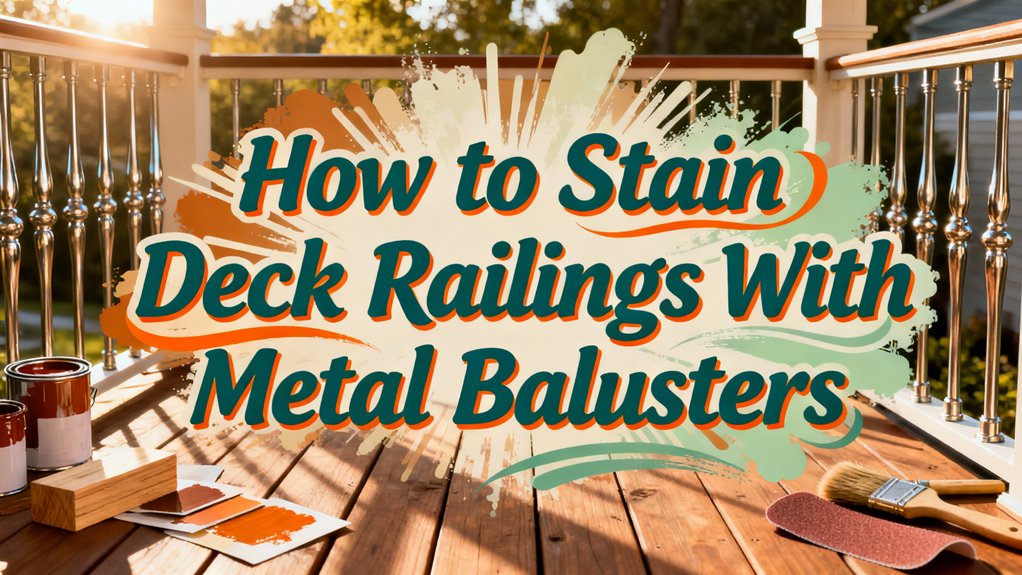
How to Stain Deck Railings With Metal Balusters
You’ll successfully stain your deck railings by first selecting the right stain type based on your climate—oil-based for humid areas, water-based for high-sun exposure. Next, prep your wood surfaces by sanding with 100-150 grit sandpaper and removing dust thoroughly. Clean metal balusters with mild soap and inspect for rust or structural issues. Apply thin, even coats using quality brushes, maintaining a wet edge to prevent lap marks. Allow proper drying time before sealing. The specific techniques for each step deserve closer examination.
Choosing the Right Stain for Your Metal Balusters
When you’re selecting a stain for your deck railings, you’ll need to take into account both the material composition of your balusters and the specific environmental conditions your deck faces. Oil-based stains deliver maximum durability and classical aesthetics, making them ideal for shaded or humid areas where moisture resistance matters. Water-based stains excel in high-sun exposure locations, offering superior UV resistance that prevents fading. Consider stain types carefully: semi-transparent options provide excellent balance between wood grain visibility and protection with outstanding stain longevity. Semi-solid stains offer robust protection through high pigment concentration. Your climate directly influences stain longevity and maintenance frequency. Match your choice to your environment—water-based for sunny decks, oil-based for humid settings—to maximize both performance and lifespan. Decking stains form a protective film on the surface that offers superior resistance to UV rays, water, and wear, resulting in a longer-lasting finish that requires less frequent maintenance. Before applying stain to your metal balusters, ensure they are properly prepared by using chemical paint strippers to remove any existing finish or coating that could interfere with stain adhesion.
Preparing Your Deck Railings for Staining
After you’ve selected the ideal stain for your deck’s specific conditions, you’re ready to prepare your railings for application. Proper deck railing maintenance starts by clearing the work area of all furniture and obstacles, then protecting surrounding surfaces with drop cloths and painter’s tape. Next, inspect wood components for rot or structural damage, replacing compromised sections as needed. Sand all wood surfaces with 100-150 grit sandpaper, following the grain direction to guarantee even stain absorption factors. Remove all sanding dust with a tack cloth. Finally, clean the railings thoroughly with a wood cleaner and rinse completely, using soft bristles on a brush to avoid surface damage. For best results, remove dirt, old stain residues, and mildew using pressure washing or deck cleaners before the final cleaning step. Allow at least 48 hours of dry weather before proceeding, verifying wood moisture content is ideal for stain penetration and consistent color absorption.
Cleaning and Inspecting Metal Components
Because metal balusters and railings are exposed to the elements, they’ll accumulate dirt, grime, and potentially corrosive substances that can compromise both their appearance and structural integrity.
Use mild dish soap mixed with warm water for routine cleaning techniques. For stubborn debris, apply a solution of powdered laundry detergent and household cleaner per gallon of water. Rinse thoroughly with a hose to remove all residue, then dry completely with a microfiber cloth to prevent water spots. Promptly address any corrosion or mold growth to prevent further damage to the metal surfaces.
Your inspection checklist should include checking for rust, corrosion, or discoloration on exposed hardware. Look for loose railings indicating weakened fasteners. Examine scratches, nicks, or surface marks that could affect the finish. Note any chalky residue on powder-coated aluminum—this is normal. Pay particular attention to areas near salt sources, where corrosion accelerates rapidly. After inspection, consider applying rust-inhibiting primers or protective sealants to shield metal surfaces from moisture and UV protection.
Addressing Structural Issues Before Staining
Once you’ve cleaned and inspected your deck railings, you’ll need to address any structural issues you’ve identified before applying stain. Start by tightening or replacing loose fasteners to restore fastener integrity throughout your system. Use a screwdriver or wrench to verify all screws and bolts are secure, and upgrade corroded hardware to rust-resistant alternatives.
Next, test structural stability by gently shaking the railing. If you detect movement or soft, spongy wood, you’ve found rot that requires component replacement. Check for sagging or warped sections indicating underlying failure. Consider applying a deep-penetrating waterproof sealant to any exposed wood surfaces to prevent moisture infiltration and further deterioration.
Replace any deteriorated posts, joists, or split wood before proceeding. Verify your ledger board attachment meets load-bearing standards. Similar to how outdoor furniture projects require galvanized hardware to withstand environmental exposure, your deck railings should use rust-resistant fasteners and bolts to ensure long-term durability. Only after confirming solid structural integrity should you apply stain to your railings.
Essential Tools for Proper Stain Application
Successfully staining your deck railings depends on selecting the right tools for each application task. You’ll need specific brush types for precision work around metal balusters—a 2.5-inch angled paintbrush with natural bristles for oil-based stains or synthetic for water-based formulas. For larger flat surfaces, you’ll use rollers with thick naps to double your speed, though you’ll avoid them near intricate areas.
HVLP sprayers excel at reaching tight spaces between balusters with minimal overspray. Your application techniques should include back-brushing after spraying to eliminate drips and pooling.
Don’t overlook preparation: use a random orbital sander with 150-grit sandpaper for flat surfaces and 100-grit sanding sponges for detailed areas. Keep clean rags, masking tape, and plastic sheeting handy for cleanup and protection. As with any outdoor wood finish, thorough surface preparation including cleaning and repairing ensures the stain adheres properly and lasts longer.
Masking and Protecting Non-Wood Surfaces
With your tools selected and surfaces prepped, you’re ready to address a critical challenge: preventing stain from adhering to metal balusters and hardware.
You’ll find several masking techniques effective for protecting finishes. Painter’s tape works well for cable railings and decorative brackets, while plastic sheeting provides broader coverage against overspray. Aluminum foil offers a quick temporary barrier when wrapped around individual balusters.
However, these methods prove time-consuming with multiple balusters. Consider alternative approaches: select oil-based stains that don’t adhere to metal, allowing easy wipe-off without masking. Apply stain in small sections using controlled brush strokes that follow wood grain, directing excess away from metal surfaces.
Immediately wipe metal balusters with clean rags after application. This prevents stain from drying and eliminates residue before it sets. For metal hardware particularly susceptible to finish damage, use high-quality protective covers during the staining process to prevent unwanted discoloration. Remember that over-application of stain can lead to extended drying times and surface failure, so using controlled brush strokes with thin coverage helps prevent these issues on both wood and metal surfaces.
Understanding Weather and Drying Requirements
Because weather conditions directly influence how your stain cures and adheres to deck railings, you’ll need to carefully monitor atmospheric factors before and after application. Temperature fluctuations notably affect drying times, with aluminum cooling faster than steel, thereby accelerating surface curing rates. You’ll want to schedule applications during spring or fall when moderate temperatures optimize stain penetration.
Humidity levels extend drying periods considerably, particularly in coastal environments where salt spray compromises adhesion on aluminum balusters. Avoid applying stain during morning dew or after overnight condensation deposits water films on surfaces. Wind patterns facilitate evaporation but risk introducing dust contamination to wet finishes.
Plan your project during dry forecasts, ensuring minimal rain risk for 24–48 hours post-application. High-UV climates demand stain formulations with UV inhibitors to maintain color consistency throughout the curing process.
Applying Stain to Metal Balusters Effectively
Now that you’ve identified ideal weather conditions for your project, you’ll need to select the right stain formulation and application method to achieve professional results on your metal balusters.
Choose oil-based penetrating stains, which won’t dry or stick to metal surfaces, simplifying stain removal methods. Use staining pads or contour applicators to reach tight spaces around balusters evenly. Dab and wipe with controlled pressure to prevent drips while ensuring thorough coverage on wood components. Maintaining a wet edge while working prevents visible lap marks and ensures seamless blending between sections.
Apply thin, even coats working from top to bottom, allowing 10–15 minutes for penetration before wiping excess. Address any accidental metal contact immediately—clean rags remove wet stain before it sets. Pay special attention to joints where balusters meet wood. Allow 24-72 hours for complete curing before exposing the railings to heavy use or moisture. Your stain application techniques directly determine final appearance and longevity.
Removing Excess Stain and Evening Out Coverage
Even after careful application, you’ll likely need to address pooled stain and uneven patches to achieve a professional finish on your deck railings. For excess stain removal, use a lint-free rag soaked in mineral spirits to gently rub darker areas within 24 hours of application. Work with light pressure initially, increasing as needed without stripping all stain.
To even out stain coverage techniques, back-brush with a suitable brush to smooth drips and heavy spots. Maintain a wet edge during application to prevent lap marks and guarantee consistent penetration. After drying, dab small amounts of stain on lighter patches using a lint-free rag, avoiding oversaturation. Allow sufficient drying time between coats before evaluating coverage. For stubborn uneven areas, pressure washing before the final coat can help restore surface consistency and promote even absorption and appearance.
Sealing and Finishing Your Stained Railings
After you’ve achieved even coverage and allowed your stain to cure fully, you’ll protect your work by applying a quality sealer that guards against moisture and UV exposure. Select sealer types compatible with your stain—oil-based or water-based—for peak adhesion. Choose exterior-grade formulas with vapor permeability to prevent moisture trapping and wood damage.
Apply finishing techniques using a high-quality brush or foam applicator in thin, even coats across all surfaces, including edges and undersides. Avoid direct sunlight during application to prevent premature drying and uneven film formation. Allow 24-48 hours between coats and follow manufacturer guidelines for multiple applications. For best results, consider sanding between coats to ensure a smooth, professional finish on your railings.
For railings with metal balusters, mask off metal components or use easily wipeable products to prevent sealer buildup and potential corrosion. Unlike stains that add color to wood surfaces, clear sealers protect without altering your stain’s appearance while still providing essential UV and moisture defense. Proper technique guarantees a durable, protective finish that preserves your stain’s color.