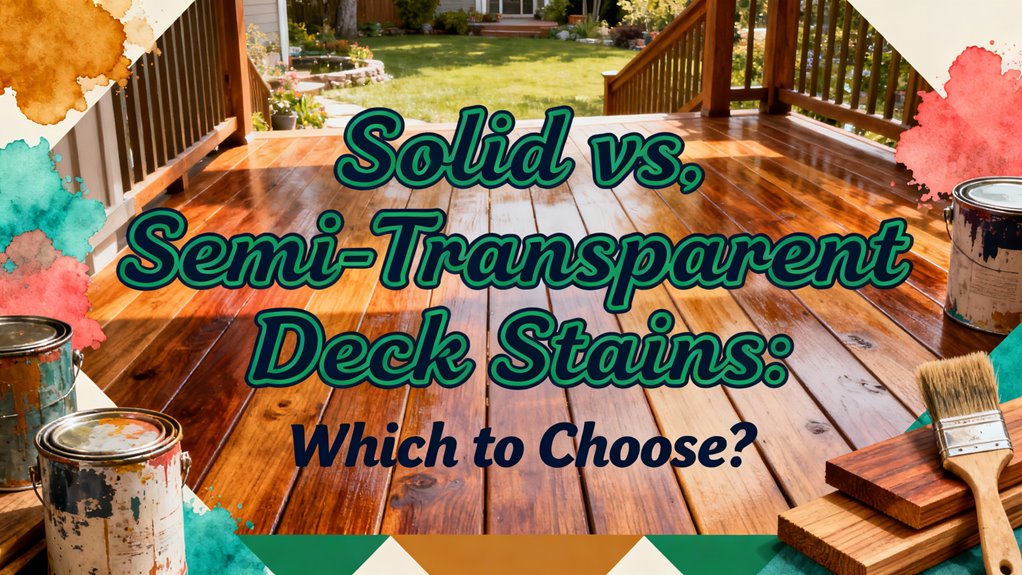
Solid vs. Semi-Transparent Deck Stains: Which to Choose?
You’ll choose solid stains if your deck shows wear, faces harsh climates, or you prioritize durability—they last 3–5 years with superior moisture resistance. Pick semi-transparent stains if you want visible wood grain and don’t mind recoating every 1–3 years. Solid stains create uniform coverage masking imperfections; semi-transparent stains enhance natural beauty but require pristine wood. Consider your climate’s UV exposure, maintenance capacity, and whether you value protection or aesthetics more. Understanding your specific deck’s condition and environmental factors will guide your best choice.
Understanding Solid Stains
Solid stains differ fundamentally from paint because they absorb into wood fibers rather than sitting on the surface, creating an opaque, film-like coating that masks the wood grain entirely. Understanding solid stain characteristics helps you make informed decisions for your deck project.
These finishes contain high pigment concentrations that provide uniform color coverage without visible wood texture. Unlike paint, solid stains wear gradually rather than peeling, allowing you to rejuvenate them with simple reapplication.
Solid stain advantages include thorough protection against moisture, UV rays, mold, and mildew. The durable barrier prevents rot and warping while extending protection up to five years with proper maintenance. Before applying solid stain, thorough cleaning removes dirt and old coatings that could interfere with absorption and adhesion. To prepare your deck properly, start by removing furniture and obstacles, then scrub the surface with a stiff brush to eliminate debris. You’ll appreciate the wide color selection available and the opaque finish that effectively covers imperfections on weathered decks. This straightforward maintenance approach delivers excellent long-term value for your wood investment.

SOLID WOOD PAINT COLOR: Delivers a flat, opaque finish that hides imperfections and refreshes wood surfaces. Ideal for outdoor wood paint projects like decks, fences, and furniture.

Waterproofing deck stain & sealer with all-in-one protection

READY-TO-USE DECK STAIN & SEALER: Olympic WaterGuard woodland cedar semi-transparent wood stain and sealant combines color and waterproofing in one water-based, ready-mix coat.
Understanding Semi-Transparent Stains
Semi-transparent stains offer a fundamentally different approach to deck finishing by allowing wood grain and natural character to remain visible while still providing meaningful protection. These penetrating formulas contain higher dye concentrations and lower pigment levels than solid stains, soaking directly into wood rather than sitting on the surface.
You’ll appreciate the semi-transparent characteristics that showcase your wood’s unique beauty while delivering enhanced waterproofing and UV defense. Application techniques are straightforward—you can apply in temperatures as low as 35°F, with weather-ready formulas ready for rain within two hours. One-coat coverage typically works on most exterior surfaces.
However, you must strip previously painted or stained decks to bare wood before application. Thorough surface preparation, including cleaning and brightening, is essential for superior results and guarantees the stain penetrates effectively. To achieve optimal results, work in manageable sections to prevent lap marks and ensure uniform color throughout your deck.

SEMI TRANSPARENT EXTERIOR WOOD STAIN: Our outdoor wood stain and sealer allows the natural wood grain to show through, highlighting the beauty of your decks, fences and sidings and preserving its natural look.
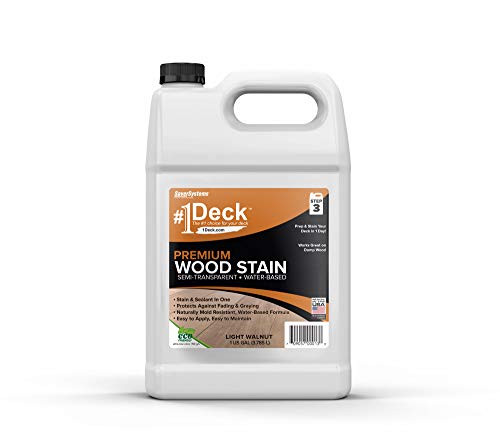
SEMI-TRANSPARENT WOOD STAIN: Enhance your deck or fence with a semi-transparent finish that lets natural wood grain show through. Perfect for decks, fences, and siding to preserve beauty.
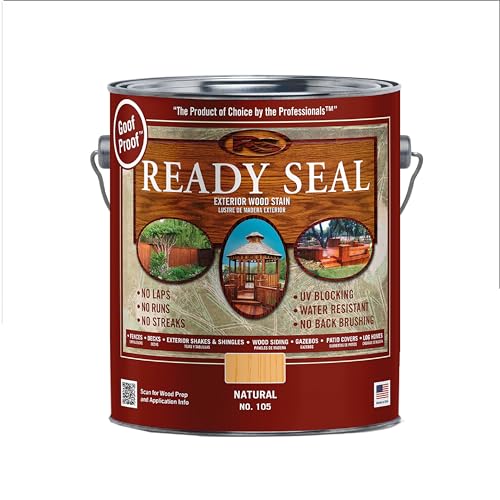
NO LAPS, RUNS OR STREAKS: Goof Proof formula with no back brushing required; ideal for exterior wood projects
Durability and Longevity Comparison
When you’re evaluating deck stains, understanding how long each type actually protects your investment becomes the deciding factor. Solid stains last 3 to 5 years with proper maintenance, while semi-transparent stains typically require reapplication every 1 to 3 years. This difference in application frequency markedly impacts your long-term maintenance schedule and costs.
Climate effects play an essential role in durability. Solid stains excel in humid, rainy, or coastal environments due to superior water and UV resistance. Semi-transparent stains degrade faster in high-sun or wet areas because their lower pigment content offers less protection. UV exposure accelerates breakdown in both types, but semi-transparent varieties suffer more pronounced degradation. Your local climate determines which option delivers better longevity for your deck’s specific conditions. Oil-based stains typically endure longer than water-based alternatives, often lasting 2 to 5 years depending on your environmental exposure and maintenance practices. Proper surface preparation with thorough cleaning procedures before application significantly extends the protective lifespan of either stain type.

READY-TO-USE DECK STAIN & SEALER: Olympic WaterGuard acorn brown semi-transparent wood stain and sealant combines color and waterproofing in one water-based, ready-mix coat.

NO LAPS, RUNS OR STREAKS: Goof Proof formula with no back brushing required; ideal for exterior wood projects
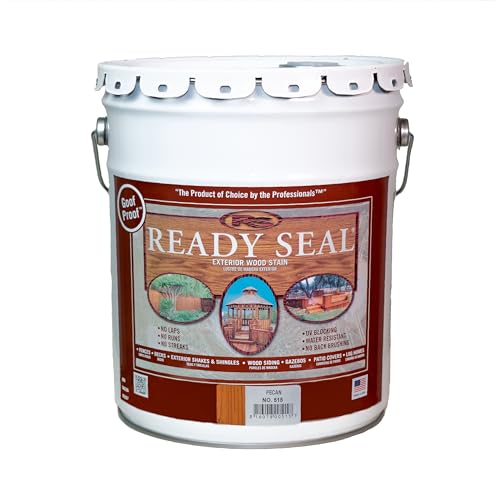
NO LAPS, RUNS OR STREAKS: Goof Proof formula with no back brushing required; ideal for exterior wood projects
Visual Appearance and Aesthetic Appeal
How much of your deck’s natural wood character do you want visible?
Solid stains create a uniform, paint-like finish that completely masks wood grain and texture variety. You’ll achieve visual contrast through color alone, sacrificing the organic appeal of exposed wood.
Semi-transparent stains strike a different balance. They showcase your deck’s natural grain while adding color enhancement, letting some texture variety remain visible. This approach preserves character while providing protection. Proper surface preparation through cleaning and sanding ensures that semi-transparent stains adhere evenly and highlight the wood’s natural beauty.
Your aesthetic preference determines the right choice. Choose solid stains if you prioritize a consistent, contemporary appearance and need to conceal imperfections. Select semi-transparent options when you value the deck’s natural beauty and want wood characteristics to remain prominent. Premium wood quality justifies transparent staining to maximize visual appeal. Semi-transparent stains require less intensive maintenance compared to paint, making them an excellent option for homeowners in humid or rainy climates.
Protection Against Environmental Damage
Your deck faces constant threats from moisture, UV radiation, mold, and harsh weather conditions that can rapidly degrade wood if left unprotected. Solid stains provide superior moisture resistance through their thick, opaque film, while semi-transparent stains offer breathability at the cost of frequent reapplication. For UV protection, solid stains’ higher pigment concentrations greatly reduce fading and surface degradation compared to semi-transparent alternatives. Regarding mildew prevention, solid stains create less permeable surfaces that resist fungal growth better in damp environments. However, you’ll find semi-transparent stains generally contain lower VOC levels, reducing chemical exposure and environmental impact. Both options benefit from mildewcides and proper maintenance. Like teak oil used for exterior wood, solid stains penetrate and protect wood while maintaining natural character and resilience. Before applying either stain type, ensure your deck has been properly prepared through thorough cleaning and drying. Consider your climate’s intensity and your tolerance for reapplication schedules when choosing between moisture resistance, UV protection, and environmental concerns.

ONE‑COAT PROTECTION: Oil‑base formula seals and protects exterior wood surfaces in a single coat, delivering strong defense against water and UV exposure

OPAQUE FINISH W/ UV PROTECTION: #1 Deck Premium wood stains provide full coverage with an opaque finish, completely hiding the natural wood grain while protecting against fading, graying, peeling, and mildew from UV exposure

OPAQUE FINISH W/ UV PROTECTION: #1 Deck Premium wood stains provide full coverage with an opaque finish, completely hiding the natural wood grain while protecting against fading, graying, peeling, and mildew from UV exposure
Maintenance Requirements and Ease of Application
While environmental protection matters considerably, the real test of a stain’s value emerges in how it performs over years of actual use. You’ll find that semi-transparent stains demand less overall upkeep, requiring only simple deck cleaner for dirt removal. Their application techniques prove simpler too—no stripping or sanding during recoating.
Solid stains, conversely, necessitate thorough maintenance protocols against water and mildew. You must implement rigorous cleaning schedules to prevent degradation. However, solid stains simplify future applications since you can apply them directly over existing solid stain surfaces without extensive preparation. Similar to how structural requirements ensure outdoor structures can withstand weather conditions, proper stain maintenance protects your deck’s long-term durability.
For refresh flexibility, semi-transparent stains excel. You can easily adapt to new colors without significant stripping work. Solid stains complicate color changes, especially toward lighter shades, requiring substantial preparation effort before reapplication. Preventing drips during application with careful spindle techniques helps maintain a professional appearance throughout the staining process.

ALL-IN-ONE DECK PROTECTION: Deck stain and sealer in one delivers comprehensive coverage and enhanced wood beauty. Easy to apply for long-lasting, weather-resistant results on exterior surfaces.

NO LAPS, RUNS OR STREAKS: Goof Proof formula with no back brushing required; ideal for exterior wood projects
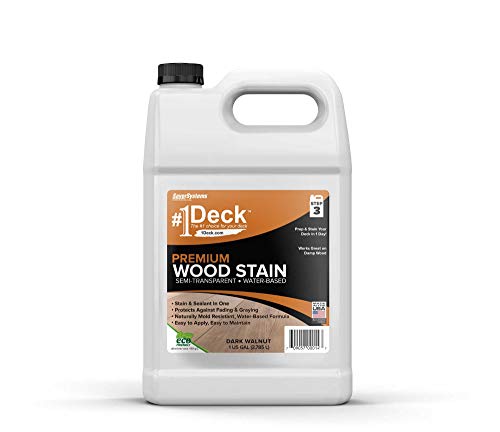
SEMI TRANSPARENT EXTERIOR WOOD STAIN: Our outdoor wood stain and sealer allows the natural wood grain to show through, highlighting the beauty of your decks, fences and sidings and preserving its natural look.
Color Change and Recoating Considerations
When you’re ready to refresh your deck’s appearance, the type of stain you’ve chosen dramatically influences your options. Semi-transparent stains offer superior color alteration flexibility since you can shift to different hues without extensive preparation. Solid stains, however, create an opaque barrier that complicates color changes and demands significant stripping before reapplication.
Regarding reapplication ease, semi-transparent stains excel with minimal surface preparation—simple cleaning suffices before applying new coats. Solid stains can be recoated over themselves without complete stripping, yet they cannot be applied over semi-transparent surfaces without preparation. Allow adequate drying time between coats to ensure proper adhesion and prevent application issues.
Consider your long-term vision carefully. If you anticipate aesthetic modifications, semi-transparent options provide practical advantages. If you prefer stability and durability with reduced maintenance frequency, solid stains deliver extended protection lasting five years or longer. Proper stain adhesion depends on ensuring moisture content falls below 15% before application to prevent peeling or uneven finishes.
Best Deck Types for Solid Stains
Because solid stains deliver opaque coverage and superior protection, they’re particularly effective for older decks suffering from visible wear, cracks, and UV fading. You’ll find solid stains ideal for pressure-treated wood, where they effectively mask the greenish tint and inherent imperfections while providing enhanced weather resistance.
Solid stains work best on weathered or aging wood species that’ve lost their original vibrancy. You shouldn’t apply them to naturally rot-resistant woods like cedar or redwood, where semi-transparent stains better showcase natural tones. Hardwood decks also resist solid stain penetration.
Choose solid stains when your primary goal is achieving a visual refresh rather than displaying wood grain. They’re perfect for high-traffic decks in harsh environments where durability and protection outweigh aesthetic considerations, transforming worn surfaces into cohesive, protected spaces. To maintain long-term protection and prevent warping, it’s essential to regularly seal or stain wood surfaces. Unlike decking oils that penetrate deeply into wood, solid stains form a protective film on the surface that offers superior resistance to UV rays and water damage.
Best Deck Types for Semi-Transparent Stains
Semi-transparent stains serve the opposite purpose of their solid counterparts—they’re designed to showcase wood character rather than conceal it. You’ll see the best results with premium species like cedar, redwood, and mahogany, where natural grain patterns and rich colors shine through. Your deck preparation is critical: verify the wood’s clean, sound, and free from old stain residue. Proper stain application requires smooth, sanded surfaces for even penetration. These stains work effectively on new decks or those with minimal damage in moderate climates. For maximum longevity, UV filters and fungicides in semi-transparent formulas help control mold, mildew, and color fading. Consider wood species with natural resistance to moisture and rot, such as teak, for superior performance in challenging environments. You’ll need to reapply every 2–3 years with light cleaning and sanding between coats. Avoid heavily trafficked areas or extreme sun exposure, as semi-transparent finishes fade faster than solid alternatives.
Making Your Final Decision
To choose between solid and semi-transparent stains, you’ll need to evaluate your deck’s current condition, your local climate, and how much maintenance you’re willing to perform. Consider your long term investment priorities. If you live in harsh environments with intense UV exposure, high rainfall, or humidity, solid stains deliver superior protection and durability. They last up to five years, reducing reapplication frequency. However, they demand greater maintenance effort and hide wood grain permanently. Semi-transparent stains suit moderate climates and showcase natural wood beauty, though they require more frequent recoating. When choosing materials, weigh aesthetic preferences against protective needs. Additionally, consider whether water-based or oil-based formulations align with your environmental concerns and maintenance preferences. Before applying your chosen stain, ensure your deck is properly prepared by cleaning the wood and allowing adequate drying time for optimal stain adhesion. Assess whether you prioritize visual appeal or maximum durability. Your decision ultimately depends on balancing environmental demands with maintenance commitment and desired appearance.