How to Build a Deck Railing: Step-by-Step Guide
You’ll need to meet strict building codes—decks over 30 inches require railings at least 36 inches tall with balusters spaced no more than 4 inches apart. Start by measuring your deck’s perimeter and marking post locations every 6 feet. Select corrosion-resistant materials like composite or vinyl, then secure posts in concrete for stability. Pre-drill holes to prevent splitting, attach rails level, and install balusters using a spacing jig. Finish with post caps and inspect all fasteners. The complete process involves several critical installation steps that guarantee both safety and compliance.
Understanding Deck Railing Code Requirements
Why should you care about deck railing codes before you pick up a hammer? Building code compliance directly impacts deck safety and your legal liability. You’ll need to understand that decks exceeding 30 inches require railings at minimum 36 inches tall per the IRC, though your state may mandate higher standards—California and Washington require 42 inches. These railing standards exist to prevent falls and injuries. You’ll also need to know that guardrail spacing can’t exceed 4 inches between balusters to prevent children from passing through. Additionally, your railings must withstand 200 pounds of concentrated force in any direction. For stairs, handrails must be positioned between 30 to 38 inches from the tread and must be continuous from the top riser to the lowest riser. In Virginia specifically, guardrails must prevent passage of a 6-inch diameter sphere to ensure proper safety spacing. Before starting construction, check local building authorities for jurisdiction-specific requirements, as variations greatly affect your project’s compliance and safety standards.
Selecting the Right Materials for Your Project
Now that you’ve confirmed your deck meets code requirements, you’ll need to select railing materials that balance safety, durability, maintenance demands, and budget constraints.
When comparing wood vs composite, consider that wood offers cost-effectiveness but demands regular maintenance to prevent rot and warping. Composite provides superior durability with minimal upkeep, though it costs more initially.
Evaluating vinyl vs metal depends on your climate and aesthetic preferences. Vinyl suits mild climates with virtually no maintenance required, while aluminum excels in harsh conditions with excellent weather resistance. Steel delivers maximum strength but requires moderate-to-high maintenance. Like selecting materials for outdoor structures such as retractable canopy systems, your railing material choice should prioritize durability in your specific climate conditions.
For railing fasteners, stainless steel or galvanized steel nails are specifically designed for outdoor use and will resist corrosion and rust over time. Assess your climate intensity, available maintenance time, and long-term budget. Coastal areas benefit from aluminum’s corrosion resistance. High-maintenance climates favor composite or vinyl. Budget-conscious projects typically start with vinyl or wood options. Match material selection to your specific environmental conditions and lifestyle requirements.

【Safety & High Impact Resistance 】– Prioritize the safety of your family and guests. This deck railing kit is designed to comply with strict IBC/IRC/ASTM building codes. The reinforced aluminum posts provide exceptional load-bearing capacity (withstands up to 500 lbs impact), preventing dangerous accidents.

Easy Installation: Install in 3 simple steps with included accessories—no welding or cutting required! Pre-drilled holes and a positioning template ensure perfect alignment on wood, concrete, tile, or marble surfaces in under 30 minutes.

POWERFUL DECK CLEANER & MILDEW REMOVER – This deck cleaner and mildew remover is a professional-grade deck cleaning solution, effectively eliminating black and green stains, mold, and built-up grime on wood and composite surfaces.
Calculating Posts and Spacing Specifications
Once you’ve selected your materials, you’ll need to determine how many posts you’ll need and where to position them along your deck’s perimeter. Start by measuring your total linear footage, then divide by your desired spacing—typically 6 feet for wood posts, though spacing variations range from 4 to 8 feet depending on material type and local codes. Metal railings accommodate wider spacing, while cable systems require closer placement at 4 feet on center for ideal post stability.
Mark all post locations using a tape measure and chalk line, ensuring even distribution. Always position posts at corners and directional changes. Account for stair railings, which may have distinct spacing requirements. Most common deck railing posts use 4×4 and 6×6 lumber, with 4×4 posts spaced no more than 6 feet apart and 6×6 posts up to 8 feet apart to ensure proper support and stability. For maximum stability, consider digging and setting posts in concrete rather than relying on surface-mounted brackets. Once marked, you’ll have a clear blueprint for installation that meets both structural demands and aesthetic goals.
Gathering Tools and Hardware Needed
Before you can install your deck railing, you’ll need to gather a thorough collection of tools and hardware that’ll enable you to work efficiently and safely. Start with essential power tools: a power drill with multiple bits, cable crimpers, and cutting tools. Add measuring instruments like levels and tape measures for precise alignment.
For hardware selection, prioritize corrosion-resistant materials such as stainless steel (304 or 2205 grade) fasteners and post anchors. Choose rail brackets and connectors compatible with your railing material—wood, metal, or composite. Include specialized components like cable rail kits if applicable. For your deck’s substructure, ensure that pressure-treated lumber is used for posts and support components to prevent decay and extend the lifespan of your railing system.
Organize your tool collection systematically before starting work. Group fasteners by type and size, arrange measuring tools accessibly, and keep safety equipment readily available. Proper preparation of your deck surface through cleaning and sanding will ensure your railing installation is built on a solid, well-maintained foundation. This tool organization approach streamlines your installation process and minimizes interruptions.

🔧Applications - DN Mate Swage Lag Screw System is made of T316 stainless steel, helping you create or upgrade a sleek, modern and minimalist look while preserving your view. This cable deck railing hardware is suitable for straight, angled and corner sections, it is ideal for wire railing kit for decks, porches, stair railings, balcony railings and fences, creating stylish indoor and outdoor wood post cable railing systems that enhance your living space.

Marine-Grade Material: Crafted from premium T316 stainless steel, our wire rope boasts exceptional strength, durability, and resistance to rust and corrosion. Designed to withstand the harshest outdoor elements, this marine-grade stainless steel cable improve reliability for all your indoor and outdoor applications.
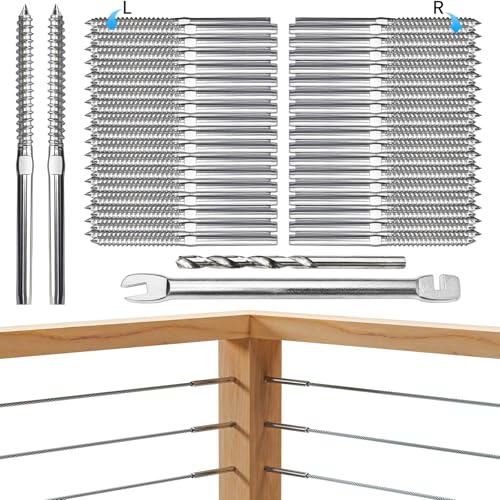
Versatile Cable Tensioning: This deck railing hardware kit is specifically designed for 1/8 inch diameter cable railing systems, these Swage Lag Screws are the ultimate solution for effortlessly adjusting cable tension. The left and right thread ensure that cables rotate in the same direction, preventing any twisting or damage, providing a smooth and secure cable railing installation.
Preparing and Measuring Your Deck Layout
With your tools and hardware organized, you’re ready to establish the foundation for your railing installation through precise measurement and planning. Start by measuring your deck’s perimeter, recording each side’s length end-to-end for thorough deck dimensions. Use consistent units—feet and inches—to maintain clarity throughout your project. Document sectional lengths separately if your deck has multiple runs or segments. For stairs, measure angled linear feet along the actual slope rather than horizontal distance, ensuring accurate handrail lengths. Mark exact stair nosing points as vertical references for height compliance. Establish clear start and end points for each edge using visual markers on complex layouts. Develop a scaled sketch noting all measurements for cross-reference during installation. Proper framing for drainage and ventilation should be considered during your measurement phase to ensure adequate airflow and moisture management beneath your deck structure. For diagonal board patterns or angled railing designs, tighter spacing requirements may apply to ensure structural integrity and prevent excessive deflection.
Installing Structural Posts and Rails
Accurate post placement determines your railing’s structural integrity and compliance with building codes, so you’ll want to start by identifying and marking centerlines for each post location directly on your deck surface or joist. Use framing squares to draw parallel guide lines ensuring centered mounting. Mark the four corner holes for post bases at least 2″ from the deck edge using templates as guides.
Attach posts using 5-inch timber screws or structural bolts with washers and nuts. Drill pilot holes to prevent splitting. Check plumbness with a 4-foot level before permanently fastening, inserting shims as needed for true vertical alignment. The blocking between deck joists should be secured with exterior-grade deck screws to ensure maximum structural stability. Posts must support a minimum of 40 pounds per square foot live load to meet Florida Building Code requirements.
For rail installation, cut rails to measured spacing between posts and pre-drill holes. Mount rail brackets at required heights, attaching bottom rails first, then top rails, verifying level throughout.

Black Strap Post Ties Bracket for 4x4 Post.

Yesland's adjustable half-column base adapts to different sizes of wooden columns, such as 1.5 "x1.5", 2 "x2", 2 "x4", 4 "x4", etc., Suitable for deck post supports, wood pile welding project.

🔩🔩🔩Sturdy Construction: These square post bases are made of heavy-duty stainless steel for long-lasting durability and corrosion resistance.
Attaching Balusters and Infill Components
Now that you’ve secured your rails to the posts, you’ll need to establish precise baluster spacing before installation begins. Building codes typically require balusters spaced no more than 4 inches apart. Use a spacing jig or template to mark consistent positions on both top and bottom rails. If your balusters are 2 inches wide, center them every 6 inches to meet code requirements. This spacing prevents a 4-inch sphere from passing through, protecting children and pets from injury.
Pre-drill holes using 7/64″ or 3/16″ drill bits to prevent splitting. Insert balusters starting at the support rail, then the bottom rail, ensuring they’re fully seated. Many systems use baluster connectors that you’ll screw into rails before installing balusters. For hollow balusters, apply silicone caulk to reduce rattling. Secure all connections with multiple fasteners to create a stable structure that can withstand lateral pressure. Have a second person help hold components during installation, and verify all balusters are level and secure before proceeding.

▼ BUILDING CODE COMPLIANCE: For 3/4" Round or 3/4"x3/4" Square balusters, the spacing will be 3-1/4" between balusters; For 1"wide facemount balusters, the spacing will be 3" between balusters. ▼ Spacing between balusters cannot exceed 4 inches.

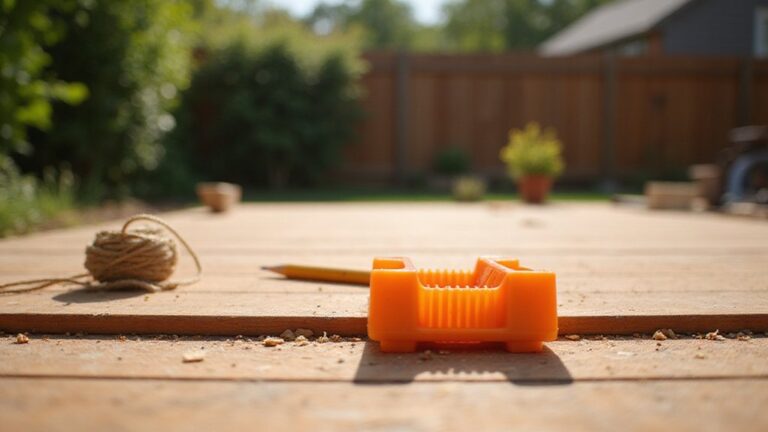
【5-Size Deck Spacers & 20-Pack】This listing: Mix-Size set. Quantity: 20 spacers per box, with 5 sizes (4 of each size). Ideal for long spans decking.▼Included Color & Size: Red: 1/8" (3.2mm) spacing, Orange: 5/32" (4mm), Yellow: 13/64" (5.2mm), Green: 1/4" (6.4mm), Blue: 5/16" (8mm).

DURABLE RAILING CONNECTIONS: Designed for 3/4-inch O.D. round balusters, these baluster connectors provide a secure connection for deck railing systems and stair railings. Each connector mounts flush to the rail surface for a clean, finished appearance.
Finishing Touches and Cap Installation
Once your balusters are secured and all railing components are properly positioned, you’ll move on to installing post caps and adding final decorative elements.
Select cap styles in wood, composite, vinyl, or metal that match your railing system. Position caps on post tops, ensuring they’re aligned flush with edges. Apply exterior-grade adhesive beneath each cap for weather resistance, then secure with compatible fasteners. Avoid over-tightening to prevent splitting.
Enhance your railing’s appearance by incorporating decorative elements like trim pieces, skirting, or LED post lights. Composite or vinyl trim resists rot and minimizes maintenance requirements. For wood railings, apply sealant or stain after cap installation to protect the wood grain and ensure long-lasting durability. Metal railings may need touch-up paint on cut areas.
Finally, inspect all fasteners for tightness, verify level alignment, and test structural stability before considering your project complete. Always ensure your finished railing meets local building codes to guarantee both safety and legality of your installation.

*Durable Construction - 30 x 14mm Plastic Hole Plugs, perfect for covering unsightly holes and enhancing the finish of your projects. Each plug is meticulously crafted from high-quality and sturdy nylon, ensuring longevity and resilience. These plugs are designed to withstand everyday wear and tear, maintaining their shape and color over time.

This long lasting post cap skirt, adapter and collar is made from black, rigid plastic and features a satin finish

Anti Theft License Plate Screws: These security screws use a unique tamper-proof design- the top of the Pan Head screw is designed with a hexagonal button head with a thimble in the center. Which cannot be installed or disassembled by an Allen wrench. You need to use the anti-theft screwdriver provided by us to keep your License plate theft proof.
Maintenance and Long-Term Care
Because deck railings face constant exposure to weather, UV rays, and temperature fluctuations, you’ll need to establish a consistent maintenance routine to preserve both safety and appearance. Implement preventative strategies by inspecting railings twice yearly, checking posts, balusters, and cable tension for wear and loosening. Tighten all fasteners annually and replace corroded hardware with stainless steel or galvanized alternatives. Create maintenance schedules that include material-specific cleaning: use mild soap for wood, warm water for metal, and specialized cleaners for vinyl. Apply water-repellent sealants to wooden railings every 2-3 years and rust-resistant coatings to metal components. In coastal areas, clean aluminum railings monthly to prevent salt corrosion. For white metal railings, use a soft cloth with mild soap and warm water to maintain their appearance and prevent discoloration. Consider moving your railing to shaded areas during peak sun exposure to reduce UV damage and fading. Regular fastening checks and protective treatments guarantee your railing remains structurally sound and visually appealing for years.